



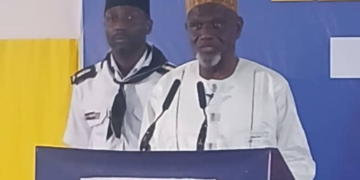
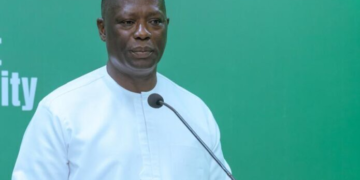








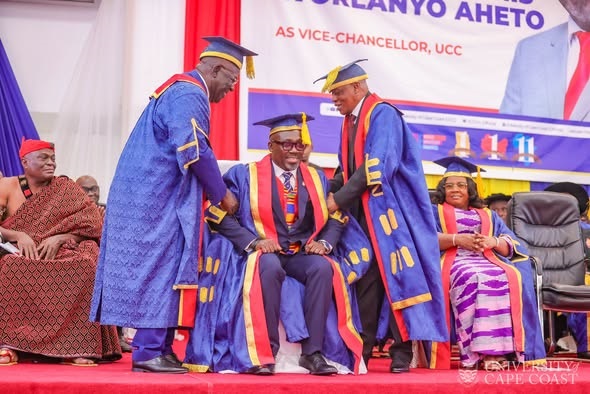
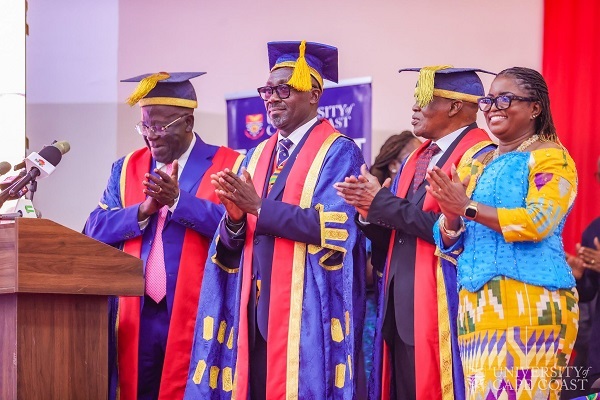
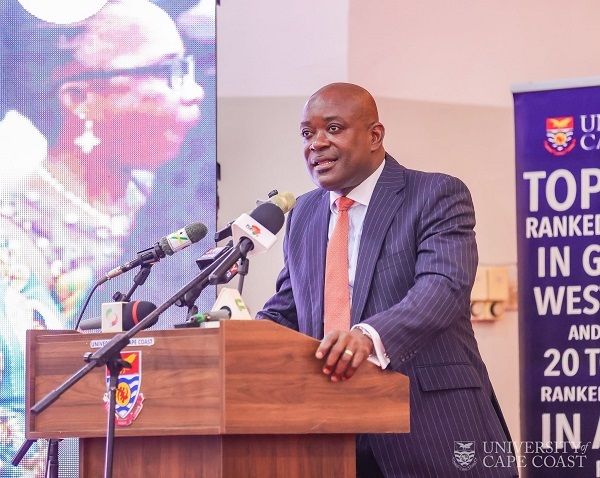
The Chancellor of the University of Cape Coast (UCC), Sir Samuel Esson Jonah, has called on African universities to radically redesign higher education to remain relevant in the age of artificial intelligence, urging the newly inducted Vice-Chancellor, Professor Denis Worlanyo Aheto, to lead the transformation by combining academic knowledge with practical skills, innovation and human-centred learning.
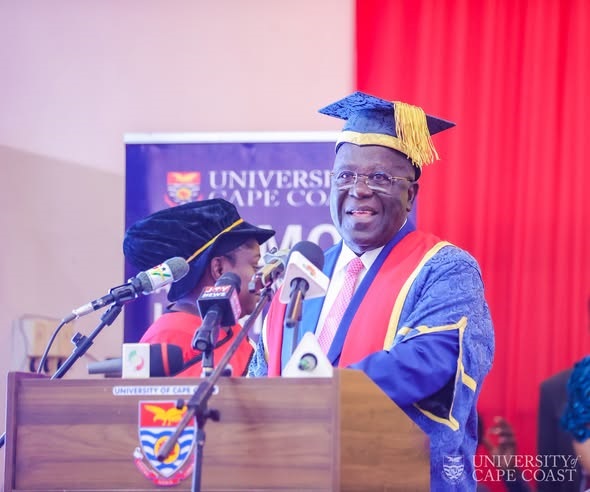
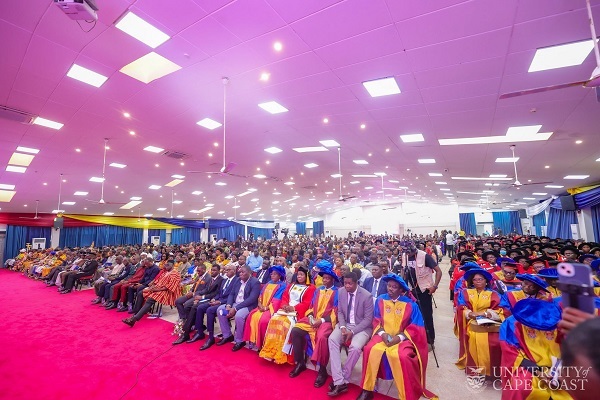
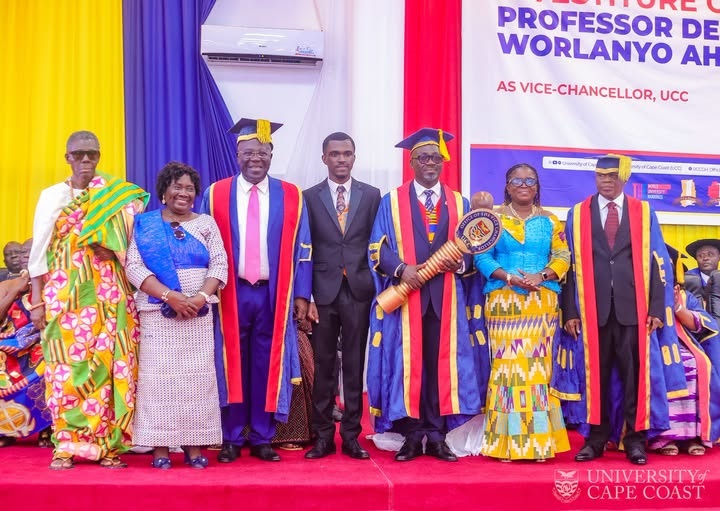
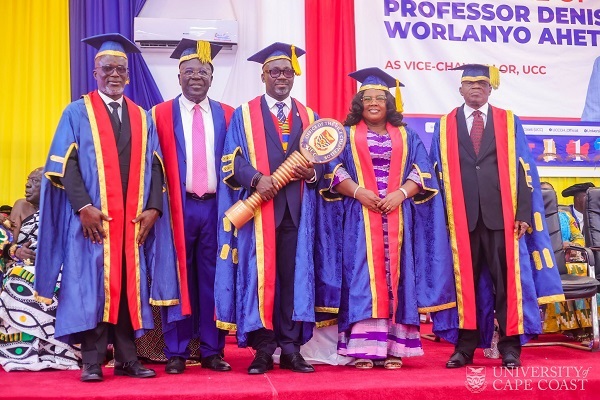
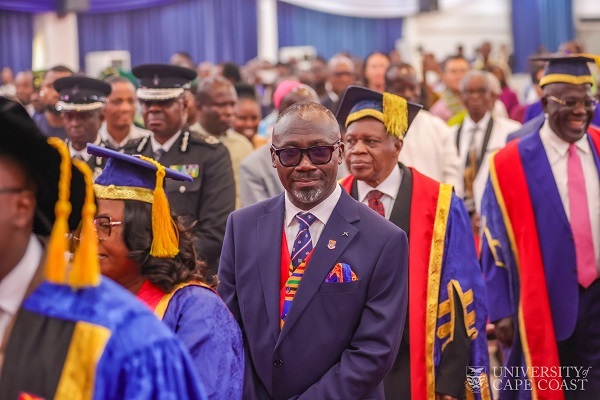
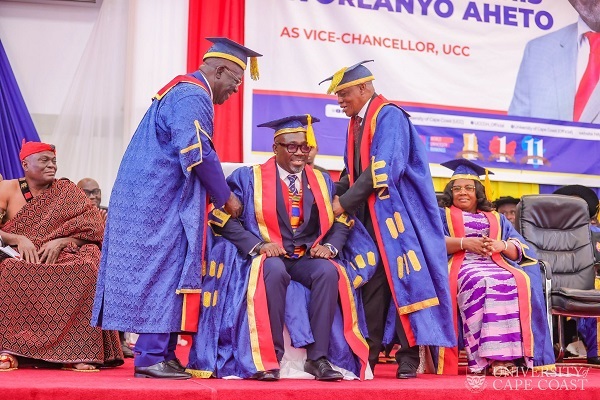
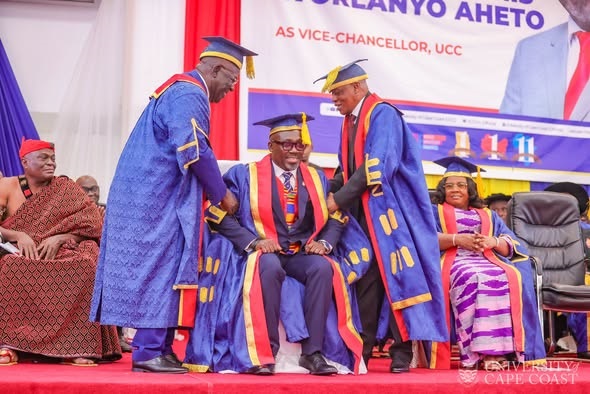
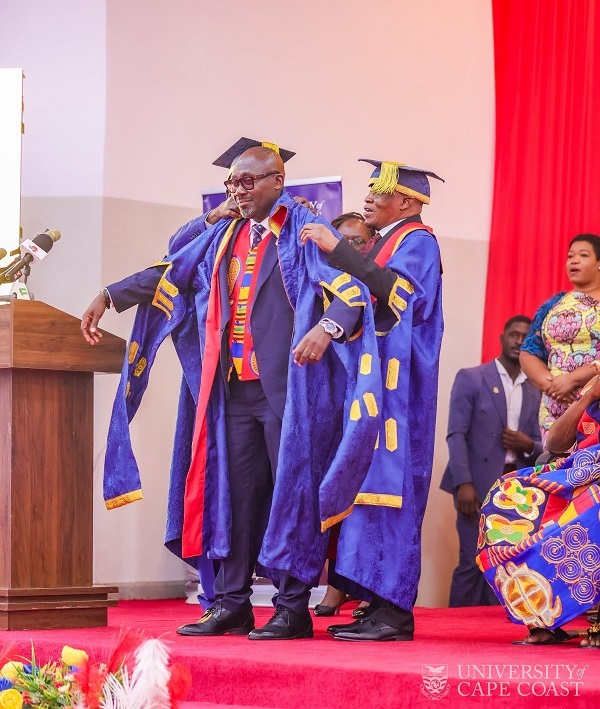
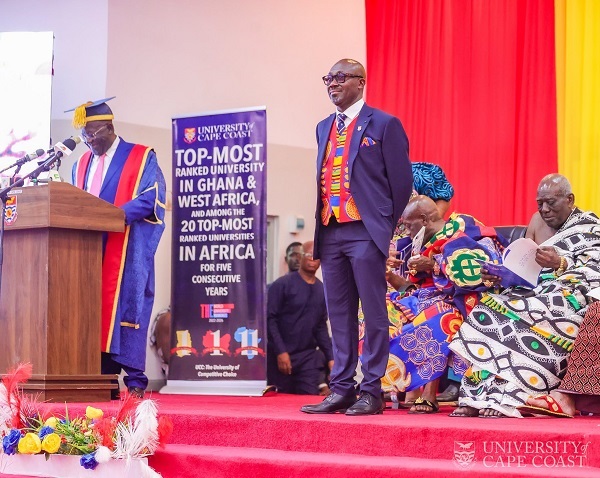
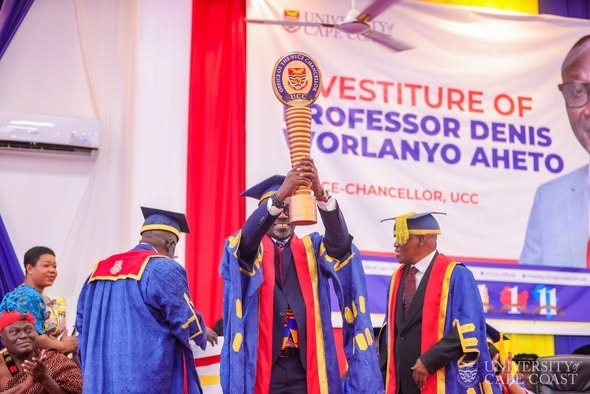
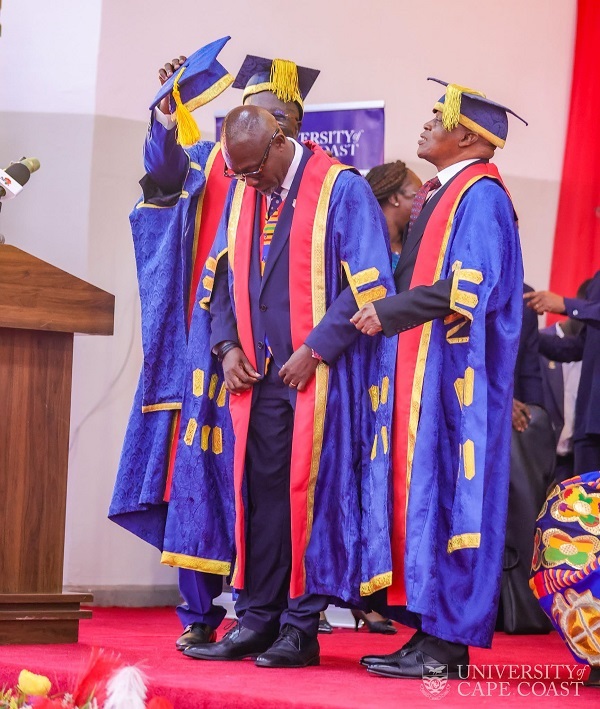
Sir Sam made the call at the investiture of Professor Aheto as the 12th Vice-Chancellor of UCC in Cape Coast, where he argued that the rapid growth of artificial intelligence had changed how knowledge was created, accessed and applied, making it necessary for universities to redefine their purpose.
Vocational education faculty
As part of the proposed reforms, Sir Sam urged UCC to become the first university in Africa to establish a degree-awarding Faculty of Vocational Education.
The faculty, he explained, could offer bachelor’s and master’s degree programmes in applied areas such as renewable energy systems, aquaculture, construction technology, agribusiness, community health, creative industries and human-AI collaboration.
He said students would be required to demonstrate practical competence through real-world projects before graduating.
“Every assessment should be authentic…instead of asking students to describe how to repair a water pump, present them with a broken pump in a community where people need water and ask them to fix it.” Sir Sam said
He said such a model would reconnect universities with national development priorities and ensure that academic qualifications represented demonstrable capability.
Defining moment
Sir Sam described artificial intelligence as one of the most profound challenges universities had faced in centuries.
“For over 900 years, universities were built on the scarcity of knowledge. Knowledge was rare. Libraries protected it, and universities certified those who possessed it. Today, that scarcity has disappeared,” he said.
He noted that students now carried devices capable of performing tasks that previously required years of academic training.
“Any student with a smartphone now has access to an intelligence that has read virtually every book ever written, speaks multiple languages, solves complex equations, drafts legal contracts and even passes professional examinations,” he said.
Sir Sam said universities that continued to define themselves merely as institutions for transmitting information risked becoming obsolete.
Institutions that concentrated on developing judgment, creativity, ethical leadership, innovation and practical competence, however, would become more relevant.
“The question is no longer how students access knowledge. The question is what universities exist to do when knowledge itself has become universally available,” he stated.
Degrees must show competence
The Chancellor said employers were becoming more interested in what graduates could do than in what they had memorised.
He observed that many graduates across Africa possessed impressive academic qualifications but lacked the practical competence required by industry.
“Too many graduates leave our universities having memorised much but built very little,” he said.
“A graduate may know everything about agriculture yet be unable to grow tomatoes. Another may understand entrepreneurship but has never sold a single product.”
He said the value of a university degree should no longer depend mainly on a graduate’s ability to recall information.
Instead, degrees should provide evidence of competence, creativity, problem-solving and innovation.
“The degree is not dying. It is being redefined. The universities that redefine it first will produce graduates whose qualifications remain valuable in the AI era,” he said.
Sir Sam also rejected claims that some academic programmes were “useless degrees”.
“There are no useless degrees. There are only degrees that have become separated from usefulness, and it is our responsibility to reconnect them,” he said.
He explained that every discipline, from the humanities to engineering, could remain relevant when connected to the practical needs of society.
Human qualities
Although artificial intelligence could automate many knowledge-based tasks, Sir Sam said it could not replace uniquely human qualities such as empathy, ethical judgment, leadership and creativity.
He said AI could diagnose diseases, draft reports and analyse data, but it could not comfort a patient, care for vulnerable people, construct physical infrastructure or exercise moral judgment.
“The more artificial our world becomes, the more valuable human beings become,” he said.
He consequently urged universities to produce graduates with strong ethical reasoning, craftsmanship, creativity and leadership capabilities.
University-industry partnership
Sir Sam further called for stronger collaboration between universities and industry.
Research, he said, should be informed by the practical challenges confronting farmers, fishermen, manufacturers, hospitals, small businesses and local communities.
“Our cocoa farms, fishing harbours, hospitals and small businesses must become laboratories where knowledge is generated, not merely places where theories are applied,” he said.
He recommended compulsory industrial attachments, sandwich programmes and project-based learning to ensure that students acquired practical experience before graduation.
Sir Sam also proposed the creation of an artificial intelligence innovation club at UCC, where multidisciplinary student teams could develop solutions for agriculture, healthcare, fisheries, education and environmental management.
He called for structured mentorship involving Ghanaian professionals working in AI and other emerging technologies around the world.
Financial independence
The Chancellor warned that public universities could no longer depend solely on government funding to remain globally competitive.
“The public purse can no longer sustain universities at the level required for global competitiveness,” he said.
He urged universities to generate income through consultancy services, research commercialisation, patents, innovation and productive partnerships with industry.
Sir Sam expressed confidence in Professor Aheto’s ability to mobilise resources, noting that during his leadership of the Centre for Coastal Management, he had secured more than US$30 million in grants, facilitated over 400 scholarships and supported the training of more than 50 PhD graduates.
He pledged to assist the new Vice-Chancellor in mobilising support from alumni, corporate organisations and international partners.
Aheto accepts responsibility
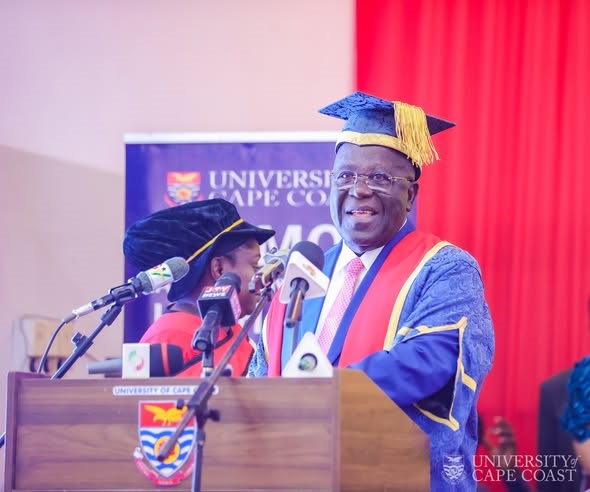
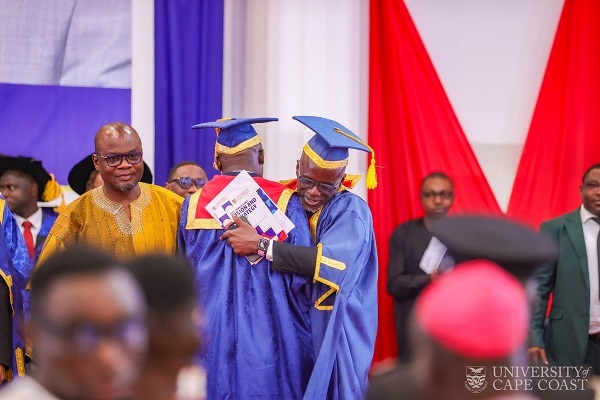
Responding to the Chancellor’s charge, the Vice Chancellor, Professor Denis Worlanyo Aheto accepted the responsibility of leading UCC with what he described as “profound humility and a deep sense of responsibility”.
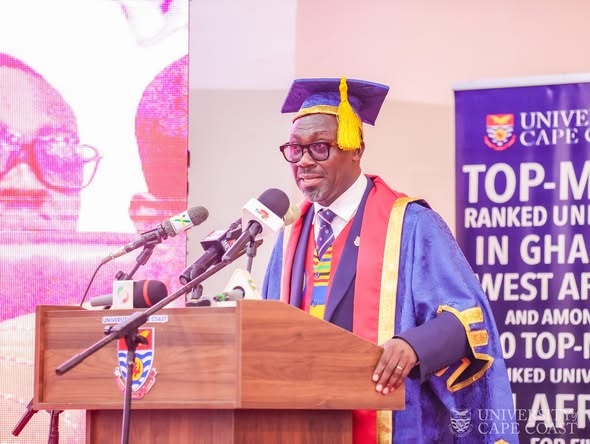
He said his appointment was not only a personal honour but also “a solemn call to service” that would require the collective commitment of the university community.
“I accept this responsibility with humility and with a firm commitment to working collaboratively and diligently with all members of the university community to advance the vision, mission and strategic aspirations of the University of Cape Coast,” he said.
Professor Aheto said his 19 months as Pro Vice-Chancellor and the subsequent 10 months as Acting Vice-Chancellor had given him a clear understanding of the responsibilities involved in leading the university.
During the transitional period, he said, the university decentralised financial approval and travel authorisation processes to its colleges to improve efficiency and reduce bureaucracy.
Professor Aheto disclosed that 92 new staff members were appointed and 160 academic and non-academic employees promoted during the period.
He also announced that UCC graduated a record 17,542 students during the 2025/2026 academic year, the highest number in the institution’s history.
Five strategic priorities
Professor Aheto said his four-year vision was to create a transformative, inclusive and diverse academic environment that promoted excellence in research, teaching, learning and community engagement.
“My vision as Vice-Chancellor is to provide strategic leadership to foster a transformative, inclusive and diverse academic environment that empowers excellence in research, teaching, learning and outreach for wider impact on society,” he said.
Professor Aheto acknowledged that the university faced financial pressures, including liquidity challenges, outstanding commitments, budget deficits and limited cash flow.
He said his administration would strengthen financial governance, ensure prudent resource allocation and increase internally generated revenue.
Staff welfare, participatory governance, merit-based human resource management, leadership development and digital administrative systems would also receive attention.
Digital campus
Professor Aheto announced that the Ghana Tertiary Education Commission had approved the establishment of the UCC e-Campus in partnership with Astra Learning.
The fully digital platform is expected to enrol about 10,000 students annually and expand access to higher education.
Professor Aheto explained that the e-Campus would complement, rather than replace, the university’s regular, distance and sandwich programmes.
“It provides an additional pathway that expands access to quality higher education, enhances flexibility for learners and positions the University of Cape Coast to meet the evolving demands of higher education in the digital age,” he said.
According to him, marketing of the programmes had begun, with the first cohort expected to start during the 2026/2027 academic year.
He indicated that about 36 master’s, PhD and Doctor of Business Administration programmes had already been accredited for the platform.
They include an MSc in Cyber Security, an MBA in Sustainability and Governance Management, a Doctor of Business Administration in Financial Analysis and Management, a PhD in Artificial Intelligence and a PhD in Digital Transformation.
AI policy and smart facilities
Professor Aheto said the university would develop a comprehensive institutional AI policy and establish an AI-powered digital ecosystem.
The initiative would include smart lecture theatres, expanded digital library services, virtual viva voce facilities for postgraduate students and improved internet connectivity in academic and administrative areas.
Research commercialisation
Professor Aheto acknowledged that the commercialisation of research remained limited, although UCC remained Ghana’s highest-ranked university and one of the leading institutions in West Africa.
He said the university would strengthen grant acquisition, promote high-impact publications and fully operationalise its Technology Transfer Office to convert research findings into commercially viable products and services.
“Our research must move beyond publication to innovation, entrepreneurship and national development,” he said.
Sustainability and accountability
Professor Aheto announced that the Directorate of Academic Planning and Quality Assurance would be restructured into the Directorate of Academic Planning, Monitoring, Evaluation and Quality Assurance.
He further stated that a Sustainability Office would also be established under the Office of the Vice-Chancellor to coordinate renewable energy projects, recycling, climate-smart development and energy-efficiency initiatives.
Graduate education
The Vice-Chancellor said the School of Graduate Studies would be strengthened through digital supervision systems, enhanced support for academic assessors and expanded mentorship for postgraduate students.
He added that UCC would intensify the international recruitment of postgraduate students and pursue more joint doctoral degrees and collaborative research projects with foreign universities.
He indicated that specialised graduate training hubs would be developed around institutions such as the Africa Ocean Institute, the Institute for Educational Planning and Administration and the College of Distance Education.
Inclusion and staff welfare
Professor Aheto pledged to make diversity, equity and inclusion central to university governance.
He acknowledged challenges such as gender imbalance in senior leadership, unequal access for economically disadvantaged students, inadequate support for persons with disabilities and limited mental health services.
His administration would enforce the university’s gender policy, expand counselling and mental health services, improve campus security and strengthen residential support.
He also announced the introduction of the University of Cape Coast Provident Fund Scheme, expected to begin in August.
The scheme, he said would complement statutory pension benefits by enabling eligible staff to build additional retirement savings through professionally managed contributions.
“It represents a significant investment in the long-term financial security, welfare and dignity of our staff,” Professor Aheto said.
Globally competitive graduates
Professor Aheto said UCC would expand overseas recruitment, international academic partnerships, student exchanges, joint degree programmes and collaborative research.
“Our goal is to produce graduates who are adaptable, innovative, globally competitive, career-ready and capable of leading in an increasingly interconnected world,” he said.
Source: Anthony Sasu Ayisadu/ATLFMNEWS