












Ghana is seeking mining agreements that attract foreign capital while creating jobs, developing local skills and expanding opportunities for Ghanaian businesses.
Minister for Lands and Natural Resources Emmanuel Armah-Kofi Buah says government will provide investors with clear regulations, fair administration and respect for lawful agreements but expects mining projects to deliver measurable benefits beyond mineral extraction.
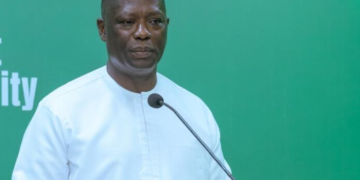
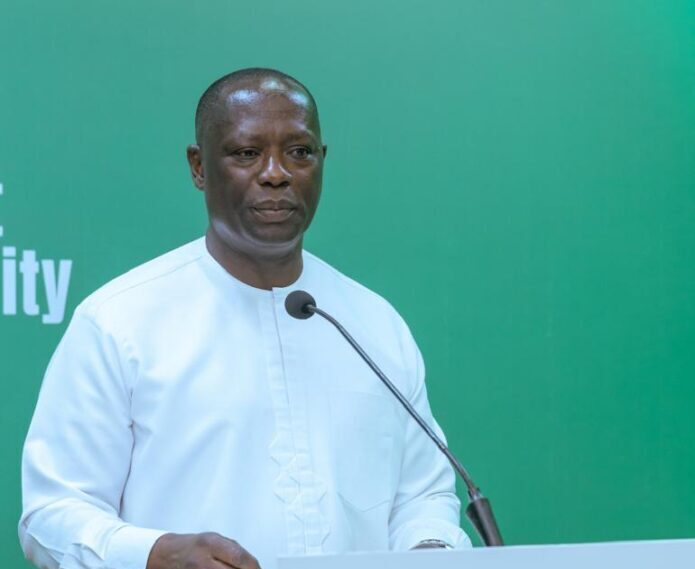
Speaking at the Mining in Motion Conference on Monday, October 19, the Minister said Ghana’s mineral governance reforms were intended to create a predictable investment environment while ensuring that citizens received a fair share of the prosperity generated from the country’s natural resources.
He invited investors, financiers and technology partners to support the reforms and engage government constructively as the changes are implemented.
Mining Investments Must Create Local Opportunities
Mr Buah said Ghanaians had legitimate expectations that mining projects would provide employment, support skills development and create business opportunities for local companies.
“Our citizens have equally legitimate expectations. They want jobs, skills, opportunities for local enterprise, protection of the environment and a fair share of the prosperity produced from their own resources,” he said.
The Minister argued that mining should contribute to wider economic transformation rather than operate as an isolated extractive activity.
Government therefore wants agreements that allow Ghanaian contractors, suppliers, professionals and communities to participate more meaningfully in the mining value chain.
Greater local participation could help the country retain more of the economic value generated by its mineral resources while building stronger domestic industries.
Investors Assured of Clear Rules
While demanding greater national benefits, the Minister assured investors that government understood their need for regulatory certainty and financially sustainable projects.
He said Ghana would work with industry players to ensure mining investments remained commercially viable and produced reasonable returns.
According to him, a predictable regulatory environment would give investors greater confidence to commit capital, introduce new technology and make long-term business decisions.
Government, he added, would administer the sector fairly and honour agreements entered into lawfully.
The assurance is intended to address investor concerns that policy uncertainty or unexpected regulatory changes could affect the financial viability of mining projects.
Reforms Will Require Consultation
Mr Buah acknowledged that implementing the mineral governance reforms would involve consultations, adjustments and patience from both government and industry players.
He urged investors, financiers and technology partners to participate actively in discussions rather than view every proposed change as hostile to business.
The Minister said open engagement would allow the parties to identify concerns and negotiate arrangements that protected both Ghana’s national interest and investors’ commercial objectives.
He maintained that reforming the sector successfully would require cooperation, transparency, and a willingness to consider different perspectives.
Government remains ready, he said, to listen to industry concerns and address legitimate challenges affecting investment.
Read Also: GAPTE Issues Strong Warning on Aayalolo Lane Misuse
Jobs at the Centre of Mining Policy
Employment creation is expected to remain one of the main standards by which mining agreements are assessed.
Ghana wants projects to generate direct jobs at mining sites while also supporting employment within local supply chains.
Opportunities could emerge in areas including engineering, transportation, equipment maintenance, environmental management, catering, manufacturing and professional services.
Government also expects mining companies to provide training that enables more Ghanaians to take up technical and managerial positions.
A stronger connection between mining operations and local employment could help communities experience more direct benefits from the resources extracted from their areas.
Local Enterprises Expected to Gain
The Minister said foreign investment and the growth of Ghanaian businesses were compatible objectives.
International mining companies can bring capital, technology and expertise, while local firms provide goods, services and knowledge of the domestic business environment.
Government wants mining arrangements that expand opportunities for Ghanaian companies rather than leaving most high-value contracts in the hands of foreign suppliers.
Building domestic capacity could also help local businesses compete for contracts in other mining jurisdictions over time.
The approach is expected to strengthen Ghana’s industrial base and ensure that mining expenditure produces wider economic activity.
Skills and Technology Transfer Prioritized
Mr Buah also highlighted the importance of technology and expertise in the development of Ghana’s mineral sector.
The country continues to require investment in modern exploration, extraction, processing and environmental-management systems.
Government is therefore inviting technology partners to work with Ghanaian institutions and businesses while supporting the transfer of knowledge and skills.
Such collaboration could help develop a stronger pool of Ghanaian professionals capable of managing increasingly sophisticated mining operations.
The long-term objective is to reduce dependence on imported expertise and build domestic capacity across the mining industry.
Environmental Protection Remains Essential
The Minister stressed that commercial success could not come at the expense of the environment or the well-being of mining communities.
Mining activities can affect land, forests, water bodies and livelihoods where environmental requirements are weak or poorly enforced.
Government therefore expects investors to comply with environmental regulations and support responsible practices throughout the life of their projects.
Environmental protection, Mr Buah said, formed part of the legitimate expectations of Ghanaians and should be reflected in negotiations with investors.
Mining companies will also be expected to rehabilitate affected areas and minimize harm to surrounding communities.
Ghana Seeks Fair Share of Mineral Wealth
Government wants mining agreements that provide the country with a fair return from the extraction of its natural resources.
The Minister argued that securing national benefits did not require Ghana to undermine the profitability of mining companies.
Well-negotiated agreements, he said, could produce reasonable returns for investors while generating public revenue, jobs and development opportunities for the host country.
The challenge is to establish terms that remain commercially attractive without denying Ghana the long-term value of its mineral wealth.
Mr Buah said fair negotiation and mutual respect would be central to achieving that balance.
Investors Invited to Build with Ghana
The Minister reaffirmed Ghana’s openness to responsible investment in the mining sector.
“The invitation is straightforward. Come and invest. Come and build with us. Let us negotiate fairly, honour our commitments and work for outcomes that benefit both the investor and the host countries,” he said.
He encouraged companies to view Ghana as a long-term partner rather than simply a source of minerals.
Government, he added, was ready to maintain open dialogue and negotiate agreements that supported successful business operations and national development.
Implementation Will Determine Success
The practical impact of the reforms will depend on whether government institutions apply the rules consistently and transparently.
Investors will expect efficient approval processes, regulatory certainty and respect for contracts.
Ghanaians, meanwhile, will assess the reforms by the jobs created, the growth of local businesses, the protection of the environment and the benefits delivered to mining communities.
Government will therefore have to balance investor confidence with strong enforcement of national requirements.
Mr Buah maintained that these objectives were not contradictory and could be achieved through fair negotiations, responsible investment and sustained cooperation between the State and industry.