







Ghana’s economic recovery and reform programme have received strong praise from the International Monetary Fund, with the Fund’s African Department describing the country’s performance as an example for other economies to follow.
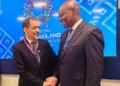
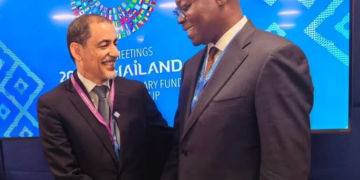
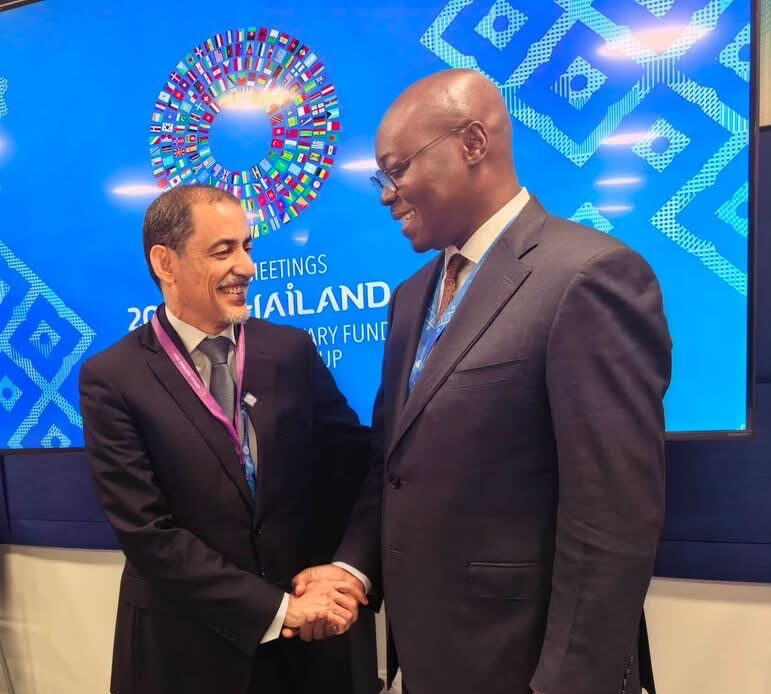
Director of the IMF’s African Department Zeine Zeidane commended Ghana’s progress during a meeting with Finance Minister Dr Cassiel Ato Forson on the sidelines of the IMF–World Bank Annual Meetings in Bangkok, Thailand.
“The ECF was a great success,” Mr Zeidane said, adding: “We tell others to follow your steps.”
He also offered an upbeat assessment of the country’s current position, saying Ghana had made significant progress in restoring economic stability. The 2026 Annual Meetings are being held in Bangkok from October 12 to 18.
Ghana’s Performance Held Up as an Example
Mr Zeidane said Ghana’s implementation of reforms under the Extended Credit Facility had produced results that could offer lessons to other countries pursuing economic stabilisation.
His comments represent a strong endorsement of Ghana’s progress following a period marked by high inflation, debt distress, weakened foreign exchange reserves and declining investor confidence.
The IMF’s assessment also suggests that Ghana’s recovery is being viewed not only through improved headline indicators but through the implementation of broader reforms in public finance, customs administration and state-owned enterprises.
Mr Zeidane praised the country’s use of artificial intelligence in customs administration and acknowledged work being undertaken to improve the performance of state-owned enterprises and address stock-flow adjustments.
These reforms are expected to strengthen revenue administration, improve the management of public institutions and reduce financial risks that may not be immediately visible in annual budget deficits.
ECF Programme Completed After Final Review
The IMF Executive Board completed the sixth and final review of Ghana’s US$3 billion Extended Credit Facility arrangement in July 2026.
The decision enabled a final disbursement of approximately US$371 million, bringing total financial support provided under the programme to about US$3 billion.
In its official assessment, the IMF described Ghana’s performance under the programme as broadly satisfactory and pointed to substantial gains in macroeconomic stabilisation and debt sustainability.
The Fund reported that inflation had fallen sharply, foreign exchange reserves had nearly doubled by the end of 2025 and the primary fiscal balance had moved into surplus.
Ghana’s risk of external and overall debt distress was also upgraded to moderate, two years earlier than had been expected when the programme began.
The IMF said those gains reflected a combination of sustained policy reforms and favourable commodity-price developments, particularly strong earnings from gold exports.
Growth Forecast Raised to 5.7%
The IMF’s October 2026 World Economic Outlook projects Ghana’s economy to grow by 5.7% in 2026, reinforcing expectations of stronger-than-anticipated economic activity.
The Fund also projects consumer price inflation at 4.8%, pointing to continued moderation in price pressures as the economy expands.
The improved outlook provides a more favourable environment for households, businesses and investors, although the broader public benefit will depend on whether growth translates into jobs, higher real incomes and improved access to essential services.
Lower and more stable inflation could help protect purchasing power, improve business planning and reduce uncertainty over future operating costs.
However, stronger GDP growth alone will not necessarily resolve unemployment, income inequality or pressure on household budgets.
Finance Minister Expects Stronger Growth
Finance Minister Dr Cassiel Ato Forson expressed confidence that Ghana could perform even better than the IMF’s 5.7% forecast.
He said the government remained committed to fiscal credibility, discipline and reforms intended to sustain the economic turnaround.
Read Also: University Rent Hikes Could Be Capped at 5%-10% a Year
According to the Minister, the administration expects the economy to exceed the Fund’s current projection if the recovery continues along its present path.
The confidence reflects recent economic growth figures, improvements in Ghana’s external position and the continued moderation of inflation.
It also places pressure on the government to ensure that the improved macroeconomic indicators produce measurable benefits for businesses and households.
The practical test of the recovery will be whether more companies expand, employment opportunities increase and households experience lasting stability in the cost of living.
AI Use in Customs Administration Recognised
The IMF African Department Director also commended Ghana’s use of artificial intelligence in customs administration.
The application of AI could help authorities analyse trade data, identify anomalies, improve compliance and detect potential revenue leakages.
Customs administration remains an important source of public revenue, making improved efficiency critical to Ghana’s efforts to strengthen domestic revenue mobilisation without relying excessively on borrowing.
The use of technology could also reduce delays and improve risk-based assessment of imports and exports.
However, successful implementation will require reliable data, strong oversight and safeguards to ensure that automated systems are accurate, transparent and properly supervised by trained officials.
State-Owned Enterprise Reforms Remain Important
Mr Zeidane also acknowledged reforms involving state-owned enterprises.
Financial weaknesses within public enterprises can create significant risks for government finances, particularly where the State must repeatedly provide financial support or assume liabilities incurred by poorly performing institutions.
Improving governance, financial reporting and operational efficiency within these entities could reduce pressure on the national budget.
The IMF has also emphasised the importance of addressing stock-flow adjustments, which can cause public debt to increase even when the reported fiscal deficit appears contained.
Greater transparency over such financial movements could help prevent the accumulation of hidden liabilities and strengthen public confidence in the government’s fiscal data.
Recovery Still Requires Discipline
Despite the praise, the IMF has maintained that Ghana must continue implementing reforms to preserve the gains achieved under the ECF programme.
The Fund said sustained implementation of the post-programme reform agenda would be necessary to entrench macroeconomic stability, support private-sector-led growth and create room for development spending without compromising debt sustainability.
This means the end of the ECF arrangement does not mark the end of Ghana’s economic adjustment.
Government must continue strengthening revenue mobilisation, controlling expenditure, improving public financial management and completing outstanding debt-restructuring processes.
Any return to excessive borrowing, uncontrolled spending or the accumulation of arrears could undermine the progress recorded so far.
Recovery Must Reach Households
The IMF’s endorsement strengthens confidence in Ghana’s economic direction, but the success of the recovery will ultimately be judged by its effect on everyday life.
For households, the important questions will involve employment, wages, food prices, transport costs, housing and access to healthcare and education.
For businesses, the recovery must produce greater access to affordable credit, predictable taxation, stable energy and improved conditions for investment.
Government will therefore need to connect improved macroeconomic indicators to practical policies that support productive industries, small businesses and employment creation.
The IMF’s message is that Ghana has made significant progress and now offers lessons for other countries.
The next challenge is to protect those gains and ensure that the recovery produces broad and lasting improvements in living standards.