










Nigeria has activated an urgent public health response after confirming an imported case of Bundibugyo Ebola virus disease in Abuja, with 44 people already identified for monitoring.
The patient is a woman who recently traveled to Nigeria from Uganda. She began showing symptoms on October 7 and sought treatment at a private health facility in the Federal Capital Territory on October 11.
Laboratory tests confirmed the infection on October 20, after which she was placed in isolation to receive medical care.
The confirmation marks the detection of the virus in West Africa as health authorities across the continent respond to an outbreak that began in the Democratic Republic of the Congo and later spread to other countries.
Forty-Four Contacts Identified
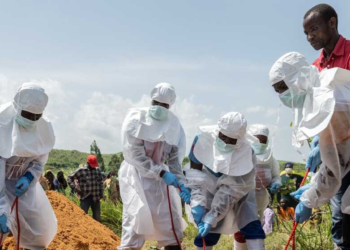
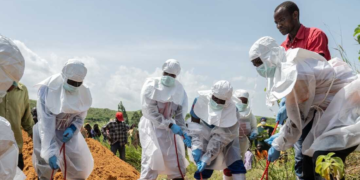
Nigeria’s Federal Ministry of Health and Social Welfare says contact tracing began immediately after the case was confirmed.
Public health teams have so far identified 44 people who may have been exposed to the patient.
The contacts include healthcare workers, other patients, caregivers and people linked to the woman’s journey into Nigeria.
Officials are monitoring them for possible symptoms while continuing efforts to identify any additional people who may have had contact with the patient.
Health Minister Muhammad Pate said authorities were taking steps to prevent further transmission.
“We are doing everything possible to contain this case by tracing all the contacts the individual may have had,” he said.
Contact tracing is expected to remain one of the most important parts of the response because it allows authorities to identify exposed individuals before possible infections spread more widely.
Emergency Coordination System Activated
The Nigeria Centre for Disease Control and Prevention has activated its incident-management system to coordinate the national response.
The system is expected to bring together health agencies, laboratories, treatment facilities and other institutions involved in disease surveillance and outbreak management.
The Federal Ministry of Health is also working with the Federal Capital Territory Health Services Secretariat and other relevant authorities.
The response includes case investigation, contact monitoring, laboratory testing and stronger infection-prevention measures.
Read Also: Obuasi SHTS Headmaster Resigns to Focus on Clearing His Name
Officials say rapid detection and isolation will be essential to preventing the imported case from developing into wider community transmission.
Private Hospital Receives Support
The private hospital where the patient first received care is being supported to strengthen infection-prevention and control procedures.
Health officials are reviewing the woman’s movements within the facility and identifying staff, patients and caregivers who may have been exposed before the diagnosis was confirmed.
The process is particularly important because healthcare workers may face increased risk when treating a patient whose infection has not yet been identified.
Authorities are expected to assess how the patient was handled, whether protective measures were followed and which parts of the facility may require additional decontamination or monitoring.
The hospital will also remain an important focus of the contact-tracing exercise.
Health Facilities Placed on Alert
Public and private health facilities across Nigeria have been directed to maintain a high level of vigilance.
Healthcare workers have been asked to quickly identify and isolate patients with symptoms that may be consistent with Ebola, particularly where there is a relevant travel or contact history.
Facilities have also been urged to strictly observe infection-prevention procedures and immediately report suspected cases to public health authorities.
The nationwide alert is intended to ensure that possible infections are detected early, regardless of where a patient first seeks medical assistance.
Health authorities are also expected to strengthen surveillance at points of entry and prepare medical teams to respond rapidly to suspected cases.
Source of Infection Under Investigation
Although the patient traveled to Nigeria from Uganda, investigators have not yet established where or how she became infected.
Health officials are reconstructing her full travel and exposure history to determine whether the infection occurred in Uganda or during another stage of her journey.
The investigation is expected to examine the places she visited, the people she interacted with and whether she had any known connection to an infected person.
Uganda had previously recorded cases during the regional outbreak but was later declared free of active transmission.
Authorities have therefore cautioned against drawing conclusions about the source of the infection before the investigation is completed.
Regional Outbreak Raises Concern
Nigeria’s confirmation comes as several African countries respond to cases linked to the Bundibugyo strain of Ebola.
The Democratic Republic of the Congo remains at the centre of the outbreak, which began in May and has spread across multiple provinces.
Kenya has also reported nine cases linked to an imported infection.
The first Kenyan patient had traveled from the Democratic Republic of the Congo through Uganda before arriving in Nairobi.
Health authorities in Kenya subsequently identified infections among people connected to the original patient, with several cases detected while the contacts were already under quarantine.
The detection of Nigeria’s case has increased concern about the possibility of the virus reaching additional countries through regional and international travel.
Nigeria Draws on Previous Ebola Experience
Nigeria successfully contained an imported Ebola outbreak in 2014 after the virus was brought into Lagos by an infected traveler.
That response involved rapid isolation, extensive contact tracing and close monitoring of people who had been exposed.
Health authorities are expected to draw on that experience as they respond to the Abuja case.
However, officials have stressed that effective containment will still depend on timely reporting, public cooperation and strict infection-control measures.
The movement of the latest patient across international borders also highlights the importance of information sharing between countries responding to the regional outbreak.
Public Urged to Avoid Panic
The Nigerian government has urged the public to remain calm and rely on official information from health authorities.
Members of the public have been advised against spreading unverified reports that could create fear, stigmatize patients or interfere with contact tracing.
People who may have had contact with the patient are expected to cooperate fully with public health teams and follow monitoring instructions.
Authorities have also warned against discriminating against individuals under observation, stressing that contact with an infected person does not automatically mean that someone has contracted the disease.
Officials say early reporting of symptoms and possible exposure can improve the speed of treatment and reduce the risk of further transmission.
No Wider Nigerian Spread Confirmed
At the time of the official announcement, Nigeria had confirmed only the imported case in Abuja.
No additional infections or evidence of wider community transmission had been announced.
The authorities are nevertheless maintaining an intensive response because the patient spent several days receiving care before laboratory confirmation.
The monitoring of the 44 identified contacts will therefore be critical in determining whether any secondary infections occurred.
Nigeria says it will continue to provide updates as investigations, testing and contact monitoring progress.
The immediate priority remains containing the Abuja case, protecting health workers and preventing the virus from spreading to the wider population.