















The University of Cape Coast (UCC) has opened the 14th Universities, Entrepreneurship and Enterprise Development (UEED) in Africa Conference, with a strong call for African universities, entrepreneurs and young people to move beyond consuming technology and begin creating solutions that can transform the continent.
The two-day conference, which opened on the 15th September, 2026, at the School of Graduate Studies, UCC, brings together academics, entrepreneurs, policymakers, industry players and international partners to examine how innovation, education, artificial intelligence and stronger enterprise systems can drive Africa’s economic future.
This year’s conference, themed “Building Resilient Enterprise Development Ecosystem for Africa’s Digital and Artificial Intelligence Future: Financing Circular Innovation and Future,” is expected to provide a platform for participants to exchange ideas and develop practical solutions to enterprise development challenges.
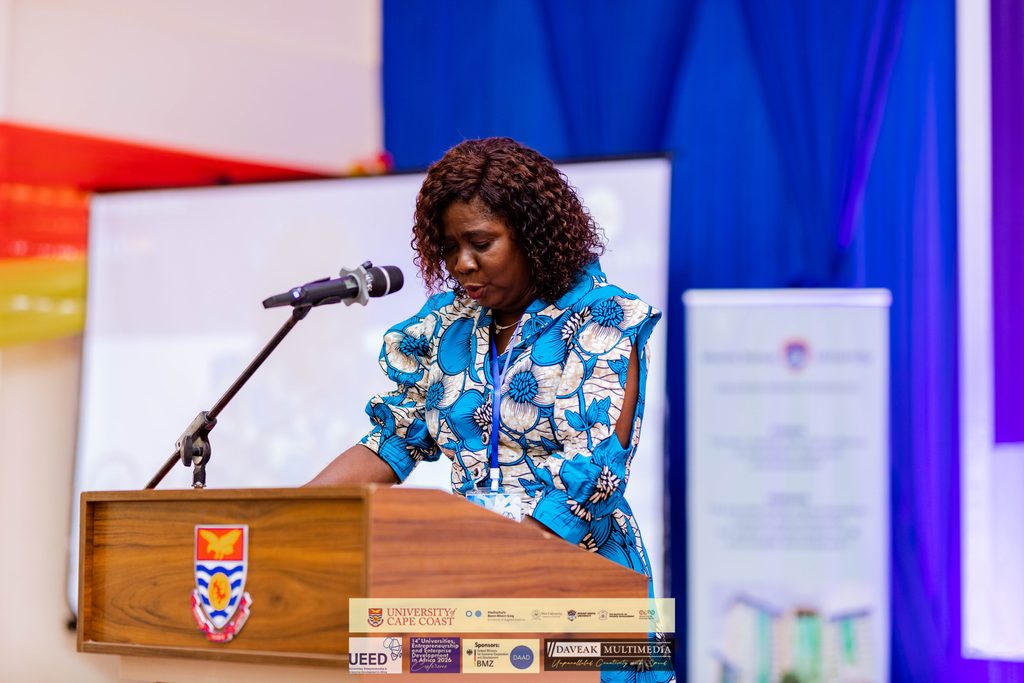
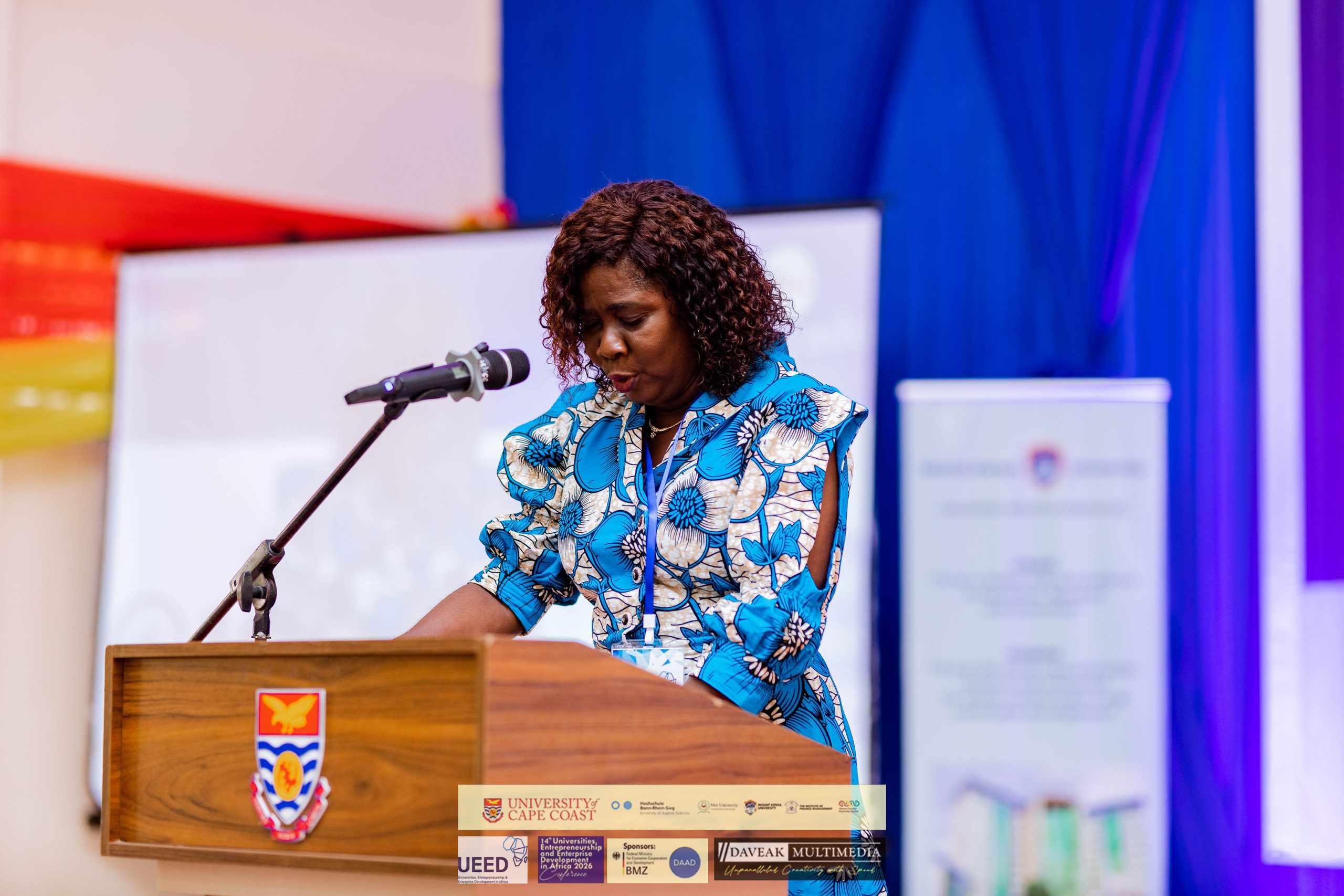
Prof. Rosemond Boohene, Director, CESED, UCC
At the heart of the opening ceremony was one recurring message: Africa’s entrepreneurial future must be built by Africans, for Africa.
Welcoming distinguished guests from universities and colleges, co-chairman of the 14th UEED Africa Conference Professor Boakye Mensah, described the gathering as a meeting point for innovative and creative minds to explore the science behind entrepreneurship and enterprise development.
That call for innovation was further amplified by the Chairman of the opening ceremony and Vice Chancellor of the University of Cape Coast, Professor Dennis Worlanyo Aheto, who drew attention to Africa’s rapidly growing young population.
With more young people expected to enter the workforce by 2035, Prof. Aheto described the development as an opportunity for the continent but one that must be matched with the right skills.
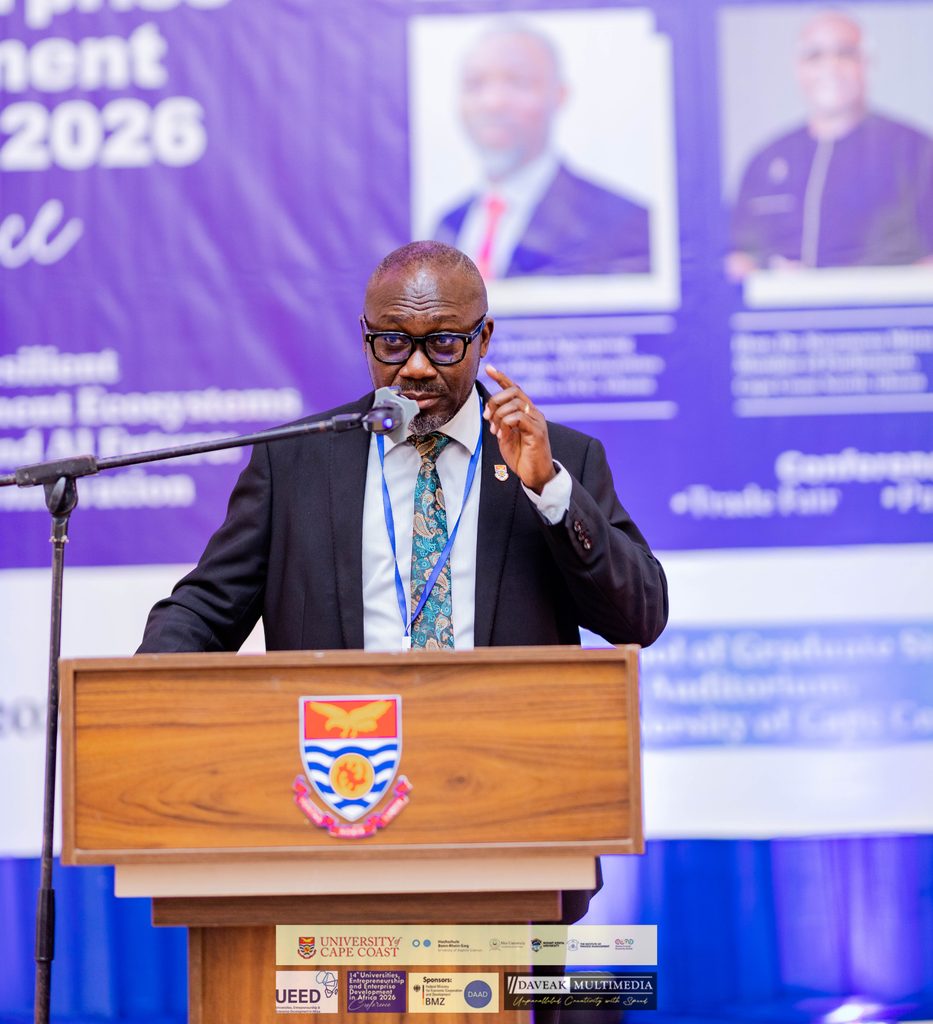
Prof. Denis Worlanyo Aheto, Vice Chancellor, UCC
He called for an Africa where young people inherit skills, not simply technology, stressing the need to prepare the next generation to create rather than merely consume.
And increasingly, that distinction is being shaped by artificial intelligence.
For Prof. Dr. Teena Chakkalayil Hassan, Vice President for International Affairs and Digitalization at HBRS, Bonn, Germany, the AI revolution presents an opportunity that entrepreneurs must learn to embrace.
She stressed that entrepreneurs do not need to become computer scientists to benefit from AI.
“One must know how to prompt,” she noted, underscoring the importance of communicating effectively with AI tools.
Her remarks also highlighted the value of international cooperation, with a recommendation for stronger collaboration between the University of Cape Coast and institutions abroad.
Building on that conversation, Professor Mrs. Rosemond Boohene of CESED, UCC, shifted attention from technology itself to the people and businesses that need it most.
She emphasized the need to bridge the gap between grassroots entrepreneurs and the marketplace, while building resilient enterprise ecosystems capable of helping businesses survive, grow, and compete.
For her, AI should not become another barrier separating entrepreneurs from opportunity. Instead, it should serve as a bridge.
But technology alone cannot build sustainable enterprises.
The Municipal Chief Executive of Cape Coast, George Justice Arthur reminded participants that one of the often-overlooked foundations of a successful business is corporate governance and it is not reserved for large corporations.
He stressed that small-scale businesses need good corporate governance too, particularly if they intend to grow into sustainable enterprises.
His message to young people was equally direct: the goal should not simply be to find a job.
Building a sustainable business requires knowledge, discipline and continuous learning. As he noted, passion alone is not enough.
This places entrepreneurship education at the center of enterprise development, with programmes such as the MBA Entrepreneurship programme at UCC playing a role in equipping aspiring entrepreneurs with the knowledge needed to turn ideas into viable businesses.
He also pointed to the role of the local assembly in training and supporting entrepreneurs in Cape Coast.
The conversation then moved from individual entrepreneurs to the institutions expected to support them.
Prof. Daniel Agyapong, Provost of the College of Humanities and Legal Studies, acknowledged the pioneers who launched the UEED conference in Germany in 2012 and recognized the contribution of partner institutions and the organizing team.
He called for the conference to grow through stronger international collaboration and cooperation, creating wider opportunities for knowledge exchange and enterprise development.
That vision also speaks to a broader responsibility for universities.
Delivering the keynote address, Member of Parliament for Cape Coast North, Hon. Dr. Kwamena Mintah Nyarku, argued that Africa’s future cannot depend solely on its natural resources.
The continent needs sustainable systems capable of supporting and developing those resources.
For him, one of the most urgent priorities is creating stronger support systems for African entrepreneurs so businesses can move beyond survival and scale and thrive.
He challenged universities to strengthen their connection with the enterprise sector and become institutions that actively provide solutions to entrepreneurs.
Academic research, he argued, must not end as papers on shelves. Research must translate into solutions for real-life problems.
Access to finance also emerged as a critical piece of the entrepreneurial puzzle.
Dr. Nyarku called for financing models that recognize that businesses have different needs at different stages of growth.
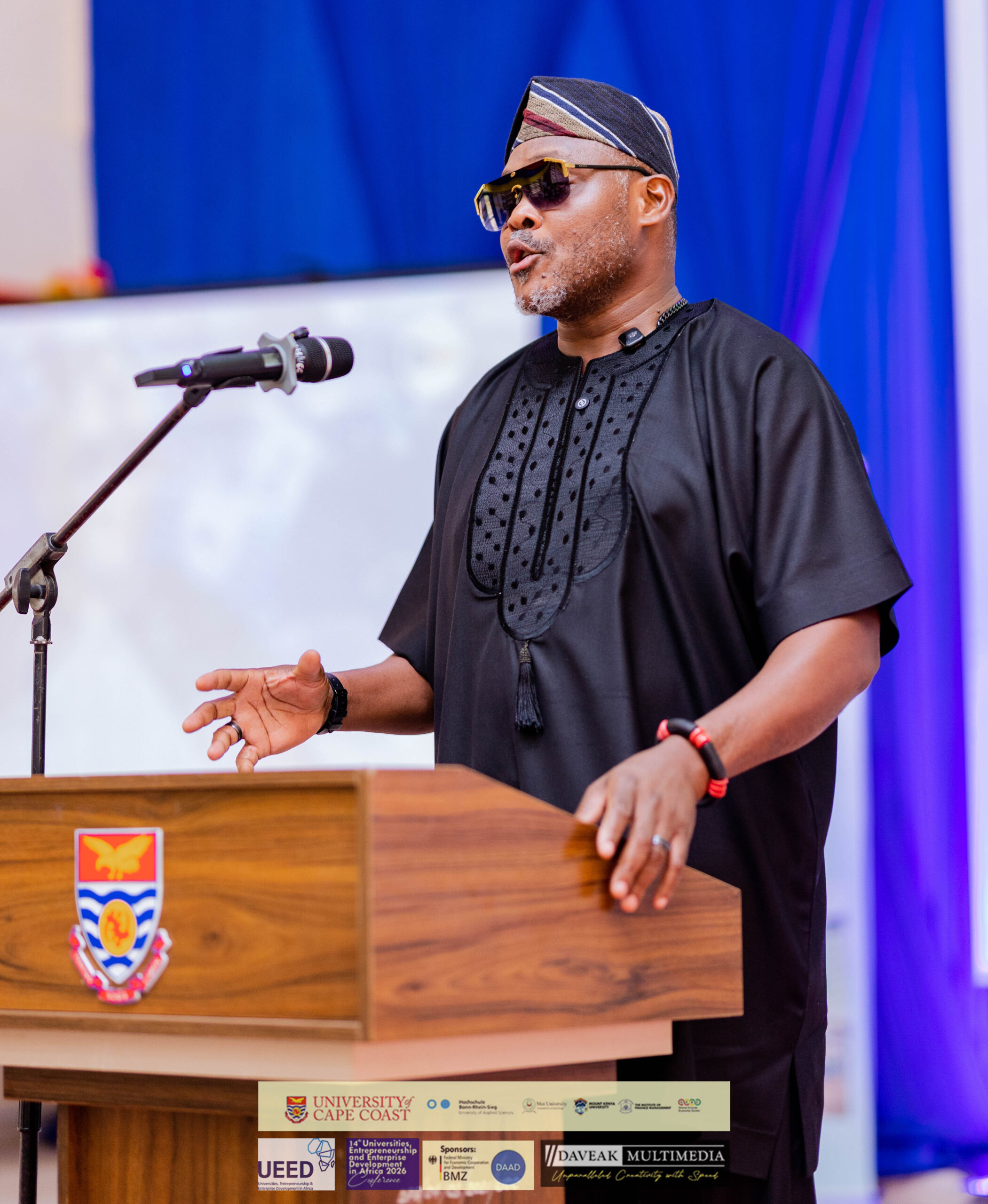
Dr. Kwamena Mintah Nyarku, MP, Cape Coast North
From starting an enterprise to expanding an established business, entrepreneurs need access to appropriate financial support if Africa is to build enterprises capable of creating jobs and driving economic development.
And as artificial intelligence continues to reshape industries, Africa must determine how it wants to participate in that transformation.
AI, he noted, has the potential to transform Africa—but only if the continent identifies its position and develops solutions that respond to its own realities.
The enterprise of the future, he stressed, must therefore be both profitable and sustainable.
Africa’s Future Will Be Built Here
Bringing the opening ceremony to a close, Prof. Dennis Worlanyo Aheto returned to three areas he urged participants to reflect on: resilience, readiness to learn and keeping digital records.
He encouraged entrepreneurs to see digital platforms as foundations for growth rather than obstacles.
More importantly, he challenged Africans to go beyond being consumers of AI.
The continent, he argued, must develop the capacity to build and train AI systems using African data and for African problems.
And his message to the continent’s young people was perhaps the clearest summation of the day’s discussions:
Africa’s future will not be built in Silicon Valley. It will be built by Africans—in both the smaller communities and the bigger cities across the continent.
He called on young people to build communities of partnership with university directorates, student bodies and other institutions that can support their entrepreneurial journey.
The opening ceremony has set the tone for the second day of the 14th UEED Africa Conference, which continues tomorrow, September 16, 2026, at the University of Cape Coast.
As discussions continue, one message from the first day remains clear: Africa does not only need more entrepreneurs. It needs entrepreneurs equipped with skills, supported by strong systems, empowered by technology, and connected to institutions capable of turning ideas into sustainable solutions.
Source: Angelina Riley