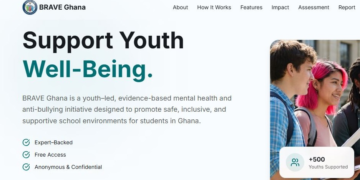












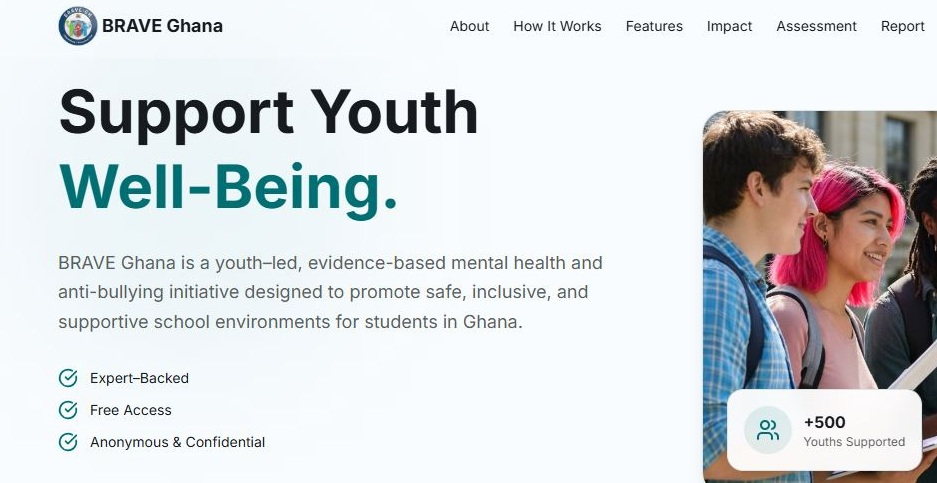
The University of Cape Coast (UCC) has launched an Artificial Intelligence (AI)-powered mobile application, BRAVE Ghana App, to combat bullying and address mental health challenges among young people in Ghanaian schools through confidential reporting, early identification of psychological distress and access to counselling services.
The application, known as the BRAVE Ghana App, has been developed by a team of UCC researchers under the Bullying Reporting and Victim Empowerment in Ghanaian Schools (BRAVE GH) Project and is currently being piloted at the Koforidua Technical Institute and Suhum Technical Institute in the Eastern Region.
Available on the Google Play Store, the application uses artificial intelligence to analyse mental health patterns, provide personalised coping strategies and identify early warning signs of psychological distress among young people experiencing anxiety, depression, stress and other mental health challenges.
It also allows students to report bullying incidents anonymously, monitor how reported cases are being addressed and seek assistance from trained counsellors and mental health professionals without disclosing their identities to other users.
Tackling bullying and psychological distress
The Project Lead, who is also the current Head of the Department of Health, Physical Education and Recreation at the University of Cape Coast, Prof. Jacob Owusu Sarfo, said the initiative was developed in response to the growing concern about bullying in Ghanaian schools and its consequences for students’ mental health, academic performance and general well-being.
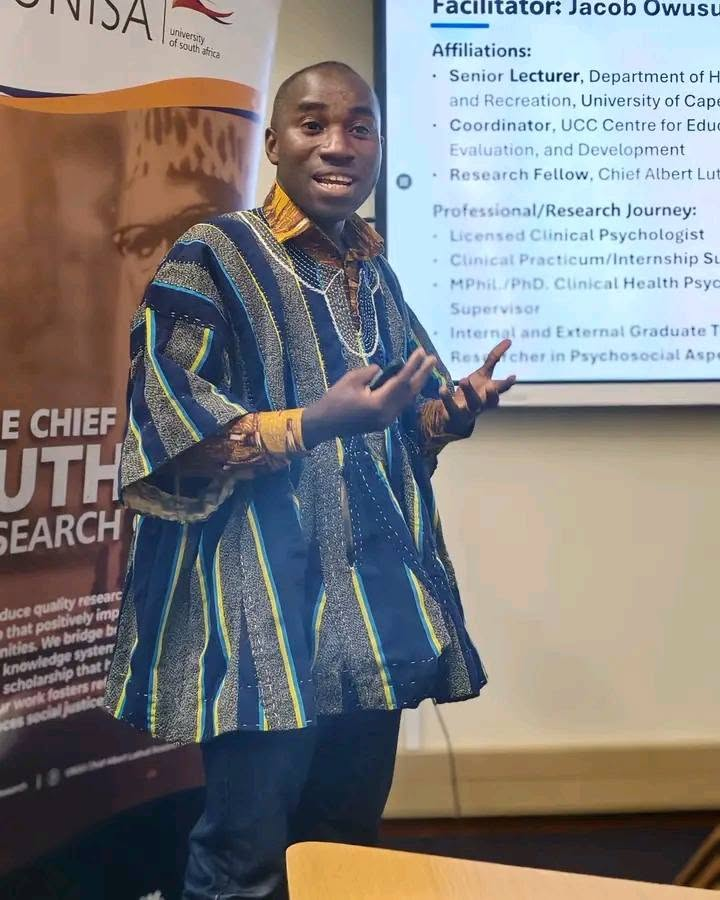
He indicated that research had shown that more than 40 per cent of students aged between 12 and 17 had experienced some form of bullying or cyberbullying, underscoring the need for practical and sustained interventions.
Prof. Sarfo, a licensed clinical psychologist and former Coordinator of UCC’s Centre for Educational Research, Evaluation and Development (CERED), explained that bullying could have far-reaching consequences, including depression, anxiety, low self-esteem, social withdrawal, poor quality of life and school absenteeism.
He observed that fear of victimisation, embarrassment and stigmatisation could discourage young people from reporting bullying incidents or seeking psychological assistance, allowing some cases to remain unreported and unresolved.
According to him, the BRAVE Ghana App was developed to help bridge these gaps by creating a secure and accessible platform through which students could report incidents and receive appropriate support.
He explained that the integration of artificial intelligence would enable the application to provide responsive assistance, particularly to young people who might be uncomfortable discussing their experiences directly with teachers, parents or other adults.
“Beyond students, the platform supports teachers, parents, counsellors, and local communities, helping build a comprehensive and responsive mental health ecosystem,” he said.
How the application works
Prof. Sarfo explained that the BRAVE Ghana App combined confidential bullying reporting with technology-assisted mental health screening and access to counselling support.
One of its distinctive features is an anonymous reporting system that enables students and other users to report bullying incidents while monitoring the progress of their cases.
The feature is intended to encourage victims and witnesses who might otherwise remain silent to report incidents without fear of exposure or stigmatisation.
The platform also incorporates a confidential two-minute mental health assessment designed to screen for symptoms associated with depression, anxiety, stress, suicidal behaviour and bullying.
Based on users’ responses, the application provides feedback, coping resources and guidance on accessing further support.
Its AI-assisted features also analyse mental health patterns and provide personalised suggestions intended to help users manage emotional distress and challenging social situations.
Students requiring additional assistance can be connected to trained peer counsellors and licensed mental health professionals, while those needing specialised attention may be referred to approved mental health facilities.
The application is intended to complement, rather than replace, direct counselling and professional mental health care.
Building safer school communities
Beyond the technological intervention, the BRAVE GH Project incorporates school-based activities aimed at preventing bullying, encouraging positive behaviour and promoting supportive relationships among students.
These include the formation of “Brave Watchdog” school clubs and behaviour modification programmes targeting students involved in bullying.
Through the clubs, students will be encouraged to assume leadership responsibilities as peer mentors, watchdogs and ambassadors of anti-bullying campaigns.
The arrangement is expected to empower students to identify bullying behaviours, support affected colleagues and promote empathy, mutual respect and inclusivity within their schools.
Teachers, school counsellors, heads of institutions, parents and mental health professionals will also be involved in the initiative as patrons, chaperones and facilitators.
They will receive training to recognise early signs of bullying and psychological distress, respond appropriately to reported incidents and facilitate referrals where necessary.
Prof. Sarfo explained that the intervention was grounded in Social and Emotional Learning (SEL) principles, which emphasised self-awareness, empathy, emotional regulation, responsible decision-making and healthy interpersonal relationships.
He said the approach recognised that addressing bullying required more than punishment or awareness creation, and must also involve efforts to improve behaviour, strengthen peer relationships and create supportive school environments.
The integration of digital reporting, peer-led activities and behaviour modification programmes is intended to provide a coordinated response to bullying rather than treating reported incidents in isolation.
Stakeholder involvement
Prof. Sarfo said the initiative had been developed through collaboration with students, teachers, parents, community leaders and relevant educational and mental health organisations.
He explained that the participatory approach was intended to ensure that the intervention responded to the practical needs of students and reflected the social and cultural circumstances of Ghanaian schools.
Among the collaborating institutions are the Eastern Regional Office of the Ghana Technical and Vocational Education and Training (TVET) Service, Koforidua Technical Institute, Suhum Technical Institute, the Centre for Health Research and Policy Innovation, and the Centre for Behaviour and Wellness Advocacy.
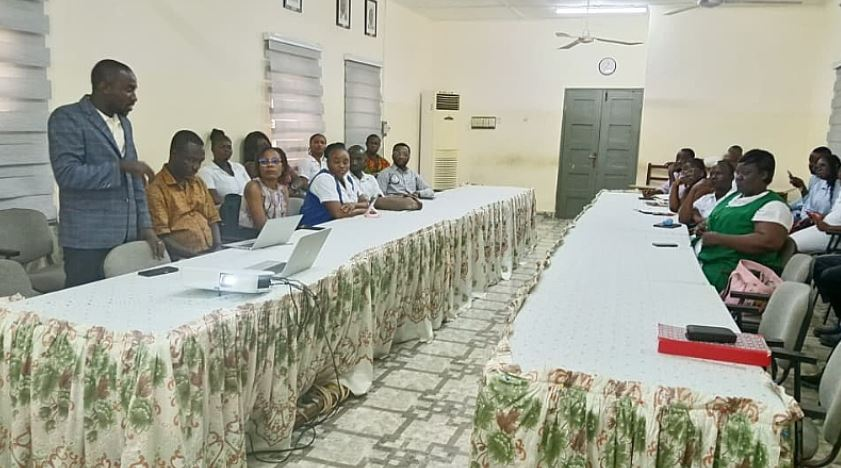
Their involvement is expected to strengthen school-level implementation, stakeholder participation and the provision of appropriate support to students.
As part of the rollout, students are being encouraged to register on the platform, while designated school focal persons will be supported to register as counsellors to facilitate responses to reported cases.
The project’s school-based arrangements are also intended to help teachers and counsellors identify students who may require further psychological support and connect them with appropriate services.
Prospects for nationwide expansion
The BRAVE GH Project is being implemented under the Being Initiative, with support from Grand Challenges Canada.
The initiative provides support for the development, testing and refinement of interventions addressing personal, social and environmental factors affecting the mental health and well-being of young people.
The broader BRAVE GH Project was launched on October 30, 2025, at the Koforidua Technical Institute in the Eastern Region.
The project is hosted by UCC’s Department of Health, Education and Recreation and managed by the Directorate of Research, Innovation and Consultancy.
The pilot implementation at Koforidua and Suhum Technical Institutes provides an opportunity to examine how the digital reporting system, counselling arrangements and school-based interventions operate within existing educational structures.
It could also provide lessons on issues such as students’ access to digital technology, confidentiality, timely responses to reported cases, stakeholder participation and the resources required to sustain the intervention.
These considerations will be important in determining the practicality of extending the initiative to additional schools, particularly in communities where access to smartphones, internet connectivity and professional mental health services may be limited.
The project team hopes that the intervention can eventually be expanded to other regions to strengthen bullying prevention and mental health support in Ghanaian schools. The BRAVE Ghana App is available for download on the Google Play Store and can also be accessed through its official website, www.bravegh.org.
Source: Anthony Sasu Ayisadu/ATLFMNEWS