





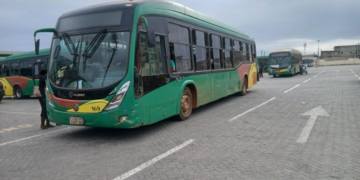







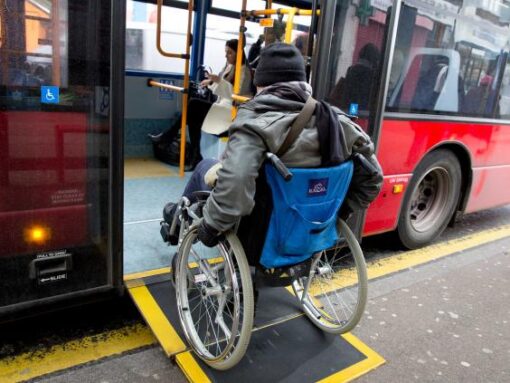
Transport professionals are calling for reforms to make Ghana’s public transport system safer and more accessible to persons with disabilities, children and older people, amid concerns that existing infrastructure does not adequately meet their needs.
The Chartered Institute of Logistics and Transport (CILT) says accessibility must become a central consideration in transport planning if Ghana is to build an inclusive system capable of serving all passengers.
Among the measures being proposed is the introduction of designated and specialized passenger seats for People with Disabilities (PwDs) on public transport.
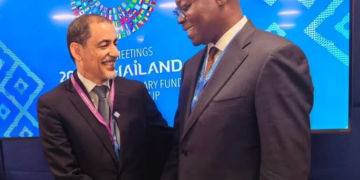
President of CILT, Alhaj Mohamed Saaka Dumba, raised the concerns at the opening of the Institute’s 2026 Conference and Annual General Meeting at Fiapre, near Sunyani.
Public Transport Still Difficult for PwDs
Alhaj Dumba said Ghana’s transport system remained largely unfriendly to persons with disabilities, exposing them to challenges that other commuters may not experience to the same extent.
He cited traffic congestion and the absence of appropriate traffic alarms among factors that could pose difficulties and safety risks to PwDs.
According to him, transport systems should be deliberately designed to account for differences in mobility and accessibility rather than expecting vulnerable passengers to adjust to infrastructure that does not accommodate them.
CILT therefore wants a strategic approach that considers the needs of PwDs alongside children and older persons.
specialized Seats Proposed
One of the practical interventions being advocated is the provision of reserved and specialized seating for persons with disabilities in public transport vehicles.
The Institute believes dedicated seating could make journeys safer and more convenient for passengers who may face mobility challenges.
The proposal also forms part of a broader push for stronger implementation of Ghana’s disability laws within the transport sector.
Read Also: Better Eating Habits Could Protect Against Stroke — Physician
Alhaj Dumba said existing legislation must translate into practical improvements that passengers can experience when using public transport.
Conference Seeks Practical Solutions
The two-day CILT conference is being held under the theme “Transforming Ghana’s Transport Infrastructure for Inclusive and Sustainable Growth.”
The gathering has brought together transport and logistics professionals, industry stakeholders and other experts to examine challenges affecting the movement of people and goods across the country.
Participants are expected to share knowledge and develop practical recommendations for improving transport infrastructure, logistics systems and accessibility.
The Institute says discussions should ultimately result in solutions that can improve service delivery rather than remain at the level of policy proposals.
Rail, Maritime and Air Transport Also Need Attention
Nana Addae Kuntuma IV, Nifahene of the Sunyani Traditional Area, urged stakeholders to broaden the discussion beyond road transport.
He called for greater attention to Ghana’s rail, maritime and aviation sectors as part of efforts to develop a more efficient national transport network.
A diversified transport system, stakeholders argue, could reduce pressure on roads while creating more options for the movement of passengers and goods.
Transport Critical to Economic Growth
Odeneho Dr Afram Brempong III, Paramount Chief of Suma Ahenkro and Member of the Council of State, described transportation as a critical driver of economic activity and national development.
He urged participants to use the conference to develop practical responses to longstanding challenges within the sector.
Sunyani Municipal Chief Executive Vincent Antwan-agyei also called for stronger collaboration between CILT and institutions responsible for transport development.
He said the Bono Region has considerable opportunities in agriculture, tourism and education, but those opportunities would be difficult to fully exploit without safe and reliable transport connections.
CILT maintains that improving accessibility for vulnerable passengers must form part of the wider effort to modernize Ghana’s transport infrastructure and ensure economic development does not leave sections of the population behind.