













The Bank of Ghana (BoG) has ended its pre-financing arrangement for GoldBod’s gold purchases, marking a significant shift in the country’s liquidity management framework and monetary policy operations.
The new policy took effect on July 1, 2026, bringing to an end the central bank’s auction-based financing arrangement that previously supported domestic gold purchases.
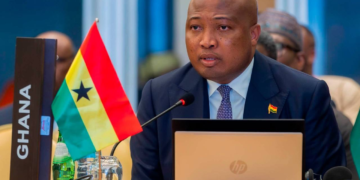
Governor of the Bank of Ghana, Dr. Johnson Pandit Asiama, announced the decision while opening the 131st Monetary Policy Committee (MPC) meeting in Accra.
Liquidity Impact Under Review
Dr. Asiama said the Monetary Policy Committee will assess how the withdrawal of the pre-financing arrangement is affecting liquidity conditions within the banking sector.
According to him, the review will also examine the impact of the policy on monetary policy transmission and broader macroeconomic stability, particularly at a time when private sector credit is expanding strongly.
Inflation and Global Risks
The Governor said the committee’s deliberations are taking place amid renewed uncertainty in the global economy.
He noted that renewed tensions around the Strait of Hormuz have pushed Brent crude oil prices above 85 dollars per barrel, increasing volatility in global energy markets.
Domestically, he said headline inflation has risen from 3.2 per cent in March to 5.3 per cent in June, driven largely by higher transport and haulage costs.
Despite the increase, inflation remains significantly lower than the 13.7 per cent recorded during the same period last year.
Read Also: New Inflation Data Shows High Costs for Businesses
Economy Shows Resilience
Dr. Asiama said Ghana’s economy continues to demonstrate resilience despite global uncertainties.
He noted that the economy expanded by 6.4 per cent in the first quarter of 2026, compared with 6.2 per cent during the same period last year.
He also pointed to strong growth in real private sector credit and a broadly stable exchange rate, although he cautioned that high non-performing loans remain a concern for the banking sector.
Four Key Issues Before the MPC
The Governor said the committee will focus on four major issues during the meeting:
- The outlook for inflation.
- The effectiveness of recent cash reserve ratio reforms.
- The impact of ending GoldBod pre-financing on domestic liquidity.
- The effect of global oil price volatility on Ghana’s economy.
Students Join MPC Proceedings
As part of efforts to improve public understanding of monetary policy, the Bank of Ghana has launched its first Monetary Policy Committee Educational Observership Programme.
Selected students from the University of Ghana are participating in aspects of the MPC meeting to gain practical insight into how monetary policy decisions are made.
According to Dr. Asiama, the initiative is intended to strengthen collaboration between academia and policymakers while promoting greater public appreciation of the Bank’s evidence-based decision-making process.