






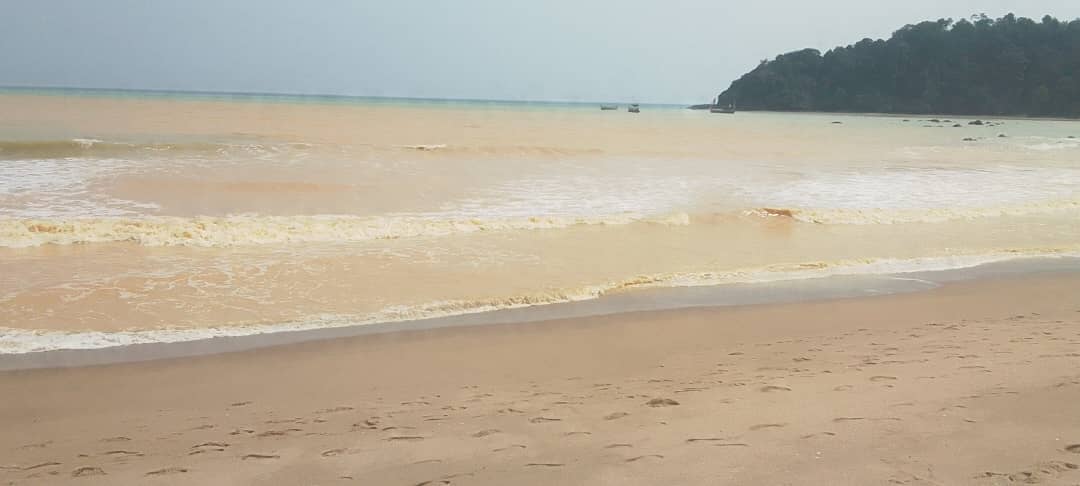
The Chairman of the Marine Protected Areas Technical Advisory Committee (MPA TAC) has sounded the alarm over the growing threat of illegal mining activities to the Cape Three Points Marine Protected Area (MPA), warning that Ghana’s first Marine Protected Area could suffer irreversible environmental damage if immediate action is not taken.
Speaking in a telephone interview with ATL FM News, Dr Arizi, who is also a Fisheries Scientist and Senior Lecturer with the Department of Fisheries and Aquatic Sciences at the University of Cape Coast (UCC), revealed that illegal mining activities in a forest adjoining the protected area are already contaminating parts of the marine ecosystem.
According to him, the committee has received photographs and video evidence showing polluted water from illegal mining sites being channelled through an estuary into sections of the Marine Protected Area.
“I have received photos and videos showing how polluted some sections of the Marine Protected Area have become. The pollution is coming from illegal mining activities in an adjoining forest, with an estuary carrying the contaminated water into the protected area.”
The Government of Ghana officially launched the Cape Three Points Marine Protected Area this year as a landmark conservation initiative aimed at restoring declining fish stocks, protecting marine biodiversity and strengthening the resilience of coastal communities. The protected area is expected to play a significant role in ensuring the long-term sustainability of Ghana’s fisheries sector.
Dr Arizi stressed that although the current level of pollution remains manageable, the window for intervention is rapidly closing.
“For now, the situation is not worse. If the government intervenes immediately, the impact can be managed. However, if nothing is done and the illegal mining continues, within about six months the situation could become disastrous.”
He warned that worsening pollution would degrade water quality and force fish and other marine organisms to migrate from the protected area, defeating the very purpose for which it was established.
“Once the water becomes polluted, organisms, including fish, will be compelled to migrate to other areas. The Marine Protected Area could lose the very biodiversity it was created to protect.”
The fisheries expert disclosed that after receiving evidence of the pollution, the Technical Advisory Committee immediately brought the matter to the attention of the Minister responsible for Fisheries and Aquaculture Development.
According to him, the Minister expressed deep concern and has initiated steps to escalate the issue to the President of Ghana for urgent intervention.
“The Minister was clearly unhappy about the development and has taken steps to ensure the matter is brought to the attention of the President for immediate action,” he said.
Dr Arizi called for stronger law enforcement measures, including increased security and the deployment of wildlife rangers within the adjoining forest, to halt illegal mining activities before the environmental damage becomes irreversible.
He appealed to the government to safeguard the country’s investment in marine conservation by protecting the Cape Three Points Marine Protected Area from the destructive effects of illegal mining.
“Government must stop the illegal miners from operating in the forest. There should be a heavy security presence in the area to prevent these activities. Having worked hard to declare the area a protected zone, Ghana cannot sit aloof while illegal miners destroy years of conservation efforts.”
Environmental experts have consistently warned that pollution from illegal mining, particularly sediment and chemical contamination, poses a serious threat to aquatic ecosystems, fisheries, biodiversity and the livelihoods of coastal communities.
Dr Arizi reiterated that swift government intervention is crucial to preserving the ecological integrity of the Cape Three Points Marine Protected Area and ensuring that future generations continue to benefit from one of Ghana’s most significant marine conservation initiatives.
READ ALSO: Cape Coast Generates Over 166 Tonnes of Solid Waste Daily – Public Health Engineer