














Annual accommodation fee increases in Ghana’s public universities could be limited to between 5% and 10% under a proposal aimed at protecting students and families from exorbitant and unpredictable rent charges.
Minister for Education Haruna Iddrisu has proposed the establishment of a committee to recommend the maximum percentage by which accommodation charges may be increased each year.
The committee would advise Minister for Finance Dr Cassiel Ato Forson before adjustments to university accommodation fees are approved under the Fees and Charges Act.
Mr Iddrisu said the proposed mechanism would introduce greater control, transparency and predictability into the setting of accommodation charges across public tertiary institutions.
The suggested 5%–10% range is, however, not yet an approved cap. It was cited by the Minister as an example of how inflation and prevailing economic conditions could guide annual adjustments.
Committee to Review Annual Increases
Under the proposal, a dedicated committee would examine accommodation costs in public universities and recommend a permissible annual increase.
The recommendation would then be submitted to the Finance Minister for consideration as part of the annual review of public fees and charges.
Mr Iddrisu said such a process would help prevent institutions from imposing disproportionate increases without a clearly defined benchmark.
Read Also: IMF Projects 5.7% Growth and 4.8% Inflation for Ghana
“We do not support exorbitant rent prices being charged across the country,” he said.
“It is my view that we should constitute a committee to advise the Minister of Finance before he proceeds with the Fees and Charges Act on what percentage increase is permissible each year.”
The Minister believes a structured system would provide a fairer balance between the operational needs of universities and the financial circumstances of students and their families.
Inflation Could Guide Rent Adjustments
Mr Iddrisu suggested that the annual rate of inflation could be considered when determining how much university accommodation charges should rise.
He cited a possible adjustment of between 5% and 10% annually, depending on economic conditions.
“We can say, for instance, take inflation as a guide, 5 to 10 percent increase annually,” he stated.
Using inflation as a benchmark could ensure that accommodation fees reflect changes in the broader economy without allowing institutions to introduce sharp increases unrelated to their actual operating costs.
The proposal could also require universities to justify rent adjustments using measurable economic indicators rather than applying arbitrary increases.
Students Could Gain Greater Protection
Accommodation remains one of the largest expenses confronting students in tertiary institutions.
In addition to academic fees, students and their families must meet the costs of food, transportation, learning materials and other living expenses.
Unexpected increases in rent can therefore place significant pressure on household budgets and, in some cases, affect students ability to remain in school.
A defined annual adjustment range could help protect students from sudden increases while giving parents sufficient time to plan for the cost of accommodation.
It could also reduce disputes between students and university authorities over the basis for increases in residential charges.
Universities Could Get a Clear Benchmark
The proposed framework would also provide public universities with clearer guidance on reviewing accommodation charges.
Instead of individual institutions applying different increases without a common standard, the committee’s recommendation could serve as a national benchmark.
Universities would still be able to account for the cost of maintaining halls of residence, utilities, security and other services, but any adjustment would be expected to remain within an approved framework.
The system could therefore improve consistency in how accommodation fees are reviewed across Ghana’s public universities.
Proposal Targets Exorbitant Charges
The Education Minister said the government does not support accommodation fees that become excessively burdensome for students.
His proposal follows growing concerns about the rising cost of accommodation within and around tertiary institutions.
Demand for limited residential space has contributed to increasing charges in several university communities, leaving some students struggling to secure affordable accommodation.
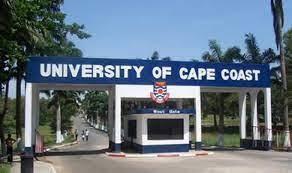
The proposed committee would focus specifically on public universities, where accommodation charges approved under the Fees and Charges Act fall within the government’s regulatory framework.
It has not yet been clarified whether any eventual limits would extend to privately operated hostels outside university campuses.
Details Yet to Be Finalized
The government has not announced when the proposed committee will be constituted or who will serve on it.
It is also unclear when its recommendations could begin influencing university accommodation charges.
The committee would be expected to consider factors such as inflation, maintenance costs, utility expenses, affordability and the financial requirements of public universities.
Any recommended cap would also have to pass through the appropriate approval process before becoming binding.
For now, the 5%–10% adjustment remains a proposal rather than an officially adopted annual limit.
Predictability Could Help Families Plan
A transparent annual benchmark could make university accommodation costs more predictable.
Parents and students would have a clearer indication of the possible increase before the start of an academic year, allowing them to budget more effectively.
Predictability could also help reduce anxiety among continuing students who may otherwise face significant increases when renewing their accommodation.
The proposed system is intended to ensure that rent adjustments remain reasonable, economically justified and sensitive to the financial pressures confronting students.
If adopted, the measure could represent an important step towards regulating accommodation costs and improving affordability within Ghana’s public tertiary education system.