











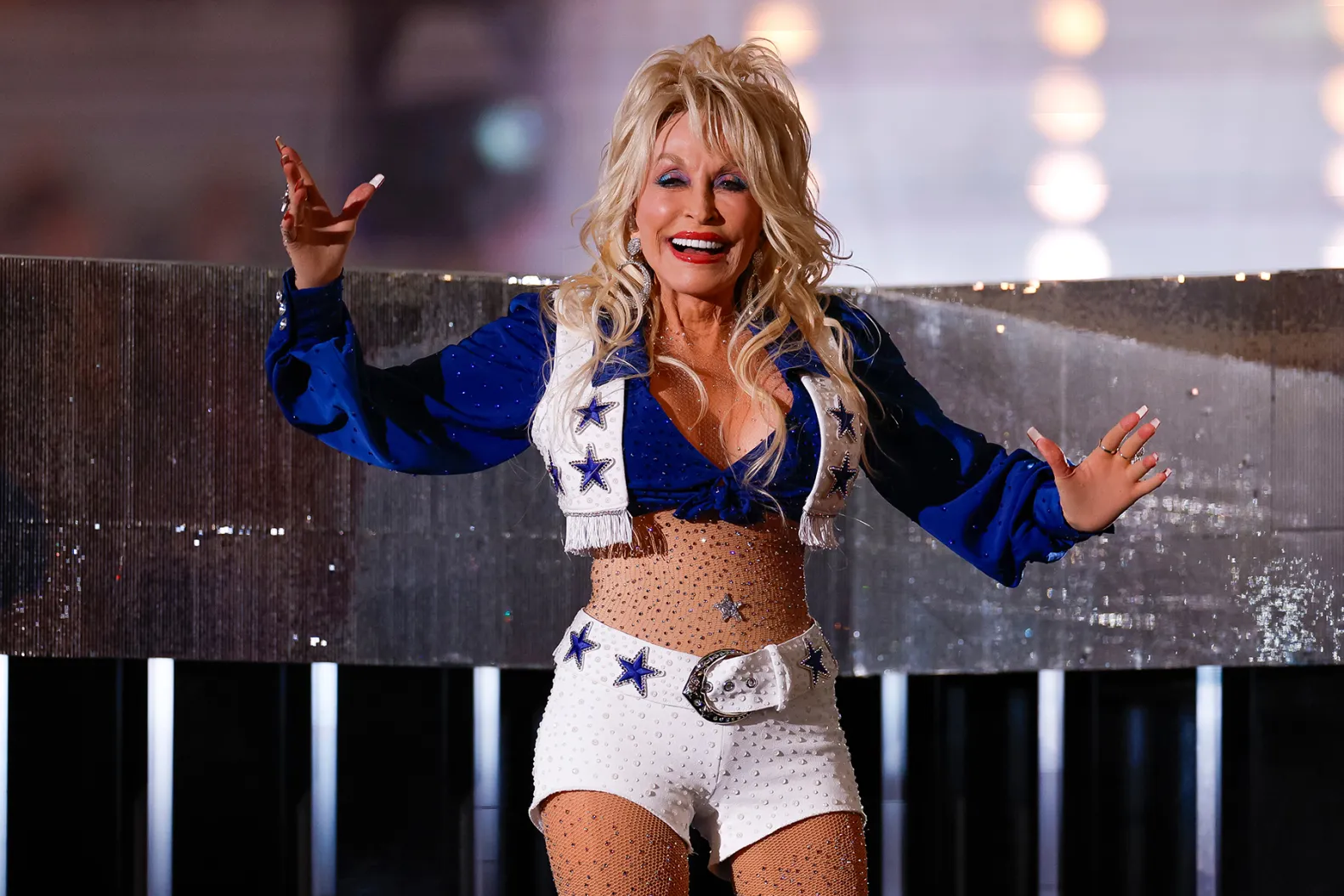
Dolly Parton, the Tennessee-born singer, songwriter, actress, entrepreneur and philanthropist whose rhinestone image became synonymous with American popular culture, has died at the age of 80 after battling cancer.
Parton died in Nashville on Tuesday, August 25, after what her publicist described as a brief battle with cancer. She died at Vanderbilt-Ingram Cancer Center surrounded by loved ones, bringing to an end a career that stretched across more than six decades.
But Parton’s story was never simply about music.
It was a story of a poor girl from the mountains of Tennessee who transformed hardship into songwriting, songwriting into an extraordinary entertainment career, and success into one of the most recognizable philanthropic legacies in modern popular culture.
Her life was, in many ways, a journey from poverty to stardom—and from stardom to service.
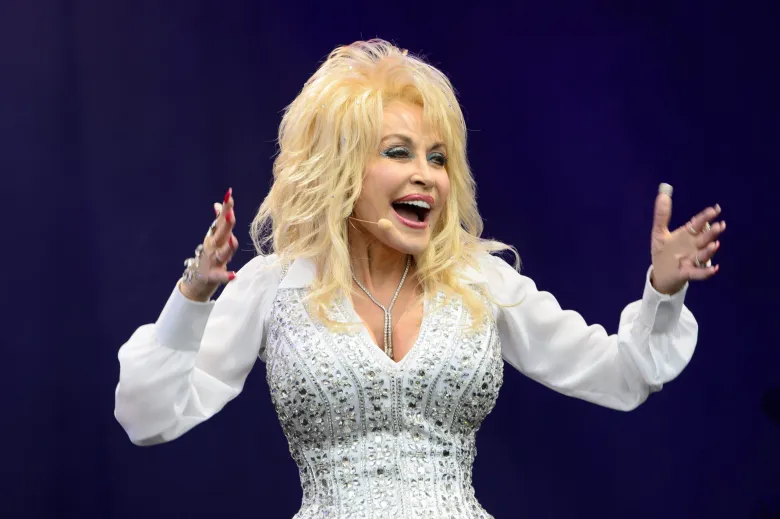
Born on January 19, 1946, in Locust Ridge, Tennessee, Parton grew up in a large family in circumstances of severe poverty. The Country Music Hall of Fame records her birthplace and describes her subsequent rise from a difficult beginning to international recognition as a singer, songwriter, actress, businesswoman and philanthropist.
Music became an important part of her childhood.
Long before the international awards, Hollywood appearances and business ventures, Parton was a young girl developing her songwriting and performing abilities in East Tennessee.
Her early experiences would eventually become some of the most important material in her songwriting.
Songs such as “Coat of Many Colors” drew heavily on the realities of her upbringing, transforming personal experiences of poverty and family into music that resonated with audiences far beyond Tennessee.
By the time she was a teenager, Parton was already performing professionally. Her career accelerated in the 1960s, and she gained national exposure through The Porter Wagoner Show after joining Porter Wagoner’s television program.
Her partnership with Wagoner became an important launching point, but Parton eventually established herself as a major solo performer.
Her songwriting would become one of her greatest strengths.Parton’s catalogue eventually produced some of the most enduring songs in popular music.
“Jolene,” “9 to 5,” “Coat of Many Colors” and “I Will Always Love You” became defining works in her career, with “I Will Always Love You” later reaching an entirely new generation through Whitney Houston’s globally successful version.
Parton’s songwriting allowed her to cross boundaries between country, pop and mainstream entertainment.
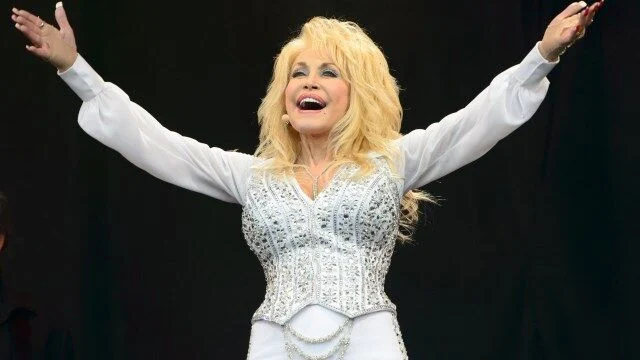
Her success was not confined to recording studios.
She became an actress, appearing in films including 9 to 5 and Steel Magnolias, while also developing television projects and business ventures. Her music for 9 to 5 earned an Academy Award nomination for Best Original Song, further demonstrating her ability to move between music and film.
She also became an entrepreneur, with Dollywood, the Tennessee theme park associated with her name, becoming a major attraction and an important part of the economy and tourism industry in her home region.
Yet even as her business empire expanded, Parton maintained a strong connection to the Appalachian community from which she came.
Dolly Parton’s achievements eventually placed her among the most decorated figures in American music.
The Country Music Hall of Fame notes that she was inducted into the Country Music Hall of Fame in 1999, after earlier entering the Nashville Songwriters Hall of Fame in 1986. She was subsequently inducted into the Songwriters Hall of Fame in 2001.
Her honours continued to accumulate.
She received the Library of Congress Living Legend Award in 2004 and the National Medal of Arts in 2005, America’s highest honour for artists. In 2006, she received the Kennedy Center Honors.
The Recording Academy recognized her with a Lifetime Achievement Award in 2011.
And in 2022, she was inducted into the Rock & Roll Hall of Fame, adding another major distinction to a career that had already crossed numerous musical boundaries.
By the later years of her career, Parton had accumulated 10 Grammy wins and more than 50 nominations, according to ABC News, while her music had generated more than 100 million worldwide sales.
Her influence was also recognized beyond music.
In 2024, Billboard named Parton No. 1 on its list of the 100 Greatest Country Artists of All Time, according to ABC News.
But perhaps the most important part of her legacy cannot be measured by trophies.
It can be measured in books.
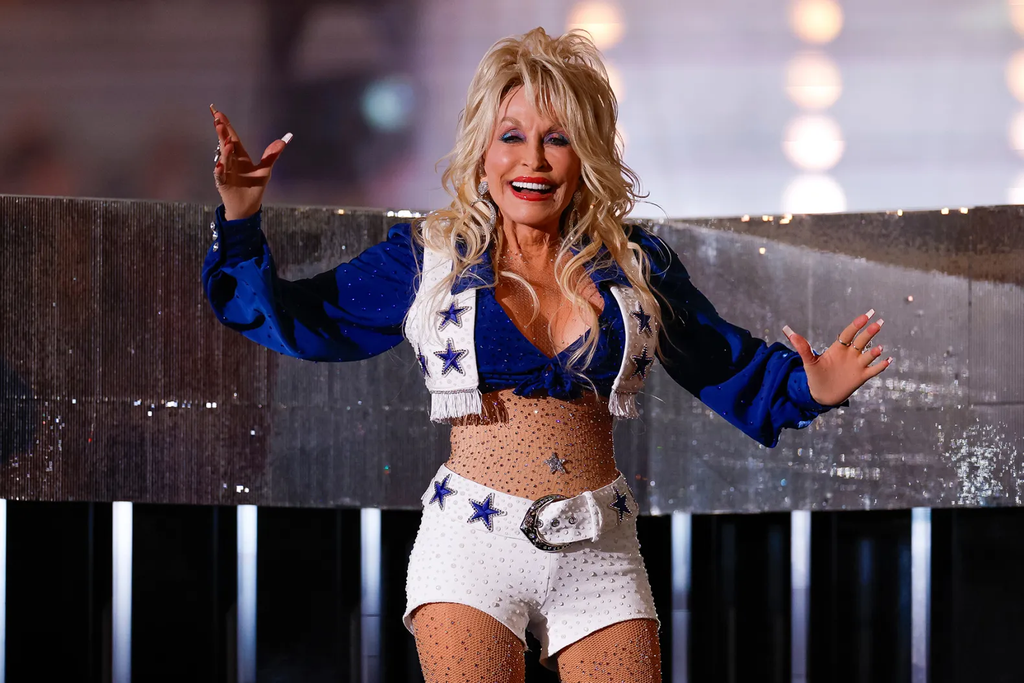
Image Credit: Brandon Sloter, Credit: Getty Images, Creator: Brandon Sloter
Dolly Parton’s philanthropy was deeply connected to her childhood.
Her father, Robert Lee Parton Sr., could not read or write. Parton later described him as one of the smartest people she knew, and his experience became an inspiration for one of her most ambitious charitable initiatives.
In 1988, she established the Dollywood Foundation, initially focusing on education and efforts to improve high-school graduation rates in her home county of Sevier County, Tennessee.
One early initiative, known as the Buddy Program, offered $500 to students who successfully completed high school. According to the Dollywood Foundation, the programme helped reduce the dropout rate among participating seventh- and eighth-grade students from 35% to 6%.
Then came the programme that would become perhaps her most enduring humanitarian achievement.
The Imagination Library
In 1995, Parton launched Dolly Parton’s Imagination Library in Sevier County.
The concept was straightforward but powerful: provide young children with free, high-quality books.
The programme was inspired by her father’s inability to read and Parton’s belief that access to books could help children dream beyond their immediate circumstances.
What began as a local Tennessee initiative became an international literacy programme.
The Imagination Library expanded across the United States and later into Canada, the United Kingdom, Australia and the Republic of Ireland.
By the end of 2025, the programme had gifted more than 304 million books since its creation, according to its official year-in-review data. In 2025 alone, more than 40 million books were distributed.
That achievement transformed Parton’s public identity.
She was no longer simply the entertainer in glittering costumes.
To millions of children and families, she became “The Book Lady.”
The Imagination Library itself received numerous honours, including recognition from the Library of Congress Literacy Awards and the Carnegie Medal of Philanthropy in 2022.
Parton’s philanthropy also extended beyond education.
When devastating wildfires struck Sevier County in 2016, the Dollywood Foundation established the My People Fund to support families who had lost their homes.
More than $12 million was ultimately raised and distributed to affected families, according to the foundation. Additional assistance included scholarships for students whose homes had been destroyed.
Her charitable work later extended to other disaster-relief efforts and medical causes.
In 2020, Parton donated $1 million to Vanderbilt University, supporting research that contributed to the development of the Moderna COVID-19 vaccine. Her name was subsequently associated with one of the most significant scientific efforts of the pandemic.
She also supported children’s healthcare and other community initiatives throughout her life.
For Parton, philanthropy was rarely presented as a grand ideological project.
It was often practical.
A book for a child.
Money for a family that had lost its home.
Support for education.
Funding for medical research.
An opportunity for someone who needed one.
Parton’s final years were marked by both professional ambition and personal loss.
Her husband, Carl Dean, whom she married in 1966, died in March 2025 after nearly six decades of marriage.
Despite the loss, Parton continued to remain connected to music and entertainment.
Her 2023 album Rockstar demonstrated that she was still willing to experiment beyond the country genre that had made her famous. She was also developing a Broadway musical based on her life and music.
Even near the end, her creative work continued.
But on August 25, 2026, the journey came to an end.
Parton was 80.
Her publicist said she had been battling cancer for a brief period before her death and that she died at Vanderbilt-Ingram Cancer Center surrounded by loved ones.
News of her death triggered tributes from musicians, actors, political figures and fans around the world.
The reaction reflected the unusual breadth of her influence.
She belonged to country music, but her audience extended far beyond country music.
She was a Hollywood actress, but her influence extended beyond Hollywood.
She was a businesswoman, but her most enduring business may have been the infrastructure she created to give children access to books.
And she was a celebrity whose greatest legacy may ultimately have little to do with celebrity.
Dolly Parton’s life tells an unusual American success story.
She came from poverty but refused to allow poverty to define her.
She became wealthy but remained connected to the community that raised her.
She became famous but repeatedly used that fame to draw attention to causes larger than herself.
And she built a philanthropic institution that will continue sending books to children long after the applause surrounding her career has faded.
The numbers are extraordinary: hundreds of millions of books, major contributions to education and disaster relief, support for medical research, and decades of cultural influence.
But perhaps the simplest way to understand her legacy is to return to the little girl from Tennessee.
She knew what it meant to grow up without much.
She understood what education could mean.
She understood the power of a song.
And she understood the difference a helping hand could make.
Dolly Parton spent more than six decades turning those lessons into music, entertainment, business and philanthropy.
Now that her voice has fallen silent, the books will continue to arrive.
The songs will continue to be recorded.
The stories will continue to be told.
And generations of children who may never have heard her sing will nevertheless grow up touched by something she created.
That may be Dolly Parton’s most enduring achievement: she didn’t simply build a career. She built a legacy designed to outlive her.
Dolly Parton was 80.
And the world she leaves behind is, in countless ways, a little more literate, a little more hopeful—and considerably more musical.