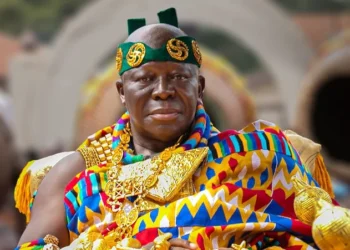
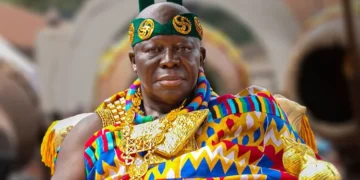











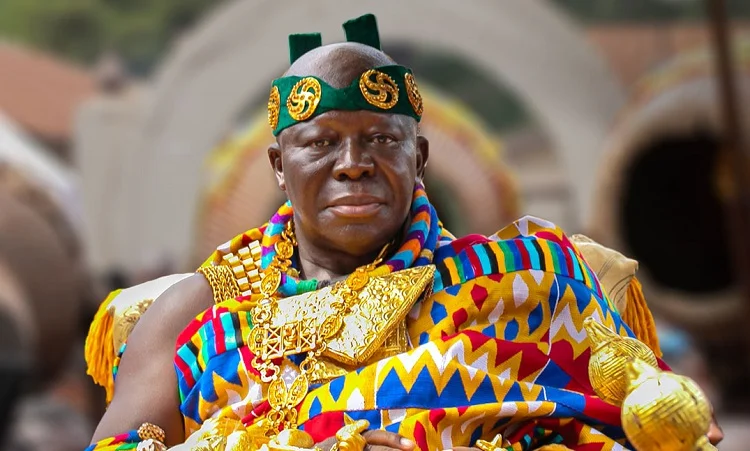
Africa’s mineral wealth must be used to build globally competitive African-owned companies and create a stronger generation of indigenous business leaders, Asantehene Otumfuo Osei Tutu II has said.
The Asantehene argues that the continent must move beyond being primarily a source of raw minerals and develop local companies capable of competing with established international mining corporations.
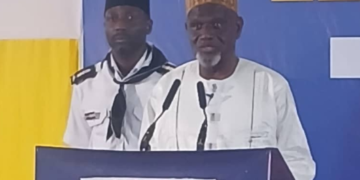
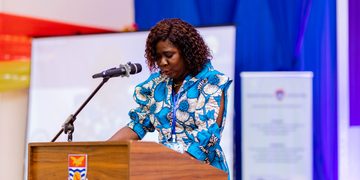
His address was delivered on his behalf by the Essumejahene, Nana Okyere Kusi Ntrama, at the Mining in Motion Conference.
According to the Asantehene, greater African ownership of mining companies would help retain more profits, expertise and economic opportunities on the continent while ensuring that mineral resources generate lasting benefits for producing countries.
Africa Must Build Its Own Mining Giants
The Asantehene called for the deliberate development of major African-owned mining businesses with the financial strength, technical capacity and professional management required to operate on a global scale.
He said Africa should be able to produce entrepreneurs and mining companies comparable to some of the world’s most influential business figures and corporations.
“The Oppenheimers, the De Beers, the Patrice Motsepes, the Ibrahim Mahama’s, should be created in Africa. So we keep the value here in Africa,” he said.
The Asantehene maintained that Africa’s natural resources should not only enrich foreign companies and economies but must also create successful businesses and wealthy entrepreneurs on the continent.
Building such companies, he argued, would help retain mineral profits in Africa and create wider economic opportunities within mining-dependent countries.
Mining Must Produce More Than Raw Materials
The Asantehene said mineral extraction must be connected to broader industrial and economic development.
Rather than exporting raw minerals with limited local processing, African countries should strengthen their capacity in refining, manufacturing, technology and mining-related services.
Greater local value addition could create employment in areas such as engineering, logistics, equipment maintenance, mineral processing, environmental management and professional services.
It could also help African countries capture a larger share of the value created after minerals leave the mine.
The Asantehene’s position is that mineral-producing countries should participate across more stages of the value chain instead of receiving benefits mainly through royalties, taxes and a limited number of direct mining jobs.
Local Companies Need Capital and Technology
Creating globally competitive African mining businesses would require significant investment in finance, expertise and modern technology.
Mining projects often demand substantial capital before production begins, placing many local entrepreneurs at a disadvantage compared with established multinational companies.
African-owned firms would therefore require stronger access to long-term financing, technical partnerships and professional management support.
Governments and financial institutions may also need to develop policies that allow capable local companies to participate meaningfully without lowering operational, safety or environmental standards.
The Asantehene stressed that the goal should not simply be to replace foreign ownership with local ownership but to build African businesses that are efficient, properly managed and internationally competitive.
National Consensus Needed on Mineral Policy
Otumfuo Osei Tutu II also called for broad national agreement on Ghana’s mineral policy.
He urged political leaders and stakeholders to keep the country’s long-term mining strategy above partisan politics.
According to him, efforts to strengthen local ownership and increase value addition require policy consistency across successive governments.
Frequent changes in direction could discourage investment and make it difficult for local businesses to plan, raise capital and develop the capacity needed to compete in the sector.
A national consensus would help ensure that reforms survive changes in government and remain focused on Ghana’s long-term economic interests.
Reforms Could Face Resistance
The Asantehene warned that changes to the existing mining structure could face resistance from interests that benefit from the current system.
Companies, individuals and institutions that have gained from the export of raw minerals or limited local participation may oppose reforms that seek to redistribute more value to producing countries.
There may also be pressure from international players seeking access to Africa’s critical minerals for technology, renewable energy and other emerging industries.
As demand for these resources rises, African countries will need strong institutions and clear negotiating strategies to avoid agreements that prioritize extraction while providing limited long-term development benefits.
The Asantehene called for determination in pursuing reforms while maintaining open and commercially sound engagement with investors.
Communities Must Feel the Benefits
The Asantehene stressed that local ownership and increased mineral revenue must produce tangible improvements in the lives of citizens.
Mining communities should benefit through jobs, skills development, infrastructure, business opportunities and environmental protection.
He said retaining mineral wealth would have limited meaning if the gains remained concentrated among a small number of businesses or individuals.
A stronger African mining sector must therefore support communities affected by mining operations and contribute to wider national development.
The benefits should extend to young professionals, local suppliers, small businesses and households in areas where mineral extraction takes place.
Skills Development Must Support Local Ownership
Building major African-owned companies will also require investment in human capital.
Mining operations depend on expertise in geology, engineering, finance, technology, environmental science, law and corporate management.
Read Also: Ghana Pushes Mining Deals That Create Jobs and Local Value
African countries must therefore strengthen education and professional training to produce workers and executives capable of managing complex mining businesses.
Local companies will be better positioned to compete when they can draw on a strong pool of professionals with technical and commercial experience.
The Asantehene’s proposal consequently places skills development alongside capital and technology as essential pillars of African ownership.
Efficiency and Safety Must Not Be Sacrificed
While advocating greater local participation, Otumfuo Osei Tutu II cautioned that reforms should not weaken efficiency, production, management or safety standards.
African-owned mining companies must be able to operate responsibly, meet their financial obligations and protect workers and surrounding communities.
The desire to retain mineral wealth must therefore be accompanied by strong corporate governance, professional leadership and effective regulation.
Companies should also comply with environmental requirements and rehabilitate areas affected by their operations.
The Asantehene maintained that local ownership and commercial excellence could be pursued together.
Foreign Investment Still Has a Role
The call for African mining giants does not necessarily exclude foreign investors from the continent’s mining industry.
International companies can continue to provide capital, technology and expertise needed to develop large mineral deposits.
However, their participation should create stronger partnerships with African businesses and institutions while promoting skills transfer and local value creation.
Joint ventures, local procurement and technology partnerships could help domestic companies gain the experience required to grow into major industry players.
The objective is to ensure that foreign investment contributes to stronger African businesses rather than leaving producing countries permanently dependent on external companies.
Mining Wealth Must Drive Transformation
The Asantehene called for a broader industry consensus capable of addressing the shortcomings of Africa’s existing mining model.
Governments, mining companies, investors, traditional leaders, communities and local businesses must work together to create a system that combines commercial success with national development.
For Ghana and other mineral-producing countries, the measure of success will not only be the volume of minerals extracted or exported.
It will also be the number of sustainable jobs created, the growth of indigenous businesses, the skills transferred to local professionals and the share of mineral value retained within African economies.
The Asantehene maintained that Africa has the resources and human potential to create its own mining giants.
What remains is the development of the policies, financing structures and long-term national commitment required to transform that potential into globally competitive African companies.