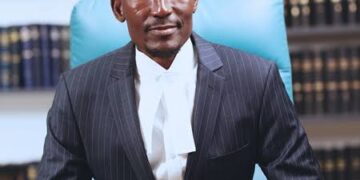









Former Chief Justice Gertrude Torkornoo has filed an application at the High Court challenging her removal from office by President John Dramani Mahama.
She is seeking to overturn her dismissal both as Chief Justice and as a Justice of the Supreme Court, describing the move as unconstitutional.
At the heart of her argument is the claim that President Mahama used a single process to remove her from two distinct judicial offices. According to Mrs. Torkornoo, while Article 146(6) of the 1992 Constitution permits the removal of a Chief Justice, it does not extend automatically to her role as a Justice of the Supreme Court, which she says requires a separate procedure under Article 146(4).
Her legal team further contends that the petitions submitted earlier this year by businessman Daniel Ofori, the group Shining Stars of Ghana, and lawyer Ayamga Yakubu Akolgo, specifically targeted her conduct as Chief Justice, not as a judge of the Supreme Court. They argue that the five-member committee chaired by Justice Gabriel Scott Pwamang was therefore limited in scope to investigating her suitability to continue serving as Chief Justice.
The petitions accused her of misconduct, including misuse of public funds, interference in judicial proceedings, abuse of power in administrative transfers, and unethical behavior. After a prima facie determination by the President, the committee was set up under Article 146(6) and eventually recommended her removal. She was formally dismissed on September 1, 2025.
However, Mrs. Torkornoo maintains that extending that decision to strip her of both positions constitutes “an unconstitutional overreach that undermines judicial independence.” Her application, filed under Articles 23 and 141 of the Constitution and Order 55 of C.I. 47, seeks to nullify the presidential warrant of removal.
“The cost was really on a very personal level,” Mrs. Torkornoo lamented. “Attacks on my family, concerns about the safety of my children and my wider family… there were a lot of lies, and so the whole fabric of the family was affected. Ultimately, we need to do better as leaders and as institutions.”
Meanwhile, the National Democratic Congress (NDC) has defended the President’s action. Director of Legal Affairs, Godwin Edudzi Tamakloe, explained that President Mahama acted within the framework of Article 146.
“President Mahama has acted according to the 1992 Constitution, specifically Article 146,” Mr. Tamakloe stated. “The framers of the Constitution anticipated potential confusion in such matters, which is why the Chief Justice’s removal process is elevated and requires consultation with the Council of State.”
Former Deputy Attorney-General Alfred Tuah-Yeboah, speaking on Joy News, described the case as raising a delicate constitutional question.
“I’ve held the view that the Chief Justice can be removed from office and still maintain his or her position as a Supreme Court judge,” he said. “The petitions against Justice Torkornoo targeted her conduct as Chief Justice, not her judicial role. If this matter requires constitutional interpretation, it must ultimately be settled by the Supreme Court.”
The case is expected to test the boundaries of Article 146 and could set a precedent for how future removals of the Chief Justice are handled in Ghana.