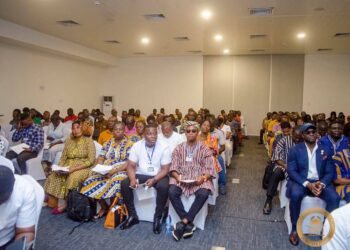
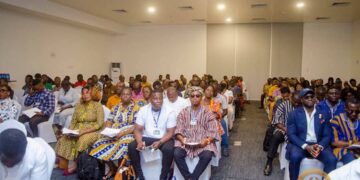



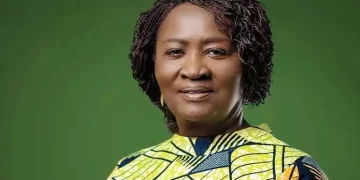


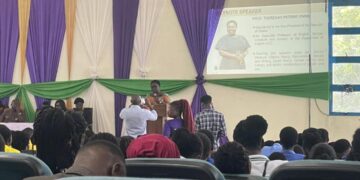







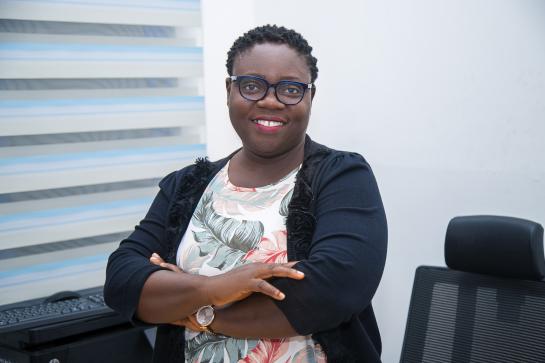
Special Aide to Ghana’s Vice-President, Theresah Patrine Ennin, has called on universities to implement deliberate institutional measures to support the advancement of women in academia.
Delivering a keynote address at the 2026 International Women’s Day celebration organised by the Centre for Gender Research, Advocacy and Documentation (CEGRAD) at the University of Cape Coast, Prof. Ennin emphasized the need for universities to create stronger systems that promote women’s professional growth and leadership development.
Speaking on the theme “From Recognition to Responsibility: Advancing Women’s Rights and Justice through Institutional Action,” she highlighted several structural challenges women face within the university environment and stressed the need for institutions to address barriers that hinder their career progression.
Prof. Ennin identified limited mentorship opportunities as a key challenge affecting female academics and urged CEGRAD to incorporate writing boot camps into its mentorship programmes to support women in research and publication.
“Promotion criteria remain the same for both men and women, so we must intentionally create time and opportunities that help women produce the research output required for career advancement,” she said.
She suggested that Heads of Department, provosts and deans collaborate with CEGRAD to organise periodic writing retreats where female lecturers can dedicate time to research and academic writing.
“If lecturers are given a few days away from their routine responsibilities to focus solely on writing, many will return with completed papers or drafts that can contribute to their promotion,” she explained.
Prof. Ennin also called for more flexible timetabling arrangements for young female lecturers who are mothers, noting that balancing academic responsibilities with family duties often affects their professional development.
“We must recognise that many women in academia are managing several roles at the same time teaching, research, family responsibilities and departmental duties. Flexible timetabling can help them manage these demands more effectively,” she noted.
She further urged Heads of Department to be mindful of the multiple responsibilities female staff carry when assigning workloads and administrative duties.
“It is not that women are not working hard. Many are juggling numerous roles, including caring for their families while fulfilling academic and administrative responsibilities,” she added.
Prof. Ennin also encouraged university management to consider the unique circumstances of female academics when implementing policies related to workload management and maternity leave.
She stressed that creating supportive institutional frameworks for women would ultimately strengthen universities and promote inclusive academic leadership.
Read Also: Economist Urges Minority to Back ‘Artificial Inflation’ Claims with Data
Source: Angelina Riley Hayford/ATLFMNEWS