

















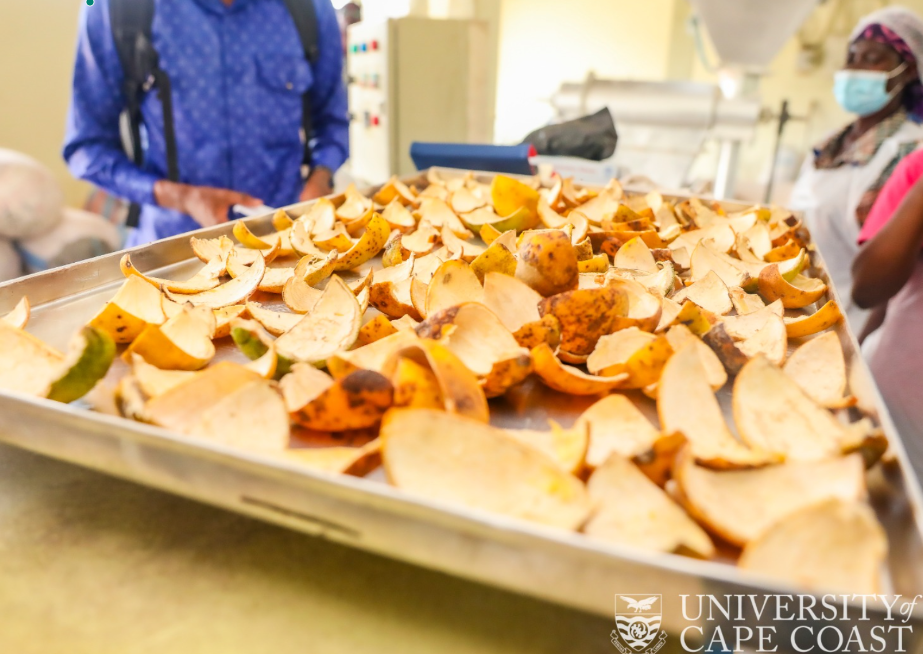
The School of Sustainable Engineering at the University of Cape Coast (UCC) has unveiled a new clean-energy drying technology designed to improve the quality, efficiency, and export potential of cassava and fruit processing in Ghana.
The innovation, known as the desiccant solar dryer, which is situated at Tropical Starch Company Limited, Abura Dunkwa was showcased during a one-day stakeholder engagement on “Clean Energy for Agro-Processing: Cassava Industrialization and Fruit Drying Business.”
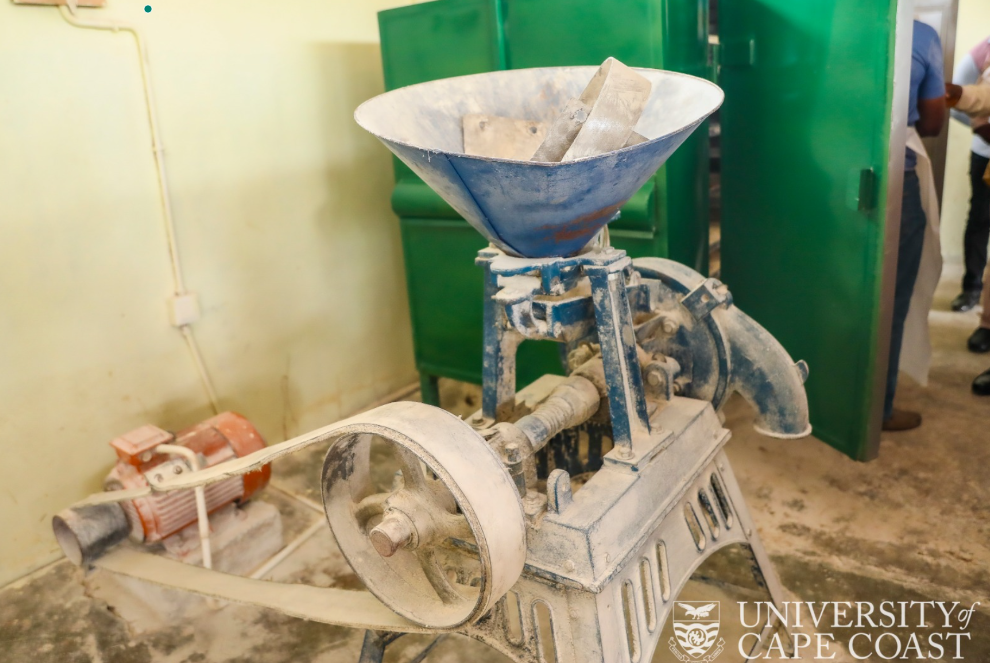

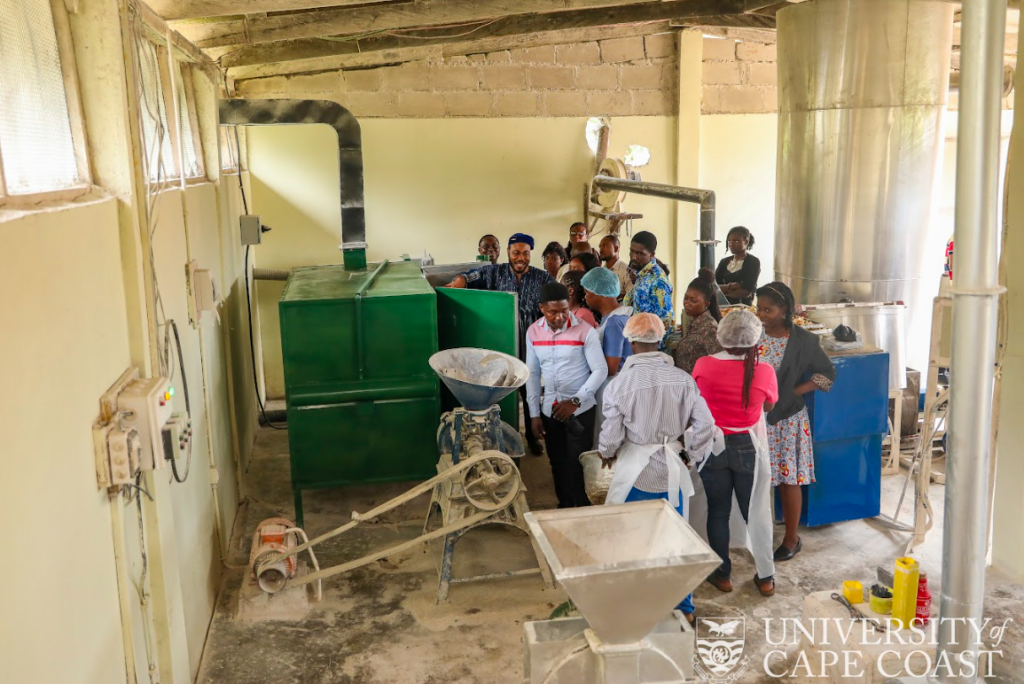
The programme, organized by the School of Sustainable Engineering, brought together key industry regulators and partners, including the Food and Drugs Authority (FDA), People from academia, Ghana Standards Authority (GSA), among others, to witness a live demonstration of the new system at Tropical Starch Company LTD, Abura Dunkwa.
The engagement sought to deepen collaboration between academia and industry while promoting sustainable technologies that could enhance agricultural productivity and product quality in the country.
Speaking to ATL FM at the sidelines of the event, academic lead of the project, Professor Ingineer Sarpong Amoah explained that the project is funded by the United Kingdom Research and Innovation (UKRI) under the Africa Agriculture Knowledge Transfer Project, which aims to introduce cutting-edge academic innovations to industry.
According to him, the initiative specifically targets improvements in the drying of cassava starch, which remains one of the major bottlenecks for processors in the Central Region and beyond.
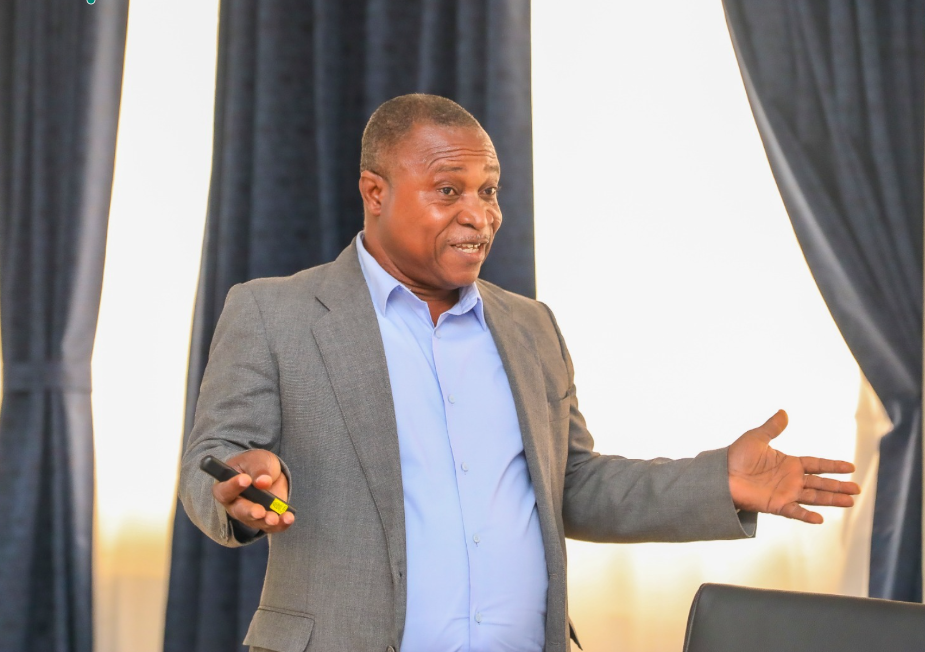
Prof. Amoah noted that many agro-processors continue to rely on traditional dryers that operate on fossil fuels, a practice that not only consumes high levels of energy but also contaminates the final product.
“These older systems often leave carbon residue and other extraneous materials in the starch,” he stated, adding that the resulting impurities have led to frequent rejection of products on the international market.
To address this challenge, the research team studied the drying processes of Tropical Starch, a major cassava starch producer in the Central Region, and identified gaps in temperature control, humidity regulation, and air quality.
“Our intervention is the development of a modular dryer that allows precise control of temperature and relative humidity, while using clean air to ensure a contaminant-free product,” Prof. Amoah explained.
He said this improvement ensures that the final cassava starch meets the requirements of international buyers and is now suitable for export.
Demonstrating the new technology, the team showed clear differences between starches dried using traditional systems and that produced by the desiccant solar dryer. While the former appeared brownish, the latter was noticeably whiter, indicating better quality.
“Once you analyze nutrient content and other parameters, the advantages of this new system become even more obvious,” Prof. Amoah added.
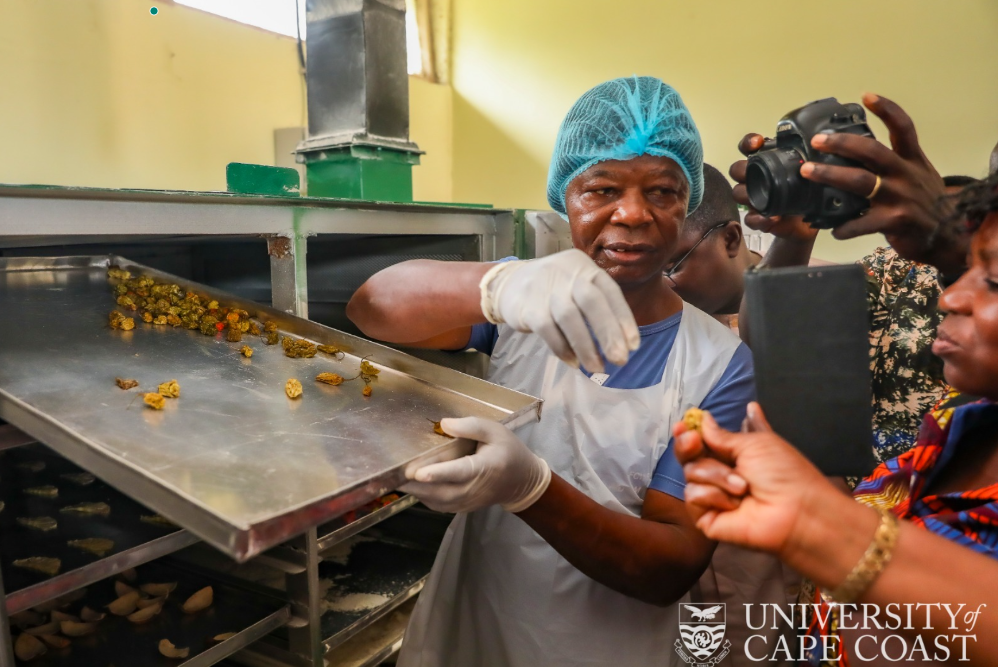
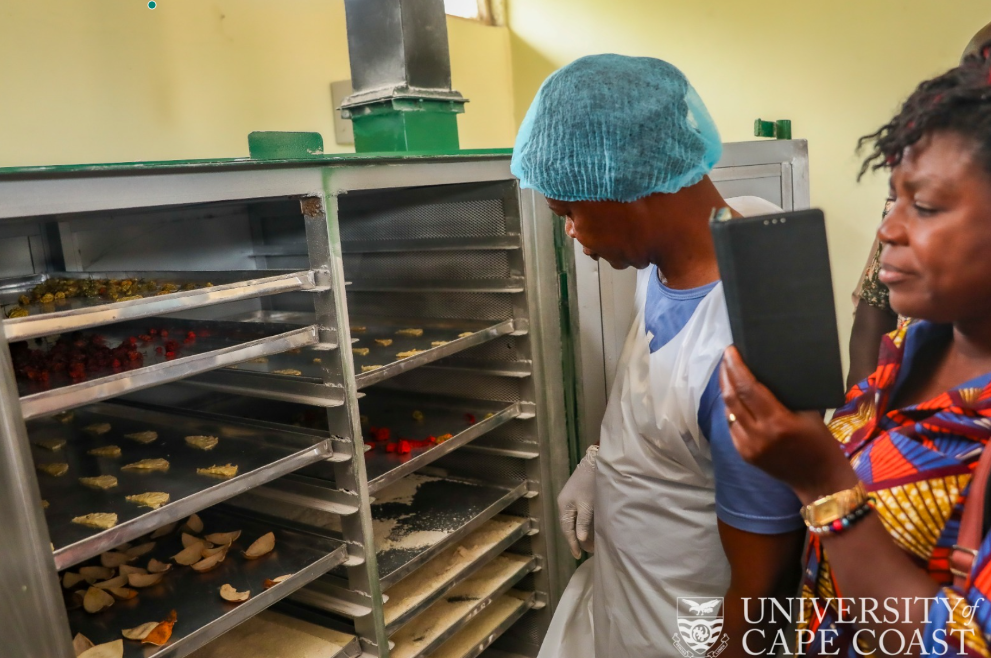
The desiccant solar dryer consists of two main units—a desiccant unit that removes moisture from the air to enhance its drying power, and a solar-powered module that supplies heat energy. Beyond cassava starch, the system has shown strong potential for drying other produce.
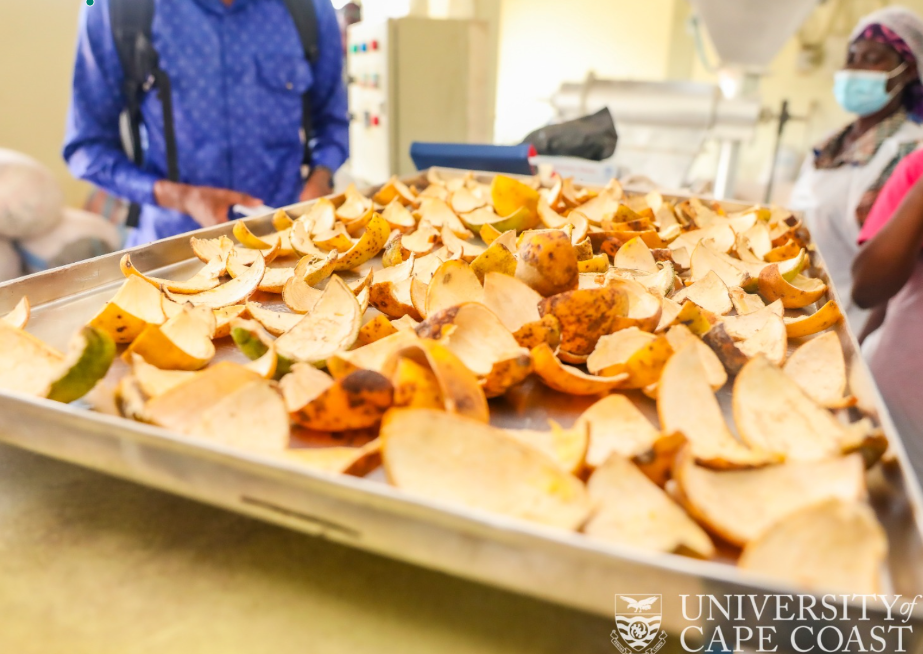
“We have successfully used it to dry orange peels, pineapple, and pepper,” Prof. Amoah revealed. “The results are impressive, orange peels dry in less than three hours, and the quality is far superior to what is achieved through sun drying.”

He disclosed that the team is also preparing to test the dryer on cocoa, one of Ghana’s leading export commodities, which he believes could help processors achieve premium-quality cocoa beans for the global market.
While the current unit is a prototype capable of drying one tonne of cassava starch per day, plans are underway to develop a commercial-scale system with a capacity of up to four tonnes per day.
“Once we upscale the dryer, we will work with agro-processors interested in acquiring the technology and connect them to manufacturers and suppliers. The team will also train users on how to operate and maintain the equipment effectively,” he said.
Prof. Amoah said the goal is to promote the new system across Ghana, ensuring that food-processing companies have access to cleaner, more efficient, and more sustainable drying solutions.
He emphasized that the university’s commitment goes beyond research and into real industrial transformation.
“What we are doing is transferring academic knowledge into practical industry solutions,” he said, emphasizing that “This dryer has the potential to significantly improve productivity, reduce contamination, and boost the competitiveness of Ghana’s agro-processing sector.”
READ MORE NEWS ON https://atlfmnews.com/
Source: Eric Sekyi/ATLFMNEWS