


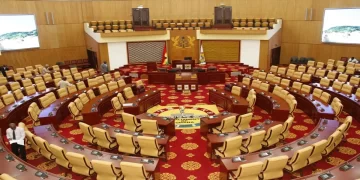



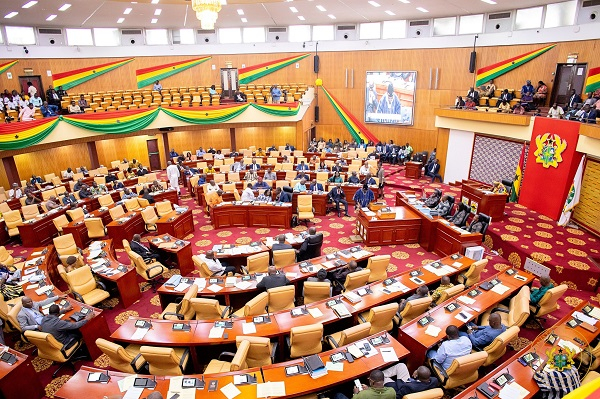
Parliament’s approval of a GH¢1.619 billion budget for the 2026 financial year has reignited debate over how Ghana’s legislature is funded and whether the current allocation is sufficient for it to function effectively.
Although the approved amount will cover salaries and allowances for Members of Parliament and staff, administrative costs, committee work, oversight activities, ICT upgrades under the e-Parliament program, facility maintenance, research, and constituency-related duties, MPs insist the figure falls far short of what is required.
A Budget Cut From What Parliament Requested
During deliberations on the report of the Committee on Parliamentary Affairs, it emerged that Parliament had initially submitted a budget proposal of over GH¢4.6 billion for 2026. That figure was later reduced to GH¢1.619 billion during the budget process.
Committee leaders argued that the sharp cut undermines Parliament’s ability to carry out essential functions, including constituency consultancy offices, effective oversight work, and critical maintenance of facilities at Job 600, such as elevators and washrooms.
They warned that persistent underfunding weakens Parliament’s efficiency and independence, prompting renewed calls for a dedicated revenue stream or stronger mid-year budget support from the Finance Ministry.
Read Also: Okada Legalised Under New Road Traffic Amendment Law
MPs Cite Operational Challenges
MPs from both sides of the House used the debate to highlight long-standing operational challenges. These include the lack of fully resourced constituency offices, inadequate staff support, poor working facilities, and limited tools for effective oversight.
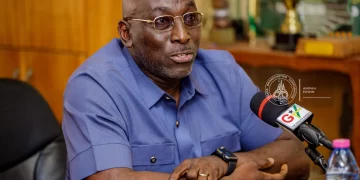
The NPP MP for Ofoase-Ayirebi, Kojo Oppong Nkrumah, argued that Parliament’s funding should be protected through a guaranteed percentage of national revenue, similar to statutory funds such as GETFund and the National Health Insurance Fund.
He said the absence of proper constituency offices forces MPs to meet constituents in informal settings, which undermines professionalism and service delivery.
NPP MP for Walewale, Dr Abdul Kabiru Tiah Mahama, echoed these concerns, saying Parliament often receives only about 40 percent of what it requests and therefore operates “at the mercy of the Executive.” He also raised concerns about accessibility, noting that the parliamentary complex is not disability-friendly.
Majority Urges Context and Gradual Improvement
On the Majority side, NDC MP for Bolgatanga Central, Isaac Adongo, urged MPs to take a longer-term view, noting that Parliament’s funding challenges were not created in a single year.
He argued that previous governments, despite heavy borrowing, failed to incrementally improve Parliament’s budget and called for patience as allocations are gradually increased.
Deputy Minister of Finance and NDC MP for Asuogyaman, Thomas Nyarko Ampem, defended the 2026 allocation, saying it was made within the limits of available national resources.
He stressed that all ministries, departments, and agencies faced cuts, including the Executive and Judiciary, and added that Parliament actually recorded the highest percentage increase—over 45 percent—from 2025 to 2026.
The Bigger Question
At the heart of the debate is a broader question about how Ghana funds its legislature and whether current arrangements adequately support Parliament’s constitutional role of lawmaking and oversight.
While the 2026 budget has been approved, MPs say discussions about sustainable and predictable funding for Parliament are far from over.