










Ghana’s tomato supply chain is facing fresh uncertainty as traders and importers in Accra warn that escalating insecurity in Burkina Faso could force them to suspend cross-border imports — a move that could trigger sharp price increases across major markets.
The warning follows recent terrorist attacks in parts of Burkina Faso that reportedly claimed the lives of eight Ghanaians and left several others injured. The incidents have heightened fears among tomato importers who regularly travel the route to transport produce into Ghana.
Burkina Faso remains a key source of tomatoes for Ghana, particularly during lean seasons when domestic production struggles due to limited irrigation infrastructure and erratic rainfall patterns.
Traders Threaten to Halt Trips
Esther Owusu Ansah, a tomato importer with more than three decades of experience, says traders are now reassessing the risks.
“If the government and security agencies do not provide us with adequate protection, we will not bother travelling to Burkina Faso anymore. Our drivers have families, and they cannot risk their lives just to transport tomatoes,” she said.
Read Also: Gov’t Summons Russian Ambassador Over Viral Explicit Video Scandal
Although security escorts are reportedly arranged up to Paga, traders say the stretch beyond the northern border remains vulnerable.
“Our Chairman usually arranges security escort up to Paga, but beyond that point, we do not know what may happen,” she added.
Shortage and Price Hikes Loom
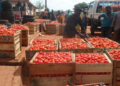
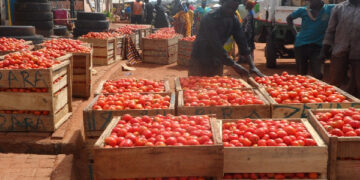
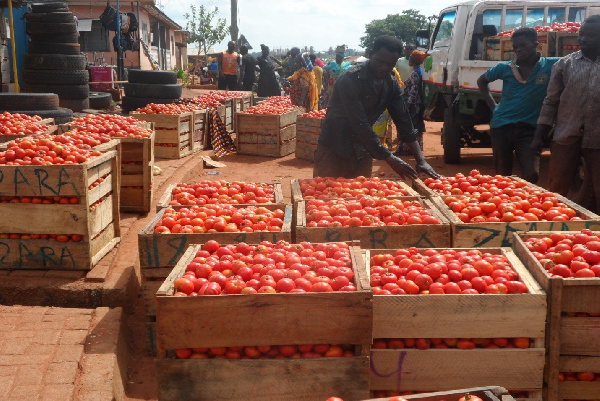
Drivers and transporters operating at the CMB Underbridge tomato market in Accra say supply has already slowed.
“With fewer tomatoes on the market, prices will become more expensive,” said Peter Boahen, a driver who has worked in the trade since 2006.
Kwame Siaw, another transporter, warned of widespread economic consequences if the disruption persists.
“If the trucks stop coming, we will be sitting here idle. How will we take care of our families?” he asked.
Tomatoes are a staple ingredient in Ghanaian households and the food service industry. Any prolonged disruption in supply could significantly increase market prices, placing additional pressure on household food budgets.
Calls for Irrigation Investment
Traders argue that the crisis highlights Ghana’s overdependence on imports and the urgent need for local agricultural investment.
Adwoa Pinnaman, a trader, urged the government to prioritise irrigation and dam construction to support domestic tomato farming.
“We want the government to construct dams for us so we do not have to depend on Burkina Faso,” she said.
She noted that traders spend substantial sums importing produce annually — funds that could instead strengthen Ghana’s own agricultural sector.
Industry observers say that improved irrigation systems could enable year-round tomato production, reduce seasonal shortages, create rural employment, and insulate the country from regional security shocks.
Risk of Informal Market Distortions
Otumfuo Charity, Queenmother of the CMB Underbridge branch and an executive member of the Ghana National Tomato Traders Association, warned that disruptions could encourage informal import routes through neighbouring Togo.
“Some traders use northern Togo routes and end up selling directly into Ghanaian markets,” she said, adding that the association would resist illegal practices.
Broader Food Security Concerns
Agriculture analysts argue that the situation underscores the broader food security risks facing Ghana as instability continues across parts of the Sahel region.
With security concerns mounting and domestic irrigation gaps unresolved, stakeholders say the government must move swiftly to protect supply chains, support traders, and strengthen local production capacity.
For now, traders remain cautious — and consumers may soon feel the impact at the market stalls.