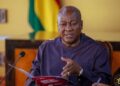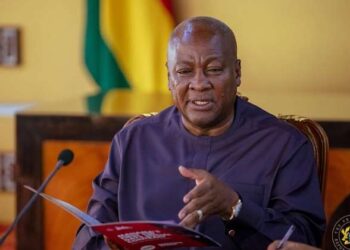

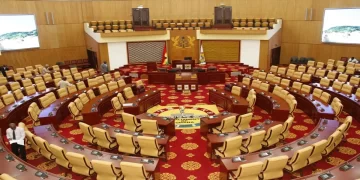

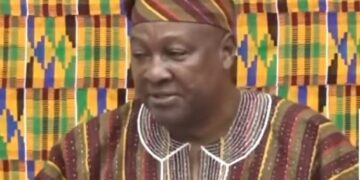






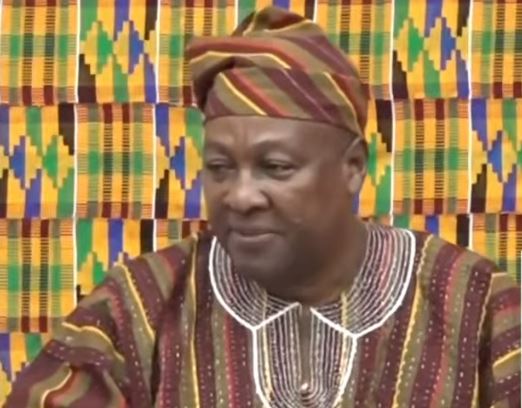
President John Dramani Mahama has announced major reforms in Ghana’s power distribution sector alongside significant investments in renewable energy and oil production, as he continues delivering the State of the Nation Address (SONA) in Parliament.
The President revealed that Ghana’s national electricity access rate currently stands at 89.05 percent, reaffirming government’s commitment to universal access.
“We are committed to ensuring that every Ghanaian has access to reliable, affordable electricity,” he told the House.
ECG Losses and Private Sector Participation
President Mahama expressed concern over persistent power losses within the distribution system, particularly at the Electricity Company of Ghana (ECG).
“It is worrying that the Electricity Company of Ghana continues to experience high power losses, with reports indicating that around 25 percent of generated power is lost,” he said.
To address the challenge, the President announced Cabinet approval for private sector participation in billing and revenue collection. noting “Adopting private sector participation, particularly in billing and collection, is the most effective way to significantly reduce these losses.”
He disclosed that Cabinet has approved a multiple lease method for concessions in the distribution utilities, with implementation already underway.
Solar Capacity Expands to 250MW
On renewable energy, President Mahama said the Bui Power Authority has completed an additional 50 megawatts of solar power, while rooftop solar installations have added another 30 megawatts.
This brings Ghana’s total installed solar capacity to 250 megawatts, representing five percent of the country’s energy generation mix.
He further announced progress on a major solar project at the Dawa Industrial Zone revealing that, “A few months ago, I broke ground for a 200 megawatt solar power project at the Dawa Industrial Zone, with the first 100 megawatts scheduled for completion in December 2026.”
Mini-Grids for Island and Lakeside Communities
The President also highlighted efforts to expand electricity access to remote communities through renewable mini-grids.
The Ministry of Energy and Green Transitions, he said, is constructing 35 mini-grids to serve 47 islands and lakeside communities across the Oti, Savannah and Bono East regions.
In addition, a feasibility study has been completed for 100 communities in the Afram Plains North District to receive solar-powered mini-grids, increasing the total number of targeted island and lakeside communities in Afram Plains North and South to 150.
“As part of the last-mile electrification effort to achieve 99.98 percent universal access by 2030, the Ministry has mainstreamed mini-grids into the National Electrification Scheme,” he said.
President Mahama announced that the African Development Bank has committed funding support for the construction of renewable energy-based mini-grids for these communities.
Smart Meters and Solar for Public Institutions
Beginning at the end of the first quarter of 2026, government will roll out 12,000 new smart net meters to improve monitoring and reduce losses.
He also disclosed that under the off-grid solar home system programme for public institutions, materials for the first phase of 350 solar systems have already been delivered.
“Public institutions are going to be fitted with solar to reduce their power consumption,” he noted.
$3.5 Billion Oil and Gas Investments
Beyond renewables, President Mahama announced fresh investments in Ghana’s oil and gas sector aimed at boosting production and strengthening energy security.
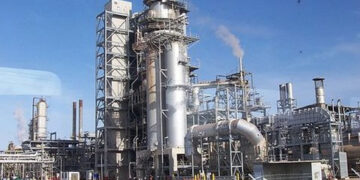
Government has signed a Memorandum of Understanding with Jubilee and Tenfield Partners to secure two billion dollars in additional investment in the Jubilee Field, including plans to drill up to 20 new wells ,the first in more than nine years.
A second Memorandum of Intent has also been signed with OCTP partners, Eni and Vitol, to mobilise 1.5 billion dollars in new investment in the Cape Three Points Block 4 contract area.
“This agreement will significantly increase Ghana’s oil and gas production, thereby enhancing energy security, domestic demand and infrastructure development,” the President stated.
The energy sector reforms form part of the government’s broader economic reset agenda, aimed at strengthening resilience, improving efficiency and expanding access to essential services nationwide.
Read Also: Mahama Announces GDP Growth, Debt Reduction and Inflation Drop at Ongoing SONA