




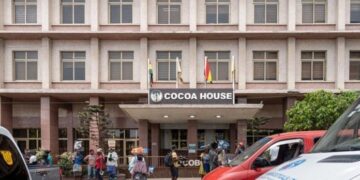







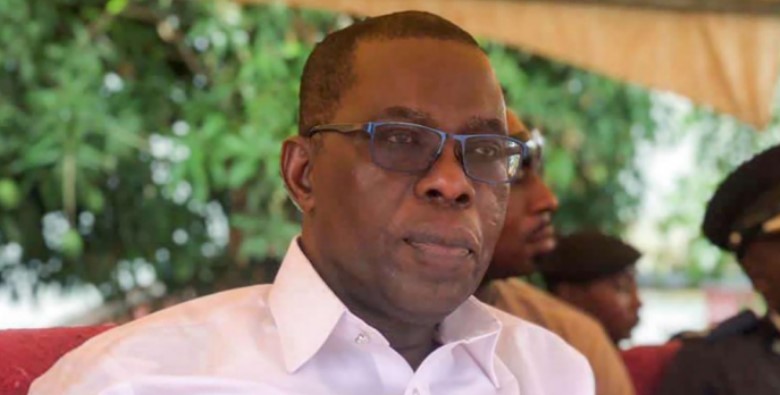
The Ranking Member of Parliament’s Food, Agriculture and Cocoa Affairs Committee, Isaac Yaw Opoku, has criticized the Ghana Cocoa Board’s decision to reduce staff salaries, arguing that workers should not bear the consequences of financial challenges within the institution.
Speaking on JoyNews’ The Pulse on Tuesday, the lawmaker said COCOBOD could address its funding constraints by improving spending efficiency rather than implementing wage reductions that affect employees’ livelihoods.
“If they stop the massive renovations, the unnecessary renovations they are doing, I think they can raise more money to finance cocoa purchases,” he said. “It’s a better way than reducing the poor COCOBOD staff’s salaries and wages. I don’t support that at all.”
COCOBOD recently announced salary cuts for its leadership and senior staff, citing financial pressures in the cocoa sector. Under the new arrangement, Executive Management will take a 20 percent reduction in pay, while Senior Staff will see their salaries reduced by 10 percent for the remainder of the 2025/26 crop season.
However, Isaac Yaw Opoku warned that such measures could weaken staff morale and create uncertainty within the organisation. He stressed that efforts should instead focus on strengthening the institution’s financial management and ensuring adequate resources for cocoa purchases and farmer payments.
“They should focus on prioritising funds for cocoa purchases and farmers rather than penalising staff,” he said.
He also questioned the logic of adjusting employee salaries based on fluctuations in international cocoa prices, warning that such an approach could create instability in the workforce.
“Anytime the international price goes up, the wages and salaries of COCOBOD staff will be increased, and anytime it goes down, it will be reduced. How do you create a system like that?” he asked. “Who will have the comfort to work in such an environment?”
The MP further called for greater accountability in COCOBOD’s financial operations, urging the board to cut avoidable costs and prioritise investments that directly support cocoa production and farmer welfare.
“The board must prioritise funding for cocoa purchases and timely payments to farmers. Cutting staff wages should never be the first option,” he added.
His comments come amid broader concerns about financial sustainability in Ghana’s cocoa sector, which continues to face challenges linked to global price volatility, production costs, and funding constraints.
Read Also: Mahama Responds to Terrorist Attack on Ghanaian Traders in Burkina Faso