














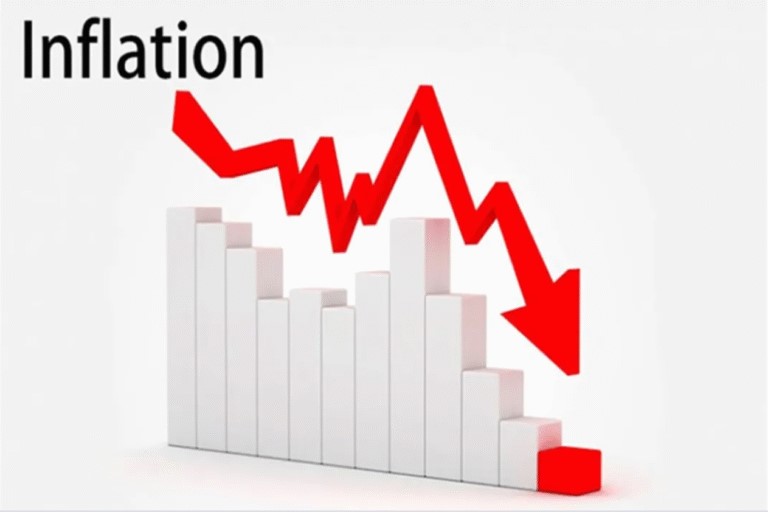
Ghana’s inflation rate continued its downward trend in December 2025, easing to 5.4 percent year-on-year, the lowest level recorded since the Consumer Price Index (CPI) was rebased in 2021.
According to figures released by the Ghana Statistical Service (GSS) on Wednesday, January 7, 2026, the latest rate represents the 12th consecutive month of disinflation, signaling sustained easing of price pressures and improving macroeconomic conditions.
Presenting the data, Government Statistician, Dr. Hassan Idrisu, said inflation has declined sharply from 23.8 percent in December 2024, marking an 18.4 percentage point reduction within a year.
“On average, prices of goods and services in December 2025 were 5.4 percent higher than they were in December 2024. This sustained decline reflects a firm shift towards price stability,” Dr. Idrisu noted.
The December figure also represents a decline from the 6.3 percent recorded in November 2025. On a month-on-month basis, inflation stood at 0.9 percent, indicating that while prices rose marginally between November and December, the long-term trend remains downward.
Food inflation recorded a significant improvement, falling to 4.9 percent year-on-year in December 2025, down from 6.6 percent in November and 27.8 percent in December 2024. This translates into a 22.9 percentage point decline over the year.
The reduction in food inflation is particularly significant, as food accounts for about 43 percent of household expenditure, offering some relief to household budgets. However, food prices increased by 1.1 percent on a month-on-month basis, suggesting that short-term price movements persist despite the broader disinflation trend.
Commenting on the figures, Associate Director at Deloitte Ghana, Dennis Brown, described the performance as remarkable, especially given typical seasonal pressures in December.
“We are not surprised that inflation has remained within single digits, but what is surprising is that it dropped further to 5.4 percent, considering that December is usually a festive period with higher demand,” he said.
According to Mr. Brown, the latest data indicates that economic fundamentals have strengthened considerably, explaining that “It clearly shows that the fundamentals are back on track and quite strong.”
The continued decline in inflation, he noted, creates room for further monetary policy easing by the Bank of Ghana, as lower inflation allows for reductions in the policy rate without undermining price stability.
However, he cautioned that excessive easing could reverse the gains made if it leads to increased consumption, currency speculation, or disinvestment in government securities.
“It’s not about a specific figure. It’s about monitoring the impact. If rate cuts continue to support private sector investment without pushing interest rates below inflation, then they remain appropriate,” Mr. Brown explained.
The Bank of Ghana cut the monetary policy rate by a cumulative 10 to 18 percentage points in 2025. While the impact on economic growth may take time to materialize, Mr. Brown said current data shows that the cuts have not undermined price stability.
“The data tells us clearly that price stability has been maintained. Food supply has increased, non-food inflation has moderated, and stronger gold reserves have helped stabilize the foreign exchange market,” he said.
He added that a fuller assessment of the impact on growth would become clearer in the medium to long term as investment responds to lower borrowing costs.
Read Also: Mahama’s Economic Management on the Right Track, Says Prof. Bokpin