








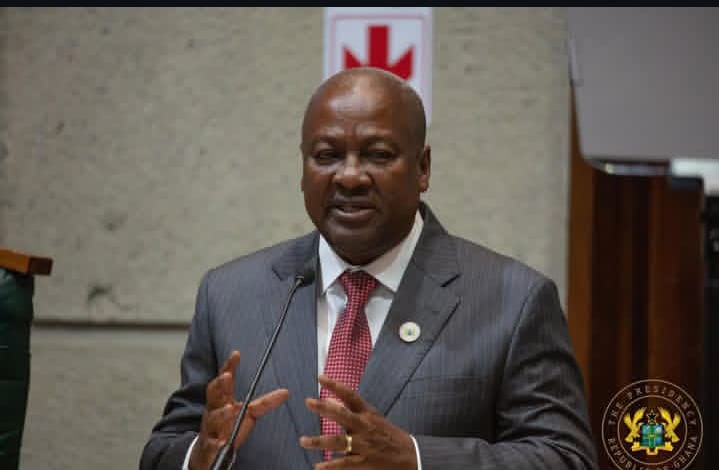
President John Dramani Mahama has defended a new move to declare slavery the gravest crime against humanity and to pursue reparatory justice.
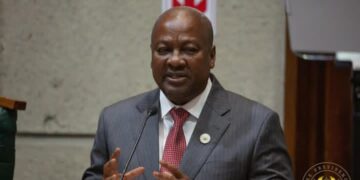
Speaking at a United Nations event in New York, he said the resolution highlights the need to address the lasting effects of slavery and colonization.
He urged global support, describing the effort as a way to restore the identity of Black people and promote racial equality.
He also raised concerns about attempts to remove Black history from school curricula in some parts of the world, stressing the importance of preserving that history.
“Museums, art centres, and other institutions whose budgets rely in any way on public funds are being prohibited from shuttling exhibitions and programmes, or from displaying materials promoting racial awareness or black history,” President Mahama said.
He believes such distractions, which are gradually becoming a template for colonial apologists, can be likened to the law that was put in place to regulate the punishment of the enslaved in Barbados.
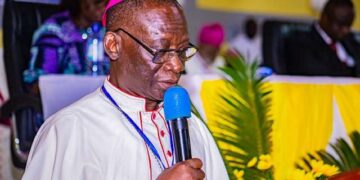
Chairperson of the African Union Commission, Mahamoud Ali Youssouf, also supported the initiative. His message, delivered by the Commissioner for Health, Humanitarian Affairs and Social Development for the AU, Her Excellency Ama Twum-Amoah, outlined steps already taken to advance reparatory justice.
According to him, some mechanisms have been recently implemented in the community to contribute towards the fight for reparatory justice. He called for rigorous inclusion of all interested parties in the fight, raising key suggestions tailored to tackle the issue head-on.
He also mentioned thatPursuant to the mandates given by the Assembly and Executive Council, the African Union Committee of Experts on Reparations and the African Union Reference Group of Legal Experts on Reparations, we constituted and convened.
He added that the committee developed substantive framework papers and working groups on legal foundations, modalities of reparations, and global advocacy.
“These mechanisms signal a simple truth that Africa is organised for justice,” he stated. “In Decision 934 of February 2025, and reaffirmed in February 2026, the union has decided to qualify transatlantic enslavement, deportation, and colonisation as crimes against humanity and acts of genocide against the peoples of Africa, and to work collectively for their recognition as such at the international level.
Mahamoud Ali Youssouf also called for stronger cooperation among all stakeholders, urging them to incorporate reparational priorities in certain aspects of administration, including education.
He advocated for a global curriculum that is “truthful” about the historical crimes of transatlantic enslavement, colonialism, and apartheid, while remaining hopeful about the healing potential.
Chairperson of the AU Commission, called on the United Nations and global society to move beyond the mere recognition of colonialism and transatlantic enslavement by establishing a formal framework for restitution and “repatriate justice.”
This agenda seeks to reclassify these historical wrongs as crimes against humanity while driving a landmark 2026 General Assembly Resolution rooted in the principles of repair and truthful education.
The resolution will be discussed today at the United Nations Headquarters and is expected to receive support from many African countries and people of African descent.
READ ALSO: Ghana Becomes First African Nation to Sign Strategic Security Pact with EU
Source: Benjamin Hutchful/ATLFMNEWS