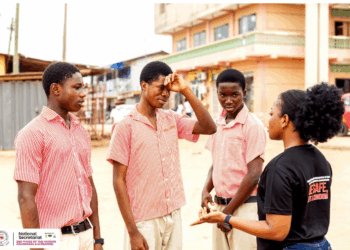












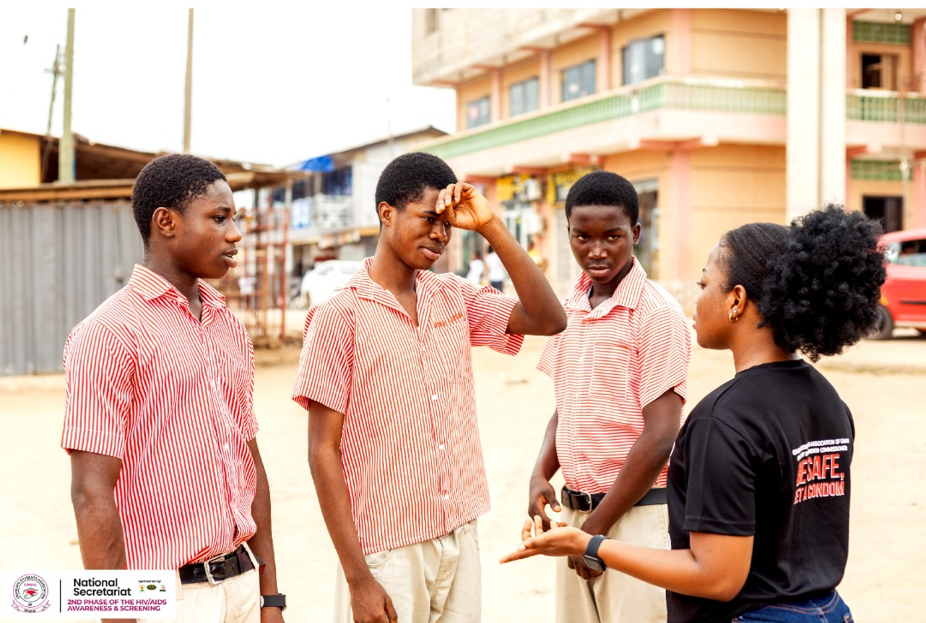
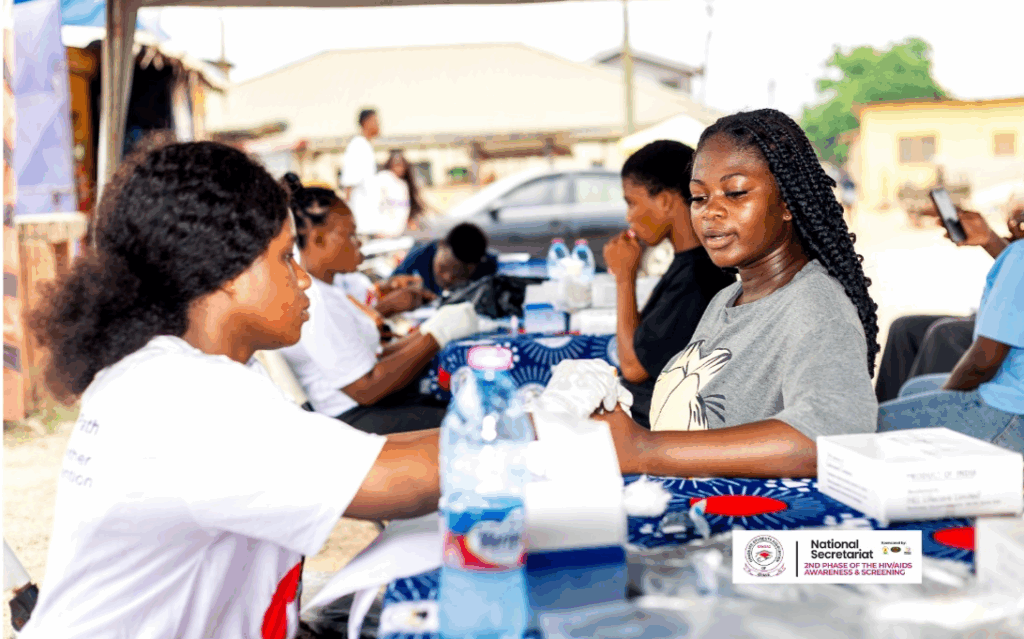
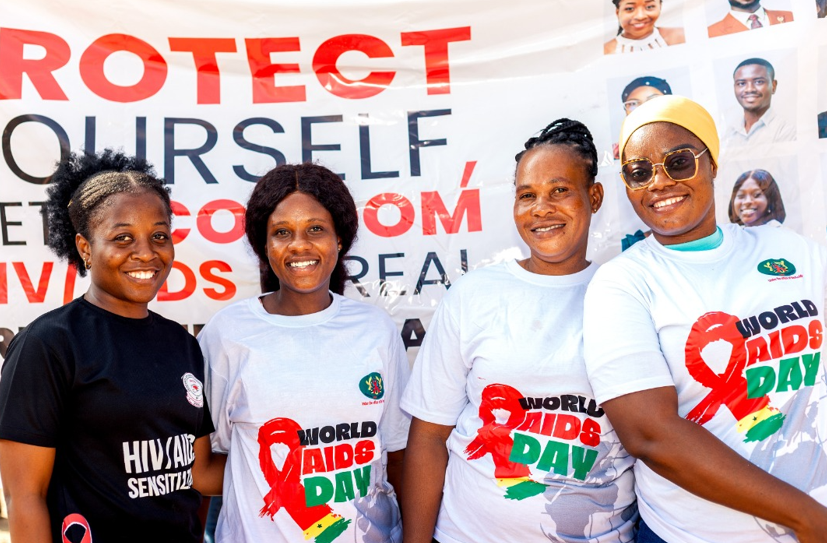
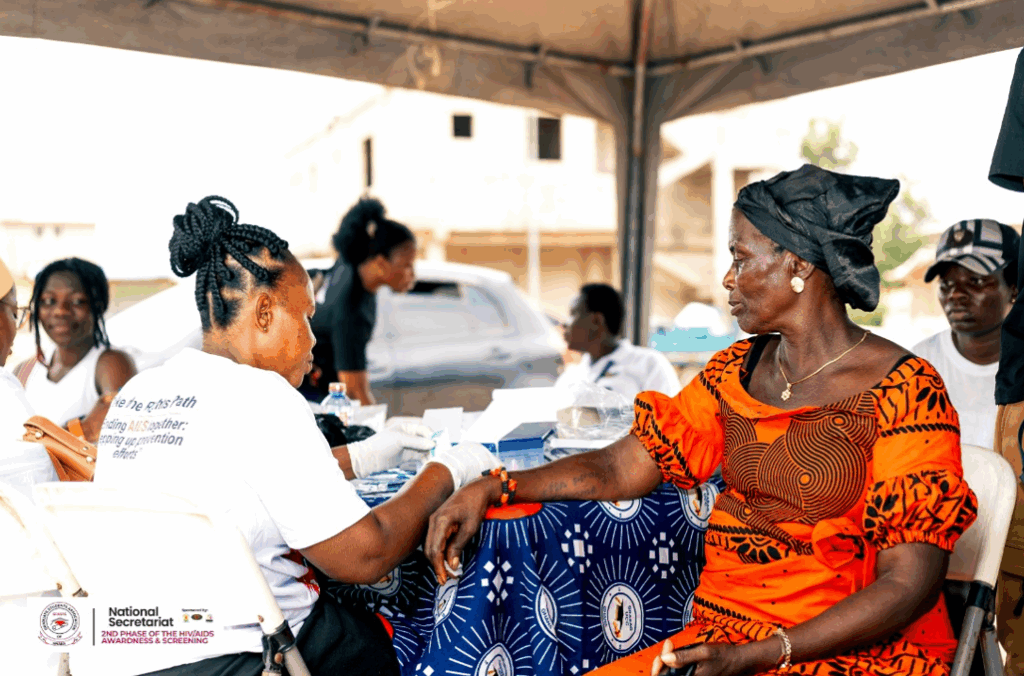
An HIV/AIDS education and screening exercise held at the Amamoma community of the University of Cape Coast has revealed no positive cases among the over 170 people who participated, according to organisers of the event.
The programme, organised by the Office of the Gender Commissioner, Graduate Students’ Association of Ghana (GRASSAG) National, in collaboration with the UCC GRASSAG/SRC Women’s Commissions, formed part of the second phase of a national HIV/AIDS awareness initiative targeted at students and young people.
Speaking at the event, Mr. William Kwaku Yeboah, Central Regional Technical Coordinator for the Ghana AIDS Commission, said Ghana is estimated to have 334,721 people living with HIV as of December 2024, including 18,229 children aged 0–14, 18,850 adolescents aged 10–19, and 37,283 young people aged 15–24.
He noted that the Central Region alone has 24,184 people living with the virus, of whom 16,153 are female (71%) and 6,596 are male (29%), with 1,435 children under 14.
He emphasized that Cape Coast has an estimated 2,334 people living with HIV, including 1,546 females, 685 males, and 110 children, stressing that knowing one’s status remains the most crucial step in HIV prevention.
Mr Yeboah explained that the “Know Your Status” campaign aims to expand young people’s access to testing. He said 30 per cent of new infections are recorded among the youth, particularly students.
“For the past five years, we have recorded almost 4,000 new infections among this age group, and we know our students are very vulnerable,” he said.
He commended GRASSAG for partnering with local stakeholders to make HIV testing easily accessible, describing the initiative as timely and impactful.
Gender Commissioner of GRASSAG National, Frederica Dede Ozoki, said the decision to bring the second phase of the awareness project to UCC was informed by reports of rising HIV infections in the Central Region and the need to safeguard students.
“We realized that HIV/AIDS is becoming rampant in our society and the youth are at the highest risk, so we brought the project here to ensure our students are conscious, informed and protected,” she explained.
Miss Ozoki noted that the first phase of the project, held during the Oguaa Fetu Afahye in August 2025, recorded over 3,000 engagements and created substantial awareness.
She emphasized that the campaign’s popular message, “If it is not on, it is not in,” remains a vital reminder to young people to priorities their sexual health and personal safety at all times.
According to her, the project is far from over, announcing that a third phase targeting over 10,000 level 100 students will soon begin at UCC.
“This phase will involve hall-to-hall sensitization, condom distribution, counselling sessions and orientation programs to ensure that our fresh students start their journey at UCC with the right information,” she added.
Organizers described the zero positive cases recorded at Saturday’s screening as encouraging, emphasizing that the fight against HIV/AIDS requires continuous education, behaviour change, and sustained access to testing and treatment services.
They called on students and community members to take advantage of future screening opportunities and make HIV testing a regular part of their health routines.
READ ALSO: Education Minister Pushes Ethics Training Amid Cheating Crisis
Source: Eric Sekyi/ATLFMNEWS