















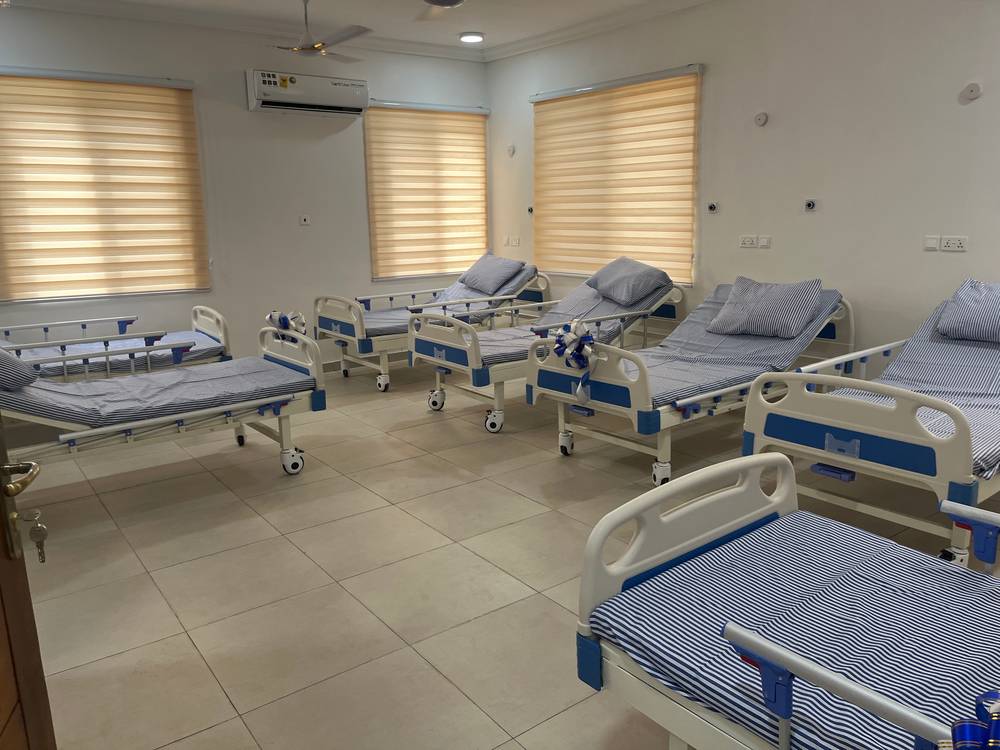
Government is rolling out a new technology-driven system aimed at ending the long-standing “no bed syndrome” in hospitals across Ghana, as part of broader efforts to improve emergency care and patient management.
The Minister for Health, Kwabena Mintah Akandoh, announced the initiative during a visit to the Korle Bu Teaching Hospital, where he identified poor coordination between health facilities as a key factor behind the problem.
He explained that patients are often turned away not because beds do not exist, but because information on bed availability is not shared efficiently across hospitals.
Central Command Centre to Coordinate Care
At the heart of the new approach is the creation of a central command centre, which will use digital tools to track bed availability and coordinate patient movement in real time.
Under the system:
- Ambulances will be directed to facilities with available beds
- Hospitals will share live updates on capacity
- Emergency response teams will receive guidance on where to send patients
The Minister said this will significantly reduce delays and prevent situations where patients are moved from one hospital to another without receiving care.
Read Also: Fuel Prices Reduced As Cedi Stability Keeps Costs Down
Real-Time Bed Tracking System Introduced
In addition, the Ministry is introducing a bed-tracking system, expected to rely on barcode technology to monitor occupancy levels across hospitals.
This will allow health authorities to:
- Track available beds instantly
- Improve planning and resource allocation
- Enhance accountability within facilities
Mr. Akandoh noted that the lack of a coordinated tracking system has been a major contributor to inefficiencies in patient care.
Pilot Phase in Major Hospitals
The initiative will first be piloted in teaching and regional hospitals, where pressure on bed space is often highest.
If successful, it will be expanded nationwide as part of efforts to permanently address the “no bed syndrome” challenge.
A Long-Standing Healthcare Challenge
The “no bed syndrome” has remained a critical issue in Ghana’s healthcare system, often leading to:
- Delays in emergency care
- Increased risk for critically ill patients
- Public concern over hospital capacity
Health experts say the introduction of a technology-led coordination system could mark a turning point in how emergency cases are managed.
Toward a More Efficient Health System
Government believes the new system will not only improve patient outcomes but also strengthen confidence in the healthcare system by ensuring that no patient is denied care due to poor coordination.
With the pilot set to begin soon, attention will now turn to how effectively the system can be implemented and scaled across the country.