














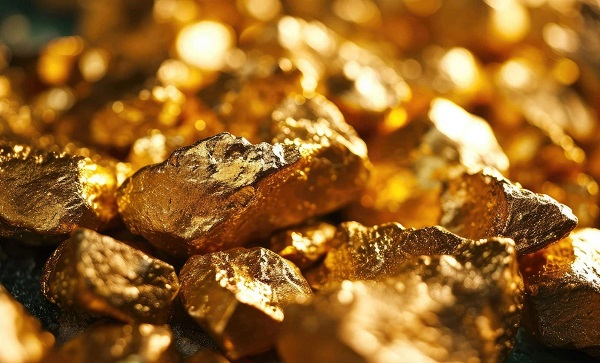
Ghana’s gold production climbed to a record high in 2025, driven by a significant expansion in small-scale mining that helped push national output close to six million ounces.
New figures released by the Ghana Chamber of Mines show that total gold production increased by 23.41 percent, rising from 4.82 million ounces in 2024 to 5.94 million ounces in 2025.
The growth marks one of the strongest performances by Ghana’s gold sector in recent years and further strengthens the industry’s contribution to economic growth, export earnings and employment.
Small-Scale Mining Leads Growth
The sharp increase was largely fueled by the small-scale mining sector, which recorded output of 3.11 million ounces in 2025, up from 1.90 million ounces the previous year.
The 63.82 percent increase elevated small-scale mining’s share of national gold production to 52.4 percent, making it the largest contributor to Ghana’s gold output.
Industry stakeholders attribute the surge to ongoing efforts to formalise artisanal mining activities, including reforms introduced through the Ghana Gold Board (GoldBod).
The measures are expected to improve regulation, strengthen market access and increase traceability within the sector.
Read Also: ECG Blackout Hits 6 Regions — Check Your Area Now
Large-Scale Mining Records Slight Decline
While national production reached a new high, large-scale mining output declined slightly.
Production from large-scale operators fell by 2.98 percent from 2.92 million ounces in 2024 to 2.83 million ounces in 2025.
As a result, the sector’s contribution to total national output dropped from 60.6 percent to 47.6 percent.
Despite the decline, some major mines recorded improved performance, including AngloGold Ashanti’s Obuasi Mine, Newmont’s Ahafo Mine, Cardinal Resources’ Namdini Mine and Zijin’s Akyem Mine.
Mining Revenue and Employment Increase
The growth in gold production translated into higher revenues for the mining industry.
According to the immediate past President of the Ghana Chamber of Mines, Michael Edem Akafia, total mining revenue increased from GH¢21.90 billion in 2024 to GH¢24.22 billion in 2025.
Gold’s contribution to Ghana’s Gross Domestic Product also rose significantly from 7.97 percent to 9.98 percent during the period.
The sector additionally expanded employment opportunities, with Chamber member companies increasing their direct workforce from 11,372 employees to 13,819.
Industry estimates indicate that mining activities supported more than 200,000 indirect and induced jobs across the wider economy.
Outlook Remains Positive
Looking ahead, the Chamber of Mines expects production growth to remain strong in 2026.
Large-scale gold production is projected to range between 3.2 million and 3.4 million ounces, while small-scale output could reach between 2.9 million and 3.5 million ounces.
However, industry leaders say future growth will depend on policy certainty, regulatory reforms, lease renewals and continued investment in the sector.
Government Reaffirms Commitment
Addressing the Chamber’s Annual General Meeting, Lands and Natural Resources Minister Emmanuel Armah-Kofi Buah described mining as a critical pillar of Ghana’s economy.
He reiterated government’s commitment to maintaining a competitive investment environment while implementing reforms aimed at improving transparency, environmental sustainability and local participation.
The Minister also stressed that efforts to increase Ghanaian ownership and involvement in the mining sector remain a key priority.
With gold production reaching record levels and small-scale mining playing an increasingly important role, the sector is expected to remain one of Ghana’s strongest economic drivers in the years ahead.