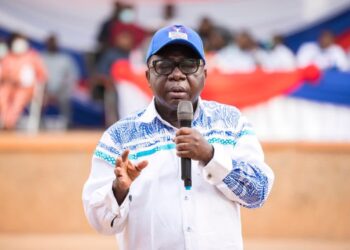


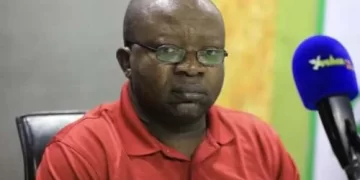










Political Scientist and Head, Centre for European Studies at the University of Ghana, Dr. Kwame Asah-Asante, has called on government to strengthen Ghana’s financial resilience in the face of global uncertainties, particularly ongoing tensions in Iran.
Speaking on JoyNews, Dr. Asah-Asante noted that developments in the global space, such as geopolitical conflicts, are beyond the control of individual countries but can significantly impact domestic economies.
According to him, the primary responsibility of government is to deploy available resources strategically to cushion citizens against such external shocks and improve living conditions.
“In every society, these challenges will arise, but that is why we have governments to manage resources in ways that make life better for the people,” he stated.
Dr. Asah-Asante expressed confidence that economic managers are exploring ways to navigate the current pressures, especially given the historical volatility associated with global energy politics.
He acknowledged that while successive governments have made efforts to manage such challenges, the burden often becomes difficult for citizens to bear, particularly during periods of rising costs.
The political analyst stressed the need for Ghana to deliberately build financial capacity to serve as a buffer in times of crisis. “We must develop the financial strength to withstand these shocks so that when they occur, we are not left struggling to respond,” he explained.
He further urged policymakers to adopt innovative approaches in addressing economic challenges, including long-term planning and forward-looking solutions that can help stabilise the economy.
Touching on the issue of illegal mining, widely known as galamsey, Dr. Asah-Asante described it as a persistent challenge that continues to undermine investor confidence and damage the country’s ecosystem.
He noted that while Ghana is endowed with significant mineral resources, the environmental and regulatory issues associated with illegal mining could deter potential investors.
“If the sector is not properly regulated, it creates difficulties for the industry despite the availability of resources,” he cautioned.
Dr. Asah-Asante, however, welcomed ongoing efforts to sanitise the gold trade, including measures to trace and verify gold sold to the state, saying such initiatives could help restore credibility and attract investment.
He added that a well-regulated mining sector could serve as a critical source of revenue to support other struggling sectors of the economy, concluding that “If we are able to sanitize the system, it can generate substantial resources to support national development.”
Read More Stories @ ATLFMNEWS.COM