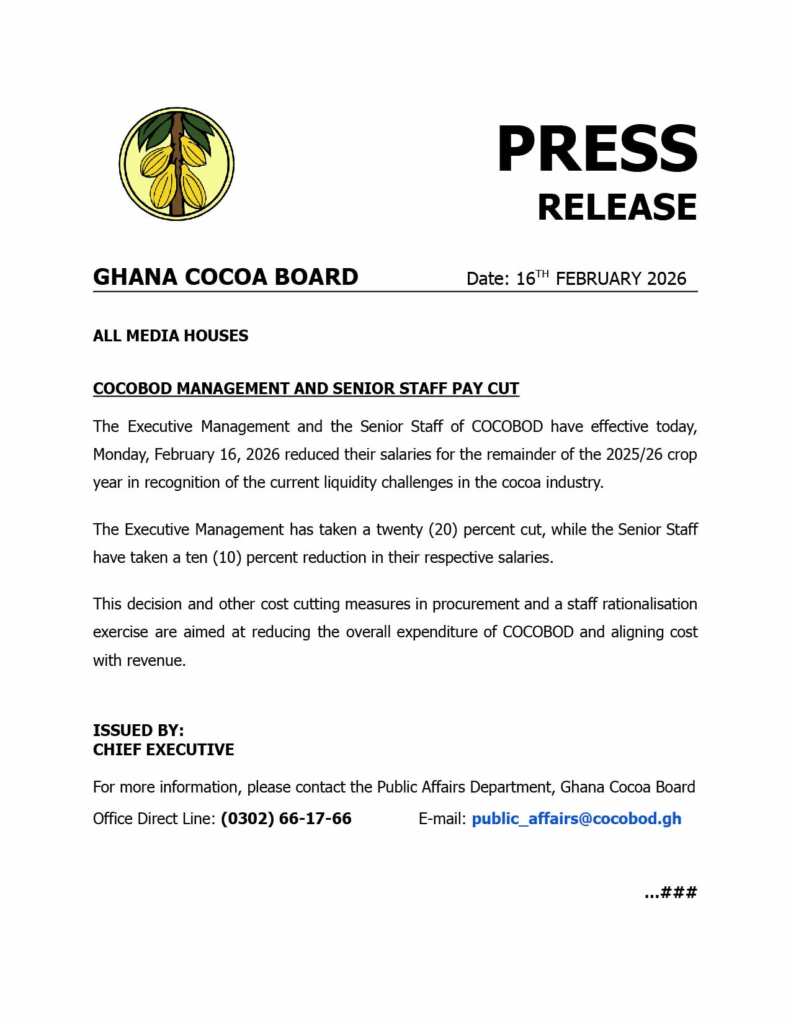












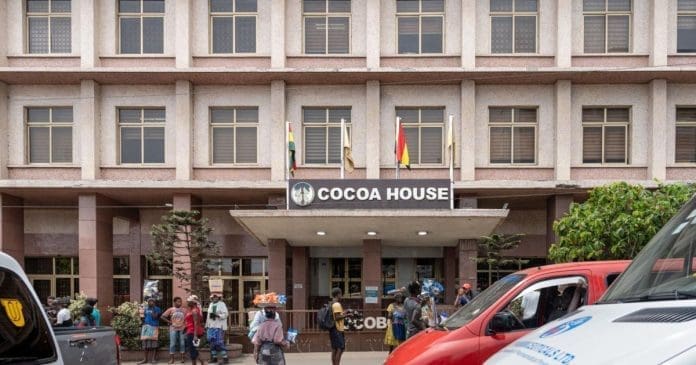
The Ghana Cocoa Board (COCOBOD) has announced a 20 per cent reduction in the salaries of its Executive Management as part of what it describes as an urgent reform drive to stabilise the institution’s finances amid mounting liquidity pressures in the cocoa sector.
In a statement issued on Monday, February 16, 2026, the Board disclosed that the salary cuts take immediate effect and will remain in place for the rest of the 2025/2026 crop year. Senior Staff will also take a 10 per cent pay reduction under the new cost-containment measures.
COCOBOD said the decision forms part of broader efforts to align expenditure with declining revenue inflows and to reposition the institution for financial sustainability during a particularly challenging crop season.
Mounting financial strain
The reform move comes at a time when Ghana’s cocoa sector is grappling with rising operational costs, heavy financing obligations and exposure to global price volatility. The industry has also faced intensified public scrutiny in recent months over producer pricing, farmer welfare and the long-term sustainability of cocoa farming.
Industry analysts note that COCOBOD’s financing model—heavily dependent on syndicated loans to fund cocoa purchases—has come under pressure, especially as the cost of borrowing rises and output fluctuations affect revenue projections.
While the Board did not disclose the size of its liquidity gap or the projected savings from the salary cuts, it framed the move as a demonstration of shared sacrifice at the highest levels of management.
Read Also: Why 2,000 Workers Lost Salaries—and What Happens Next
Broader restructuring underway
Beyond salary reductions, COCOBOD indicated that additional reforms are being implemented to restore financial balance. These include procurement reforms aimed at tightening expenditure controls, as well as a staff rationalisation exercise intended to improve operational efficiency.
Management said the measures are necessary to protect the long-term viability of the cocoa industry, which remains a key pillar of Ghana’s economy and a major source of foreign exchange earnings.
Observers say the decision to begin the reform process with top management salaries could help strengthen public confidence, especially at a time when cocoa farmers and stakeholders are calling for greater transparency and accountability within the sector.
Shared sacrifice narrative
COCOBOD leadership has positioned the pay cuts as part of a broader institutional reset rather than an isolated austerity measure.
The Board maintains that stabilising its finances is critical not only for its internal operations but also for ensuring timely payments to farmers, sustaining cocoa purchases and maintaining Ghana’s competitiveness in the global cocoa market.
With global commodity markets remaining unpredictable and operational costs elevated, analysts suggest that the success of the reform drive will depend on sustained fiscal discipline and structural efficiency improvements.
READ FULL STATEMENT BELOW: