










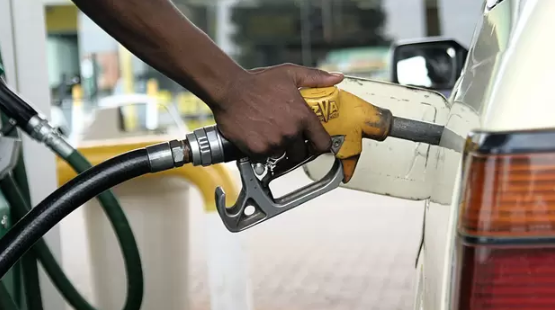
The Minority in Parliament is intensifying pressure on government to ease the tax burden on petroleum products, calling for the immediate removal of the one-cedi fuel levy as global oil prices continue to climb.
Deputy Ranking Member on Parliament’s Energy Committee, Collins Adomako Mensah, argued that the continued imposition of the levy is worsening the financial strain on households already dealing with high living costs.
“The continuous application of this levy is deepening the burden on Ghanaians who are already struggling with the cost of living,” he said.
Addressing parliamentary reporters, he maintained that the conditions that led to the introduction of the levy have largely been resolved, making its continued application difficult to justify.
“The justification for this levy no longer exists. What was introduced as a temporary measure has now become an unnecessary cost to consumers,” he stated.
He stressed that what was initially presented as a temporary fiscal intervention has evolved into a permanent burden, urging authorities to take immediate steps to repeal the Energy Sector Levy Amendment Act of 2025 under a certificate of urgency.
“We are calling on government to act swiftly and repeal this law under a certificate of urgency to bring relief to Ghanaians,” he added.
The Minority’s renewed call comes at a time when fuel prices are rising steadily, driven by escalating geopolitical tensions involving the United States, Israel and Iran, as well as disruptions to key global shipping routes such as the Strait of Hormuz.
Energy analysts warn that if the situation persists, crude oil prices could surge beyond $100 per barrel, with potential ripple effects on domestic pump prices.
Locally, fuel prices have already seen significant increases, with petrol and diesel recording notable hikes within the March 2026 pricing window.
Mr. Adomako Mensah explained that the levy, which adds GH¢1 to every litre of fuel, was introduced to support energy sector financing, including the procurement of liquid fuels and the settlement of legacy debts.
However, he pointed out that government had made substantial payments in 2025 to stabilise the sector, including clearing outstanding obligations and restoring key financial guarantees.
“Government has already made significant payments to address the sector’s debts. Maintaining the levy under these circumstances is not justified,” he argued.
With those obligations largely addressed, he said maintaining the levy no longer aligns with its original purpose.
Beyond scrapping the levy, the Minority is also advocating a broader review of all taxes embedded in fuel pricing, with the aim of identifying possible areas for relief.
“We believe a comprehensive review of all taxes on fuel is necessary to identify areas where consumers can get relief,” he noted.
The caucus insists that urgent intervention is needed to cushion Ghanaians from the combined effects of domestic economic pressures and global oil market volatility.
“Ghanaians need immediate relief, especially at a time when global developments are already pushing prices up,” he stressed.
Read Also: Government Targets Stronger Health Workforce with New Training Institution Boards