






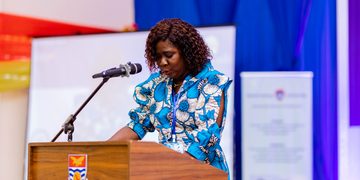



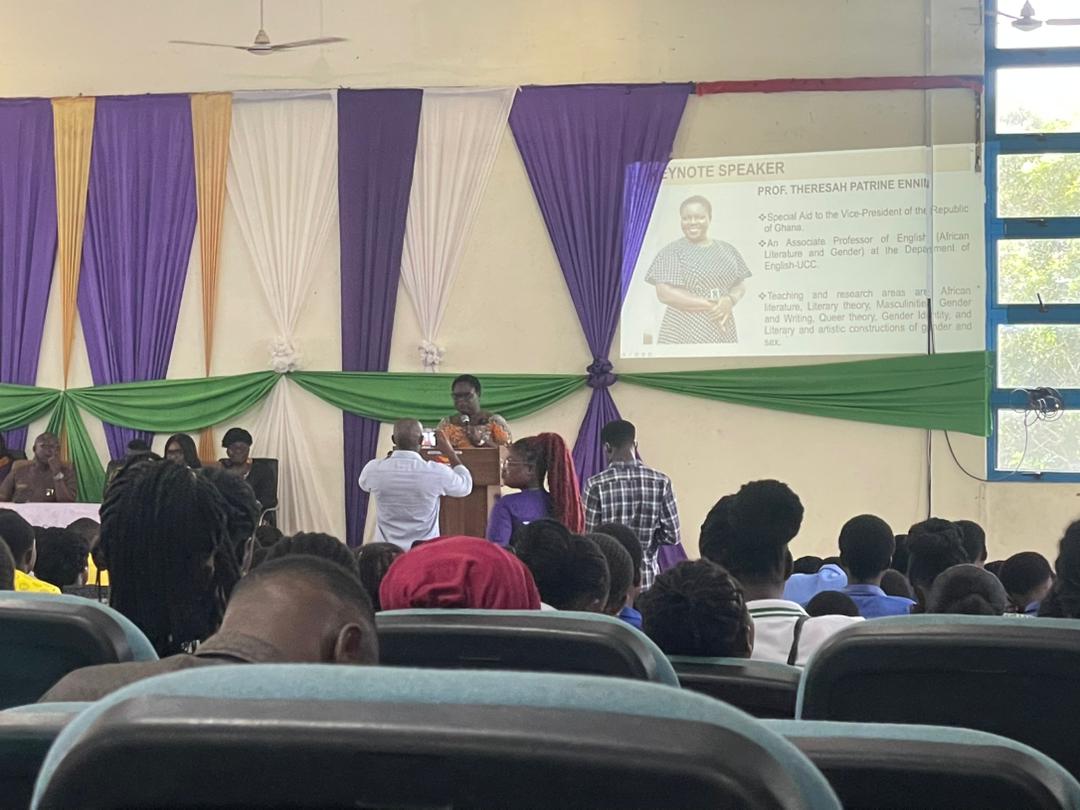
Special Aide to the Vice President of Ghana, Professor Theresah Patrine Ennin, has called for stronger institutional commitment to advancing women’s rights, stressing that recognition of women’s achievements alone is not enough to address gender inequalities.
Speaking at the 2026 International Women’s Day celebration organised by the Centre for Gender Research, Advocacy and Documentation (CEGRAD), in collaboration with women’s groups on the University of Cape Coast campus, Prof. Ennin said the focus must shift from celebrating women to ensuring institutions take responsibility for protecting their rights.
The event was held under the theme “Her Rights. Her Justice. Our Action.”
According to Prof. Ennin, International Women’s Day should be used as a moment of reflection and institutional accountability. “International Women’s Day is often a moment of celebration, but it is also a moment of reflection and sometimes a moment of earnest institutional self-examination,” she stated.
She explained that while women’s contributions to national development across sectors such as education, the judiciary, agriculture, business, public service and academia are widely acknowledged, recognition alone cannot dismantle systemic barriers.
“Recognising women’s achievements is important. We have contributed a lot and we are still contributing. But recognition alone does not change institutions, it does not dismantle inequalities, and it does not guarantee justice. What changes institutions is responsibility,” she said.
Prof. Ennin further called on traditional authorities to ensure that cultural practices do not undermine women’s rights, particularly in areas such as land and property ownership. “Traditional practices and customs must not violate women’s rights. Women’s ownership of land and property must be protected,” she stressed.
Addressing female students at the event, Prof. Ennin encouraged them to take their education seriously and position themselves as agents of change in society.
“You are not here simply to occupy space. You are here to change narratives and shape the future of Ghana. Your education is the gateway to a fulfilling future, so take your intellectual development seriously,” she advised.
She urged students to cultivate the habit of reading widely, engaging in debates and participating in discussions on national development.
“As a student, you must read widely, ask questions and engage in debates because these sharpen your mind. You must understand where your country is going and hold leaders accountable,” she added.
Prof. Ennin also highlighted the role of public institutions such as the courts, law enforcement agencies and the Domestic Violence and Victim Support Unit( DOVVSU) in protecting victims of abuse, noting that delayed justice can erode public trust.
“When victims report violence, institutions must respond promptly. When cases reach the courts, justice must defend them because justice delayed weakens public confidence in our institutions,” she said.
She further called on the media and social media influencers to portray women responsibly and avoid reinforcing harmful stereotypes.
“Media houses, bloggers and influencers must ensure their portrayal of women advances women’s rights. We are tired of stereotypical images of women as victims or objects. Use your platforms to show what women are capable of,” she noted.
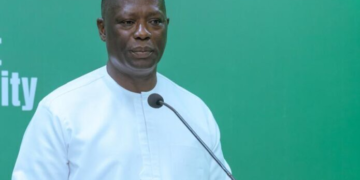
In his remarks, Registrar of the University of Cape Coast, Gideon Enoch Abeeyquaye ESQ., acknowledged the significant contributions of women to national development and called for continued efforts to empower women and girls.
“Across every sector, women continue to demonstrate resilience, innovation and compassion. When women thrive, societies prosper, and investing in women’s education and leadership strengthens families and drives social development,” he said.
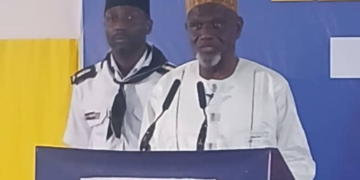
Also speaking at the event, Acting Vice-Chancellor of the University of Cape Coast, Professor Denis Worlanyo Aheto, stressed the importance of involving men in gender equality discussions to achieve meaningful progress.
“When programmes on gender are organised, men must also be involved. Gender equality cannot be achieved without engaging both men and women in the conversation,” he noted.
The celebration brought together university officials, students, gender advocates and members of women’s groups to reflect on progress made and identify concrete steps to promote gender equality and justice in Ghana.
Read More News @ ATLFMNEWS.COM