















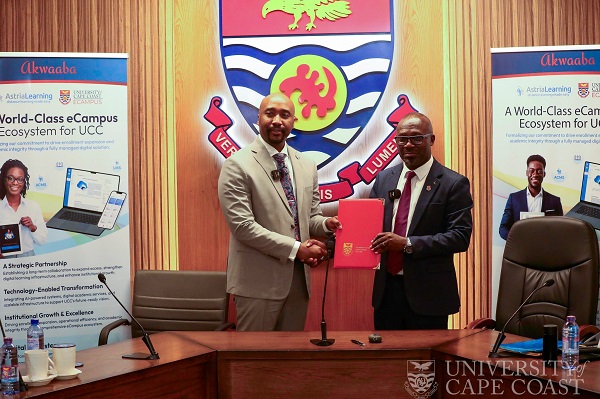
The University of Cape Coast (UCC) has signed a Memorandum of Agreement (MoA) with Astra Learning to establish a world-class, AI-powered digital eCampus ecosystem aimed at expanding enrolment, strengthening academic integrity and enhancing operational efficiency.
The agreement, signed at the University yesterday, formalises a long-term collaboration between UCC and eCampus Incorporated, Astra Learning, to integrate artificial intelligence-driven systems, digital academic services and scalable infrastructure into the University’s academic delivery.
The initiative is expected to broaden access to quality higher education, expand international student recruitment and reinforce UCC’s strategic vision of becoming a future-ready institution with global reach.
The first cohort of students under the eCampus model is expected to begin in August 2026, with projections to scale up to 10,000 active learners annually in the coming years.
A bold and carefully evaluated step
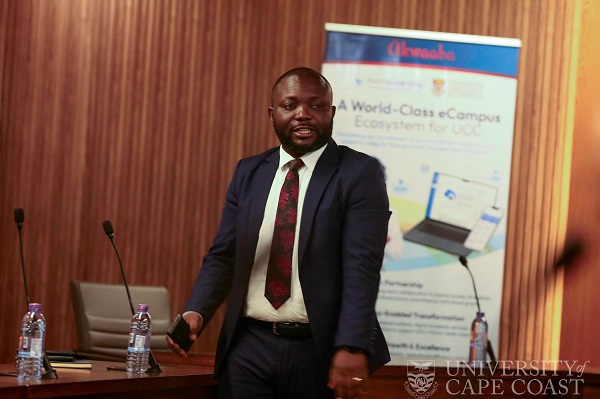
Speaking at the ceremony, the Acting Vice-Chancellor of UCC, Prof. Denis Worlanyo Aheto, described the MoA as a transformative milestone in the University’s digital evolution.
“This partnership marks the beginning of a bold and forward-looking relationship, one that embodies a transformative vision for the future of higher education in Ghana and beyond,” he stated.

Prof. Aheto emphasised that the decision to enter into the agreement was not taken lightly.
According to him, the partnership followed a rigorous and comprehensive evaluation process after Astra Learning proposed the establishment of a fully digital eCampus for UCC.
He explained that the delegation gained first-hand insight into governance arrangements, admissions automation, recruitment strategies, quality assurance systems and financial sustainability frameworks.
“Most importantly, the delegation confirmed that Astra Learning functions strictly as a digital platform and operational support partner. Academic authority remains fully vested in the University of Cape Coast, thereby safeguarding our standards, values and long-standing traditions,” Prof. Aheto stressed.
Read Also: Rural teachers to earn 20% more under New Policy
He reiterated that the partnership would enhance UCC’s global visibility and enable the scalable growth of its accredited academic programmes without compromising quality.
The Acting Vice-Chancellor further noted that UCC had long distinguished itself as a leader in distance education across Ghana and was therefore strategically positioned to extend its academic heritage to learners beyond the country’s borders through a technology-enabled platform.
“This initiative will usher our University into a new era of digital innovation, broadening access to quality education and reinforcing our standing as a leader in higher learning across Africa,” he added.
Prof. Aheto urged members of the University community to support the collaboration with integrity, foresight and dedication to ensure that the eCampus reflects the excellence for which UCC is known.
“Together we will build an eCampus that overlays our regular academic programmes, reflects the excellence of UCC and serves the aspirations of students around the globe,” he said.
Expanding access while preserving standards
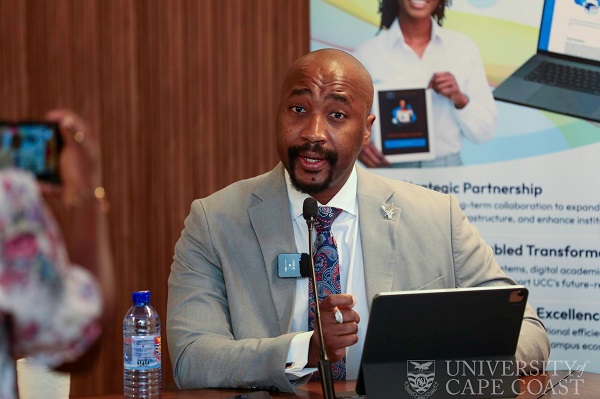
For his part, the Chief Executive Officer of Astra Learning, Mr Jeff Bordes, described the agreement as a strategic decision designed to expand access to excellence and strengthen Ghana’s professional workforce.
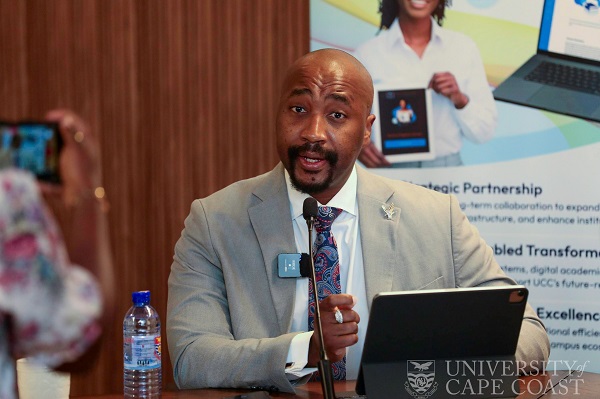
“This is not simply the signing of an MoA. It is a strategic decision to expand access to excellence, strengthen Ghana’s professional workforce and position this institution as a regional platform for opportunity,” he stated.
Mr Bordes explained that the partnership would deliver a structured, technology-enabled academic ecosystem built around governance, accountability and student support.
He said, under the agreement, Astra Learning will provide digital infrastructure, enrolment management systems, artificial intelligence-powered tools and operational expertise to help UCC implement a comprehensive eCampus model.
He was emphatic that academic authority, faculty oversight and quality assurance would remain fully under UCC’s control.
“The degree remains a UCC degree. The standards remain UCC standards. Academic authority remains with UCC. What changes is access, and access is transformative,” he emphasised.
Mr Bordes noted that demand for advanced education in Ghana continued to grow, particularly among working professionals who were unable to leave their jobs to pursue traditional campus-based programmes.
“Do we allow physical capacity to limit national ambition, or do we design a system that matches the scale and demand of the people? Today, we choose to design,” he said.
He described education as “economic infrastructure”, arguing that strengthening human capital was critical to national development. Citing global evidence, he indicated that each additional year of schooling could increase earnings by between eight and 10 per cent, leading to stronger households, institutions and national productivity.
According to him, the initiative would address a long-standing imbalance where ambitious professionals were often forced to choose between travelling abroad at significant cost or postponing their academic advancement.
“Through this partnership, professionals will gain access to a high-quality educational experience at a locally accessible price, without sacrificing their careers,” he said.
Mr Bordes projected that within a decade, thousands of additional UCC graduates would assume leadership roles across government, healthcare, education, finance and industry.
“When history reflects on today, it will not focus on the ceremony. It will focus on the professionals empowered, the institutions strengthened and the families elevated,” he stated.
An ad hoc committee was constituted to assess the academic, operational, financial and strategic implications of the proposal. In line with the University’s commitment to due diligence, a high-level delegation visited the University of Malawi from February 12 to 15, 2026, to observe the digital model in operation and engage both institutional leaders and Astra Learning’s team.
The partnership marks a significant step in UCC’s digital transformation journey and signals a broader shift towards technology-driven higher education delivery in Ghana and the West African sub-region.
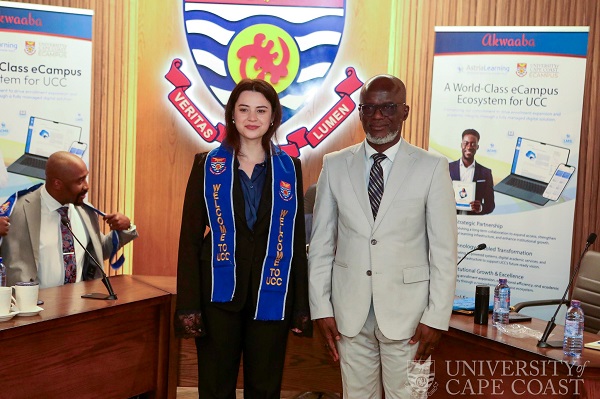
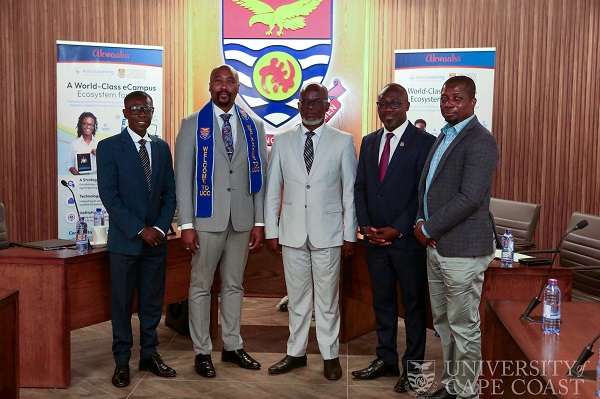
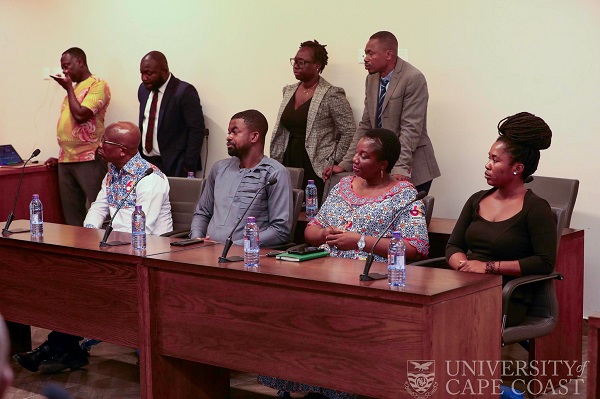
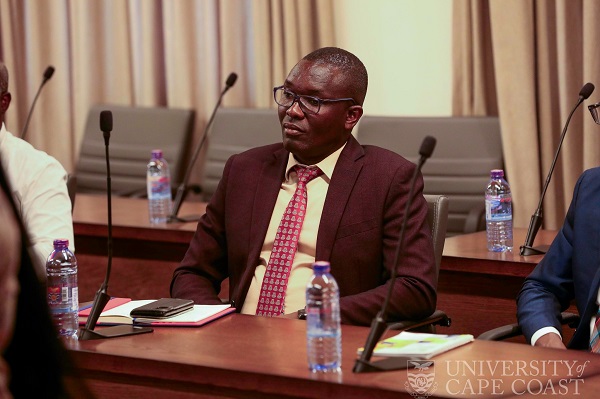
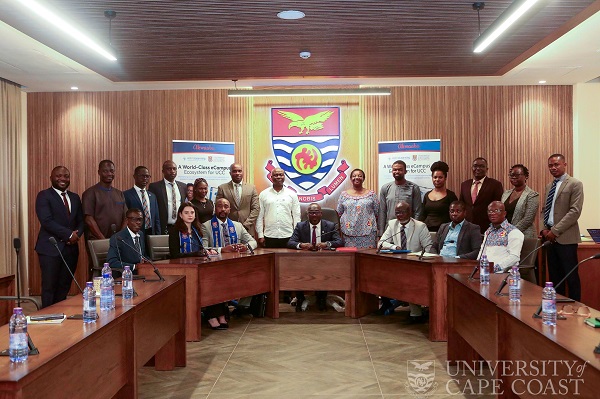
The signing ceremony was attended by members of the University’s Management, the Registrar, Provosts, Directors and representatives of Astra Learning.



Source: Anthony Sasu Ayisadu/ATLFMNEWS