





President John Dramani Mahama has announced the revival of the Tema Oil Refinery, reforms in the LPG sector and sweeping investments in agriculture as part of what he describes as Ghana’s ongoing national reset.
Delivering his address in Parliament, the President said government is moving to revitalize the Ghana Cylinder Manufacturing Company (GCMC) through a strategic partnership involving the National Petroleum Authority (NPA), Ghana Gas and the Ghana Commercial Bank (GCB).
“We’re on course to revitalize the Ghana Cylinder Manufacturing Company through a strategic partnership with the National Petroleum Authority, Ghana Gas and the Ghana Commercial Bank,” he stated. “This will boost production, ensure a steady supply of safe LPG cylinders and strengthen local manufacturing.”
Tema Oil Refinery Resumes Operations
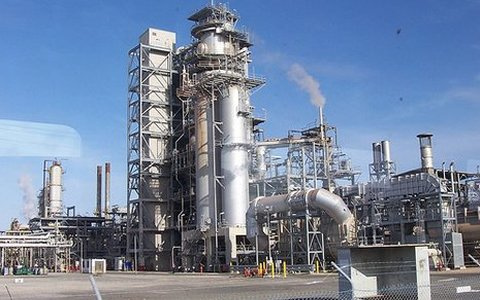
In a major announcement, President Mahama confirmed that the Tema Oil Refinery (TOR) has resumed crude oil processing for the first time since 2018 after undergoing extensive maintenance.
“Tema Oil Refinery is back,” he declared. “For the first time since 2018, the refinery has commenced processing crude oil into petroleum products again.”
He assured Parliament that reforms in the energy sector remain a priority.
“Energy sector reforms continue unabated. I remain fully committed to turning around the sector and ensuring reliable, affordable and sustainable energy security for our nation.”
Agriculture at the Centre of Economic Renewal
Shifting focus to agriculture, President Mahama described the sector as central to Ghana’s economic transformation under the Agriculture for Economic Transformation Agenda, anchored by the Feed Ghana Programme.
“Our objective is clear to restore food sovereignty, stabilize food prices, reduce import dependence, increase decent jobs especially for youth, and reposition agriculture as a strategic growth sector under our 24-hour economy policy,” he said.
He noted that food inflation, which stood at 28.3 percent in January 2025 after peaking at 61 percent in January 2023, has now declined significantly, noting
“Today, food inflation has declined to 4.9 percent, providing relief to Ghanaian families and businesses,” he announced.
GH¢300 Million for Food Buffer Stock
The President revealed that government has committed 300 million Ghana cedis to the National Food Buffer Stock Company to stabilise prices and build a strategic national food reserve, noting “This marks the first time Ghana has deliberately built a food reserve for national resilience,” he said.
Over 413 institutions from basic to tertiary are participating in the Feed Ghana Programme, with institutional farming now being undertaken by the Ghana Armed Forces, Ghana Prison Service, National Service Authority, schools, universities, churches and mosques.
A nationwide home gardening initiative has also been rolled out to encourage families to grow vegetables and reduce household food expenditure.
Irrigation and Mechanisation Drive
President Mahama announced a deliberate shift from rain-fed agriculture to irrigation-based farming to ensure year-round production and improve climate resilience.
Projects underway include:
- Construction of two new mega dams
- Rehabilitation of eight irrigation dams
- Construction of 250 solar-powered boreholes in farming communities and schools
- Development of 1,300 hectares of inland valleys for rice production
- Rehabilitation of major irrigation schemes including Via, Weta, Tanoso, Bong, Ashaiman and Aveime
Under a $20 million Global Agriculture and Food Security Programme, 50,000 farming households including 30,000 women and youth across 12 districts are receiving agro-input support to boost production of maize, rice, soya bean, cowpea and groundnuts.
Mechanisation and Farmer Service Centres
Procurement is underway for 660 tractors, 400 combined harvesters and additional equipment to modernise farming.
The President said the first 11 Farmer Service Centres will begin construction this year, offering mechanisation, storage, input supply and extension services, particularly for smallholder farmers.
“In the next two weeks, I will cut sod for the first Farmer Service Centre in the Afram Plains,” he announced.
To strengthen extension services, 540 motorbikes have been procured for officers, with one-fifth already distributed. Additionally, 400 Feed Ghana district coordinators are being recruited nationwide.
Youth and Cooperative Development
President Mahama disclosed that 10,000 young Ghanaians are being enrolled in a four-year National Service AgriPreneurial Programme, with 3,000 already deployed.
“This intervention is strengthening frontline service delivery and creating employment opportunities for young people,” he said.
As of October 2025, 70,000 community-based farmer cooperatives have been established nationwide to support mechanisation services, climate advisories and market negotiations.
Ghana-Italy Irrigated Farming Project
A key highlight is a 154 million Ghana-Italy Irrigated Commercial Farming Project to establish a 10,000-hectare irrigation model farm producing rice, maize, soya and tomatoes for local consumption.
“All produce from this project will be sold locally. This intervention supports food security and reduces Ghana’s dependence on food imports,” he stated.
Other value addition initiatives include rice processing facilities in the Upper East and Upper West Regions, poultry feed plants in Ashanti, and cashew and onion processing facilities. The shea industry is also being revived through secured export contracts and raw material protection measures.
President Mahama maintained that the combined energy and agricultural reforms form part of a broader national transformation agenda aimed at strengthening resilience, boosting production and securing long-term prosperity for Ghana.
Read Also: SONA 2026: Mahama Outlines Energy Reforms, Solar Expansion and Oil Investments