















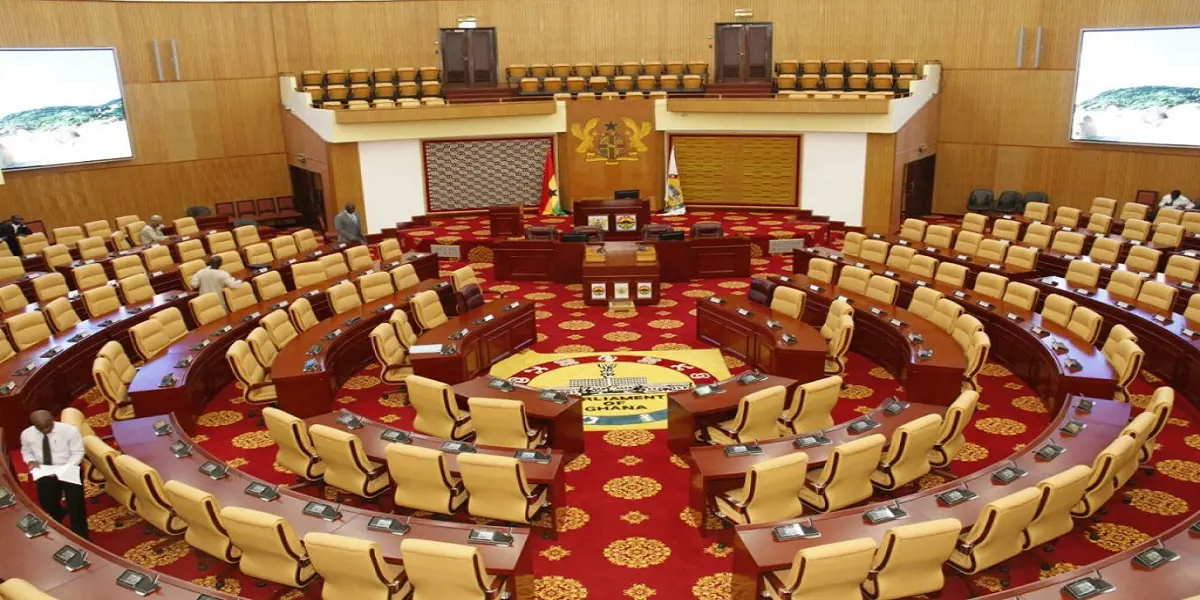
The Minority in Parliament has escalated its opposition to the 2025 District Assemblies Common Fund (DACF) utilisation guidelines, demanding what it describes as an urgent review of the plan on constitutional grounds.
Addressing journalists, Minority Chief Whip Frank Annoh-Dompreh argued that the ministerial guidelines conflict with the formula approved by Parliament under Article 252 of the 1992 Constitution.
According to him, the new guidelines introduce fixed national percentages and additional expenditure categories that are not reflected in the parliamentary-approved distribution formula.
Constitutional Breach Alleged
Mr. Annoh-Dompreh cited Section 126(1) of the Local Governance Act, 2016 (Act 936), which permits a sector minister to issue utilisation guidelines — but strictly within the boundaries of Parliament’s approved formula.
Read Also: DVLA explains new licence services for Ghanaians abroad
He contended that the current directives risk overriding Parliament’s authority and reducing district assemblies to implementers of centrally determined projects, rather than autonomous development actors.
“The Common Fund formula is not optional. It is constitutionally grounded and must be respected,” he stressed.
GH¢7.33bn Arrears Claim
Beyond the legal argument, the Minority also alleged that government owes approximately GH¢7.33 billion in DACF arrears, particularly relating to unpaid obligations from 2024.
Mr. Annoh-Dompreh described the alleged arrears as a serious breach of constitutional obligations, insisting that allocations to the Common Fund are an entitlement — not discretionary spending.
The DACF, established under Article 252 of the Constitution, is intended to ensure equitable development across Ghana’s districts by guaranteeing a portion of national revenue for local government.
Political and Fiscal Implications
Policy analysts note that if the guidelines are deemed inconsistent with Parliament’s approved formula, the dispute could escalate into a legal challenge or judicial interpretation.
The Common Fund remains a critical financing mechanism for district-level infrastructure, sanitation projects, education facilities, health services and local economic development initiatives.
As of now, government has not publicly responded to the allegations.
With Parliament back in session and fiscal pressures mounting, the standoff over the 2025 Common Fund plan is shaping into a significant constitutional and financial debate.