




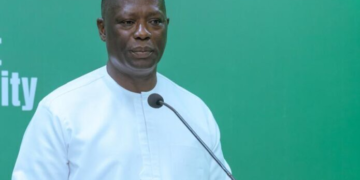








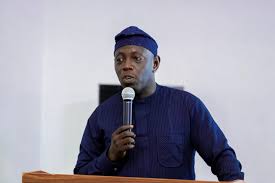
The Dean of the Faculty of Accounting and Finance at the University of Professional Studies, Accra, Prof. Isaac Boadi, says Ghana’s newly formalised 24-Hour Economy policy has the potential to unlock growth and attract foreign investment provided it moves beyond political symbolism to practical implementation.
Reacting to President John Dramani Mahama’s signing of the 24-Hour Economy Authority Bill, Prof. Boadi described the move as a “strong investor signal” that could reshape perceptions about Ghana’s economic direction.
“The signing sends a message beyond our borders,” he said in an interview on JoyNews. “Investors are watching. When they see a country formalise a policy like this, they begin preparing for opportunities.”
A Push to Expand Output
According to Prof. Boadi, Ghana is currently operating below its productive potential, with many sectors shutting down early or failing to maximise available capacity.
“We close too early as a country,” he noted. “Productivity suffers when time is not fully utilised. A properly structured 24-hour system can expand output, deepen value addition and create employment.”
He identified manufacturing, agro-processing, health services, retail, transport and hospitality as key sectors that could benefit from round-the-clock operations, especially where time-sensitive production and service delivery are involved.
Law Alone Is Not Enough
While welcoming the legislative backing for the programme, Prof. Boadi cautioned that passing a law does not automatically translate into economic transformation.
“Economic transformation does not happen because a bill has been signed,” he stressed. “It happens when you combine incentives, infrastructure and strong institutions.”
He warned that without a reliable power supply, security, transport systems and financial incentives for businesses, the policy could struggle to achieve its objectives.
Funding Questions Remain
Prof. Boadi also raised concerns about financing, pointing to government projections that the programme could require about $4 billion over five years.
“You cannot implement an ambitious policy on enthusiasm alone,” he said. “Do we have the financial readiness to support it? That question must be answered clearly.”
He added that clarity is essential, particularly as the concept appears to have evolved from a state-led initiative to one relying heavily on private sector participation.
“If the structure keeps shifting, investor confidence may be affected,” he cautioned. “Consistency and clarity are crucial.”
Beyond Shift Systems
The economist further questioned suggestions that some public institutions are already operating under a 24-hour framework.
“Running shifts is not the same as implementing a 24-hour economy policy,” he explained. “If agencies claim they are operating 24 hours, under what legal and operational framework? What are the cost implications? How are night services priced and staffed?”
Optimistic but Cautious
Despite his reservations, Prof. Boadi said he would support the initiative if it genuinely boosts productivity and reduces youth unemployment.
“I would be happy any day this materialises and delivers results,” he said. “But good economics begins where slogans end.”
The 24-Hour Economy remains one of the government’s flagship economic strategies, aimed at stimulating industrial growth, increasing exports and generating employment. Analysts say its ultimate success will depend not only on legislative backing, but on careful planning, sustainable financing and disciplined execution.
Read Also: Gov’t Releases GH¢855m to Pay Cocoa Farmers’ Arrears; Price Cut Sparks Fresh Protests