













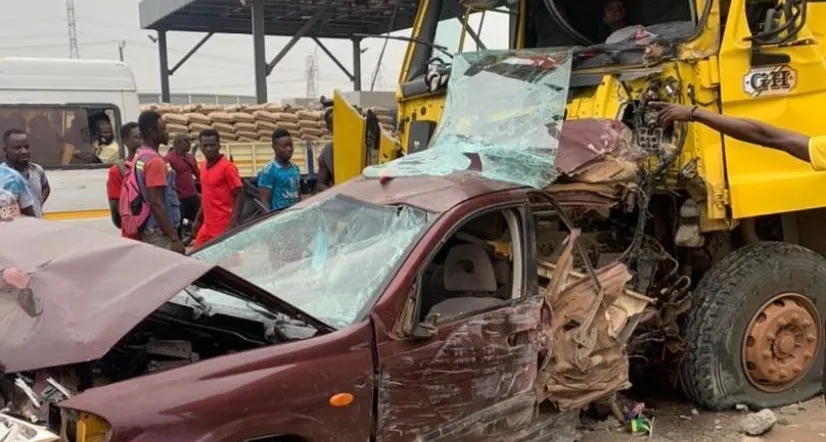
Road traffic crashes claimed 295 lives in Ghana’s Central Region in 2025, representing a 45 per cent increase over the previous year, despite major improvements in road infrastructure across the region.
Figures released by the National Road Safety Authority (NRSA) show that fatalities rose sharply from 204 deaths in 2024 to 295 in 2025, making the Central Region one of the hardest-hit areas nationwide. The deaths account for nearly 10 per cent of the 2,949 road fatalities recorded across Ghana last year.
The Central Regional Manager of the NRSA, Linda Affotey-Annang, described the situation as alarming, warning that improved roads are increasingly being misused by motorists.
“Good roads are not an invitation to speed,” she cautioned, noting that many of the crashes recorded were severe but avoidable.
Fatal Crashes Rising Faster Than Accident Numbers
While the total number of reported crashes in the Central Region increased only slightly—from 1,046 in 2024 to 1,064 in 2025—the number of deaths rose disproportionately.
Injuries climbed to 1,689, while the number of vehicles involved in crashes marginally declined from 1,714 to 1,705, suggesting that higher speeds and more violent impacts are contributing to the rising death toll.
Read Also: Diaspora Citizenship on hold: Ghana explains new application pause
Some of the deadliest crashes in the region last year included:
- An accident at Kormantse in September that claimed eight lives
- A five-fatality crash at Ayensudo in December
- A Christmas Eve crash at Twifo Ntafrewaso that killed four people
Pedestrian knockdowns also surged by 25.2 per cent, rising from 242 cases in 2024 to 303 in 2025, raising further concern about road user safety.
Human Behaviour Identified as Main Risk Factor
According to the NRSA, data from crash investigations consistently points to speeding, driver distraction, unsafe overtaking, fatigue, and impatience as the leading causes of fatal crashes.
Ms Affotey-Annang stressed that although government investment under the Big Push road infrastructure programme—particularly along the Cape Coast–Takoradi corridor—has significantly improved road conditions, infrastructure alone cannot guarantee safety.
“Human behaviour remains the most critical factor in crash prevention. As the government delivers better roads, road users must deliver better behaviour,” she said.
Enforcement and Technology-Based Interventions
The NRSA says it is intensifying enforcement under LI 2468 of 2023, while rolling out new safety interventions aimed at improving accountability, especially in the public transport sector.
One such initiative is Transport Ghana, a collaborative programme involving the NRSA, the Ministry of Transport and private sector partners. The initiative integrates:
- Electronic ticketing and passenger manifest systems
- Vehicle tracking and monitoring technologies
- Digital payment platforms
- A road safety service locator application
These measures are designed to enhance driver accountability, improve fleet management and strengthen regulatory compliance.
Appeal to Drivers
Ms Affotey-Annang urged drivers to avoid speeding, refrain from dangerous overtaking, rest adequately before long journeys and obey road signs and traffic regulations.
“Arriving late is better than not arriving at all,” she warned.
“Crashes are not random events; they are the result of choices. If we change our choices, we can change the story on our roads.”