












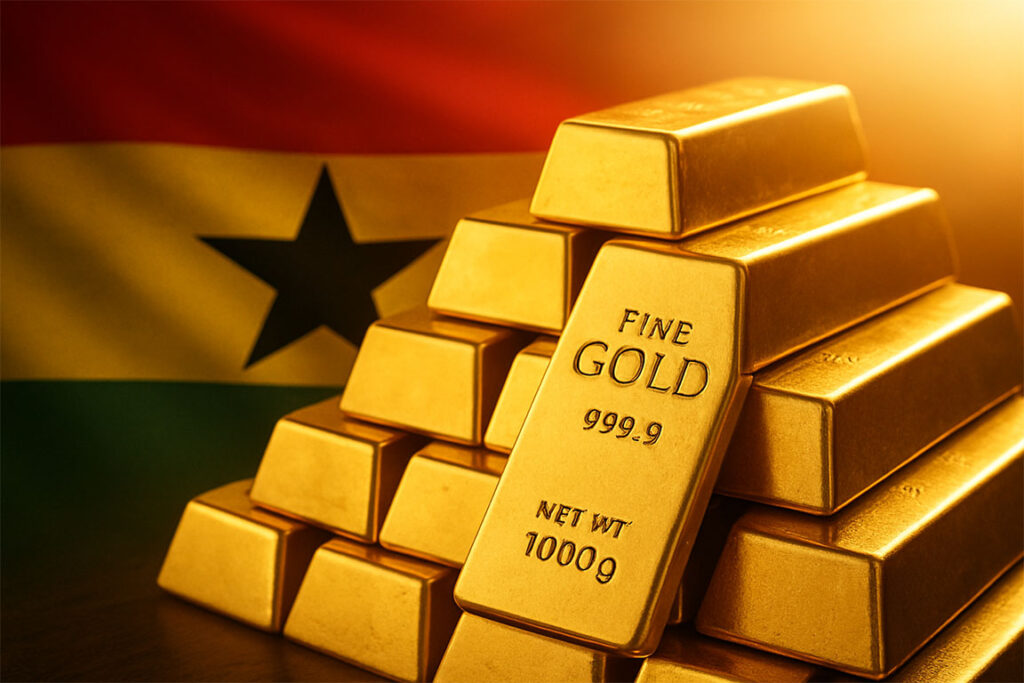
The historic surge in global gold prices has opened a new window of economic opportunity for Ghana, Africa’s leading gold producer, as the precious metal crossed the $5,000-an-ounce mark for the first time on international markets.
The rally, which capped a year in which gold gained more than 60 percent, has been driven by heightened geopolitical tensions, financial market volatility, and renewed fears of global trade disruptions. Investors have increasingly turned to gold as a safe-haven asset amid uncertainty surrounding major economies and global supply chains.
For Ghana, where gold remains the country’s single most important export commodity, the price spike carries significant upside. Higher prices are expected to translate into stronger export earnings, increased foreign exchange inflows, and improved balance-of-payments dynamics—critical factors as authorities work to consolidate recent macroeconomic gains.
Analysts say the rally could also ease pressure on the cedi by boosting dollar inflows from the mining sector while improving fiscal revenues through royalties, taxes, and dividends from gold-producing firms. This comes at a time when the government is focused on strengthening revenue mobilization and maintaining economic stability.
The global gold surge has been reinforced by broader market unease, including rising geopolitical strains and renewed trade tensions. Market sentiment has been further unsettled by protectionist rhetoric from the United States, adding to demand for assets perceived as stores of value.
Read Also: Why Ghana is pushing new Child Marriage Reforms before 2030
The momentum has not been limited to gold. Other precious metals have also rallied sharply, with silver breaking above $100 an ounce for the first time, extending a dramatic rise over the past year. The broader commodities upswing reflects sustained investor caution about global growth prospects and financial risks.
While the price rally offers Ghana clear short-term benefits, economists caution that long-term gains will depend on how effectively the windfall is managed. They point to the importance of strengthening value addition, improving environmental governance in mining communities, and ensuring that higher revenues translate into broad-based development.
As global uncertainty continues to reshape commodity markets, Ghana’s dominant position in gold production places it in a favorable position to benefit—provided policy discipline and strategic investment remain firmly in place.