





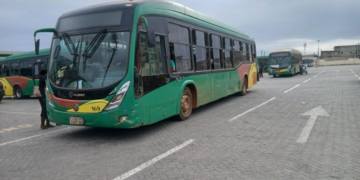








The National Road Safety Authority (NRSA) is set to invoke new laws against transport owners as part of measures to improve vehicular fleet safety in 2026.
Under the Legislative Instrument L.I. 2468, which serves as the legal backbone of the NRSA’s regulatory powers, the Authority will now hold transport operators, not just individual drivers, legally responsible for the roadworthiness of their vehicles and the conduct of their staff.
The Central Regional Head of the NRSA, Madam Linda Afottey-Annan, revealed this new strategy on the Atlantic Wave, noting that the time has come to hold the owners of the transport business accountable.
Madam Afottey-Annan indicated that, unlike the police, who traditionally fine the individual driver, the NRSA will target operators. She explained that this new move will ensure transport operators abide by the safety standards.
“So, if we come to you or we are on the road and realize that this vehicle belonging to this operator is not doing the right thing, we are going after the operator and not just the individual driver,” she emphasized.
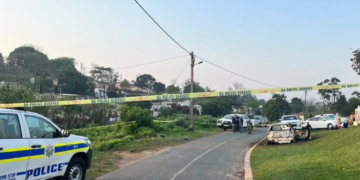
The move, according to her, follows a grim start to the year 2026. On Monday, January 14, 2026, a fatal accident at Komenda Asamasa in the Central Region claimed seven lives, highlighting a “deeply challenging” repeat of the high crash rates recorded in the previous year.
In 2025, Ghana recorded more than 13,000 road crashes between January and November. The crashes involved approximately 22,000 vehicles of all types, including privately and commercially registered vehicles, as well as motorcycles and 2,600 fatalities.
Madam Afotey Annan noted that despite constant education and enforcement, the “cash-out” mentality of commercial drivers—fueled by an adrenaline rush and a sense of invincibility—continues to lead to fatal mistakes.
These behaviours include overspeeding, wrongful overtaking and driver fatigue exacerbated by the use of alcohol or drugs drivers use to sustain themselves during high-pressure festive seasons.
While the government’s “Big Push” project to dualize the Cape Coast–Takoradi highway is expected to reduce head-on collisions, the NRSA warns that infrastructure alone won’t save lives.
Madam Afotey Annan emphasized that road users must adopt the “COAT” principle—Concentration, Observation, Anticipation, and Tolerance—to avoid “needless” deaths.
“One thing I keep talking about is the fact that let us take safety into our own hands, let’s be responsible on the road, be it a driver, be it a passenger or a pedestrian, we all have a role to play.”
READ MORE NEWS ON ATLFMNEWS.COM