


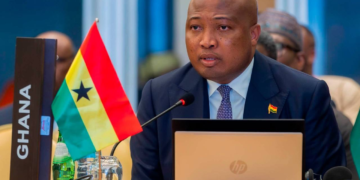




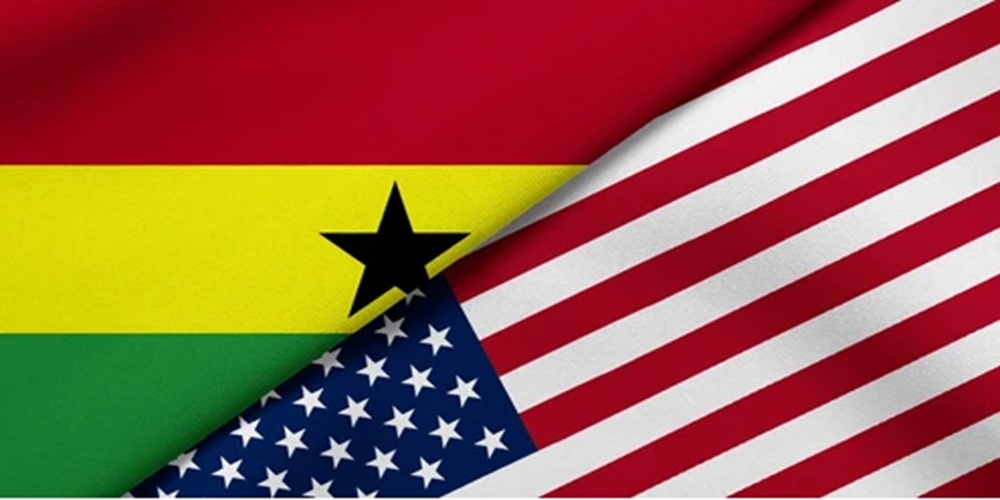
The United States government has formally barred Ghana from receiving foreign assistance, including development loans and access to major support programs such as the Millennium Challenge Corporation (MCC), after the country failed to honour significant debt obligations owed to U.S. institutions and companies.
The decision takes effect in the 2026 U.S. financial year and marks the most severe diplomatic and financial consequence Ghana has faced since entering its debt crisis in 2022.
Debt Default Triggers U.S. Restrictions
According to an Economic Intelligence Report cited by U.S. authorities, the sanctions stem from Section 7012—known as the “debt default restriction”—under the FY 2025 State, Foreign Operations, and Related Programs Appropriations Act (SFOAA).
This provision prohibits U.S. foreign assistance to any country that:
- Has defaulted on sovereign debt owed to a U.S. person or creditor, and
- Has not reached a restructuring agreement to rectify the default.
Both the MCC and the U.S. State Department confirmed on August 6, 2025, that Ghana now falls squarely under this restriction and that they must comply with the law.
Read Also: Payroll hitch delays November allowances; CAGD sets new December date
Two Major Defaults Behind the Sanctions
1. Ghana’s 2022 Suspension of External Debt Payments
On December 19, 2022, Ghana announced a sweeping suspension of payments on nearly all external public debt, including:
- Eurobonds
- Commercial term loans
- Significant bilateral debt
These instruments are widely held by international investors—especially U.S. banks, asset management firms, and global funds. The U.S. government views this unilateral suspension as an unresolved debt default.
2. $251 Million Owed to U.S. Companies
The second—and most politically sensitive—default involves $251 million in overdue payments owed to several American companies, including:
- Twin City Energy
- American Tower Company
- GSM
- Chubb
- Kosmos Energy
- Zipline
Several of these debts, particularly those owed to Twin City Energy and Chubb, were guaranteed by the U.S. International Development Finance Corporation (DFC), meaning U.S. taxpayers were exposed to losses.
U.S. lawmakers have repeatedly expressed frustration that Ghana has delayed settlements to American firms while continuing to negotiate with and pay certain Chinese creditors.
Political Pressure in Washington
Senator James Risch, the Ranking Member of the U.S. Senate Foreign Relations Committee, has been vocal about Ghana’s arrears.
He has argued that:
- Ghana prioritised Chinese creditors over American companies,
- The U.S. should block further IMF disbursements to Ghana, and
- Washington must enforce Section 7012 to protect U.S. financial interests.
This political pressure increased bipartisan momentum in Washington to take a firm stance.
Ghana’s Classification of the Debt
Ghanaian authorities reportedly classify the debts to U.S. companies as part of the $2.6 billion “energy-sector legacy debt”, accumulated due to years of:
- Power purchase agreements,
- Tariff shortfalls,
- Operational inefficiencies,
- And failures in state-owned entities such as the Electricity Company of Ghana (ECG).
From the U.S. perspective, however, the arrears represent a sovereign obligation, and the government bears ultimate responsibility.
What the Sanctions Mean for Ghana
With the sanctions in place:
- Ghana is barred from MCC funding, jeopardizing new compact opportunities.
- The country loses access to bilateral development loans.
- The U.S. government cannot approve financial assistance through agencies such as USAID, except for humanitarian relief.
- Ghana’s credibility in international financial markets may weaken further.
Development analysts warn that the restriction could compromise Ghana’s long-term reform agenda, especially at a time when the country is relying heavily on donor support to recover from its economic crisis.
Next Steps: Can Ghana Re-Qualify?
Under Section 7012, Ghana must:
- Reach a restructuring agreement with affected U.S. creditors, and
- Make demonstrable progress on arrears settlements, particularly those affecting DFC-backed obligations.
Only then can Washington reverse the aid suspension.
As it stands, Ghana’s exclusion from U.S. assistance introduces a new layer of urgency in the country’s debt restructuring efforts, which remain ongoing with both official and private creditors.